
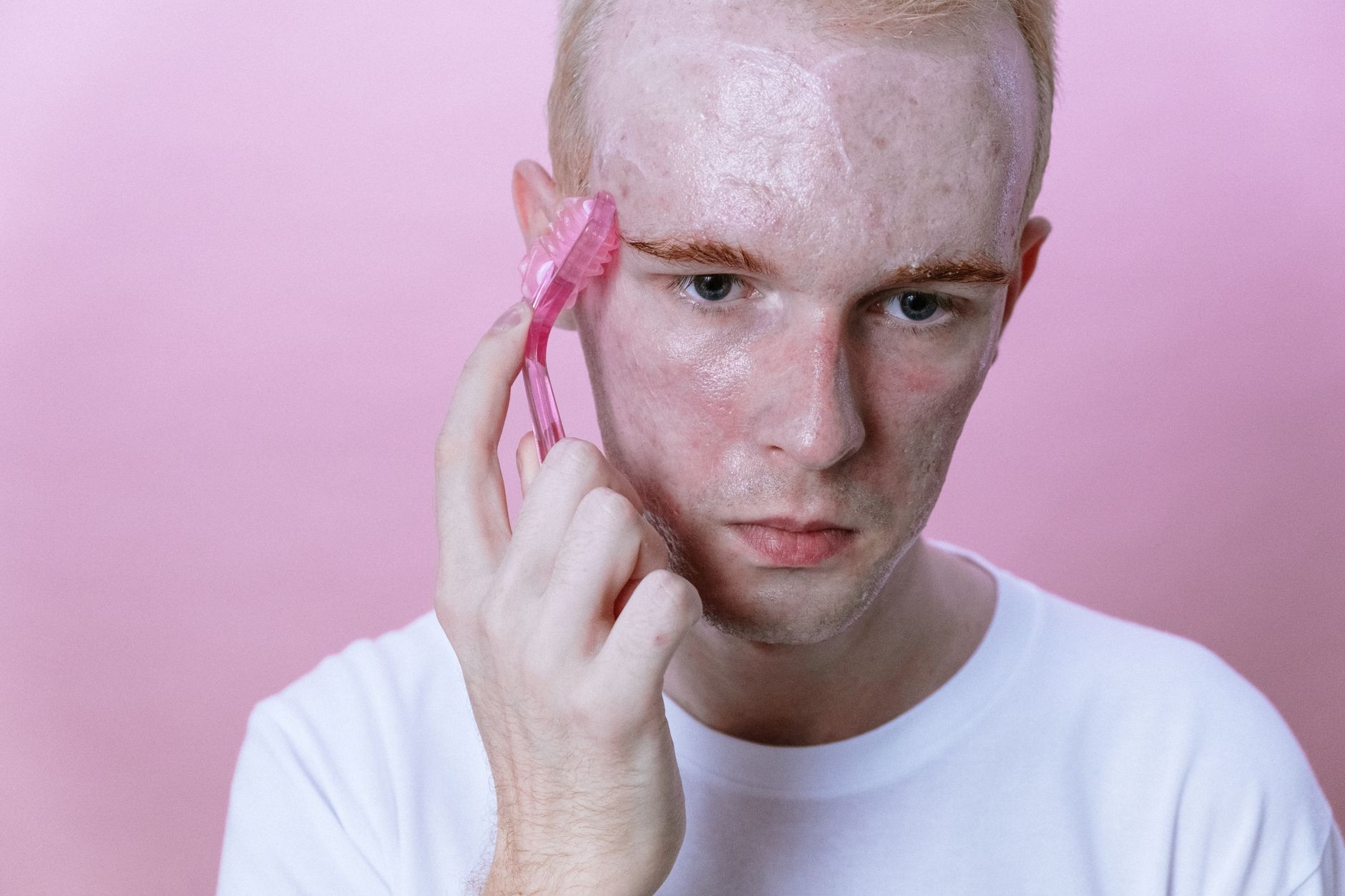
Dermatologists recommend individualized acne treatment because the right choice depends on an accurate diagnosis, acne severity, and individual factors. A custom skincare plan is a tailored combination of proven treatments and monitoring—not a separate FDA-approved therapy or a guarantee of clear skin. Acne affects nearly 50 million Americans each year and about 85% of adolescents. It can also begin or persist in adulthood, especially among women.
Medical information disclaimer: This article is for general educational purposes only and does not provide medical advice, diagnosis, or treatment. Always consult a physician or other qualified health professional about symptoms, medications, tests, or treatment decisions.
Table of Contents
- Confirm That the Condition Is Acne
- What Can a Tailored Plan Include?
- What Do Prescription Trial Results Mean?
- When Is Isotretinoin Considered?
- Separate Proven Options From Evidence Gaps
Confirm That the Condition Is Acne
acne can produce blackheads, whiteheads, pimples, and deep, painful cysts or nodules. However, rosacea, perioral dermatitis, and folliculitis can resemble acne and require different care, according to the AAD's acne diagnosis and treatment guide. That distinction matters when a routine fails.
Adding stronger acne products will not correct a mistaken diagnosis and may complicate the picture. Before an appointment, note the types and locations of the spots, whether they hurt, and whether scarring is developing. Also list previous treatments and how the skin responded.
What Can a Tailored Plan Include?
The AAD's 2024 evidence-based guideline strongly recommends benzoyl peroxide, topical retinoids, topical or oral antibiotics, and suitable combinations. Conditional options include salicylic acid, azelaic acid, clascoterone, hormonal therapies, minocycline, and sarecycline. A conditional recommendation does not make a treatment ineffective.
It means the choice depends more heavily on the patient's circumstances and the limits of the available evidence. dermatologists may combine topical treatments that act through different mechanisms. When they prescribe a topical or oral antibiotic, the guideline recommends pairing it with benzoyl peroxide and limiting systemic-antibiotic exposure to reduce resistance and complications.
What Do Prescription Trial Results Mean?
WINLEVI is clascoterone 1% cream, a topical androgen-receptor inhibitor approved for patients age 12 and older. Applied twice daily, it produced 12-week treatment-success rates of 18.4% and 20.3%, compared with 9.0% and 6.5% for the inactive vehicle in two pivotal trials reported in the FDA prescribing information. AKLIEF is trifarotene 0.005% cream, a nightly topical retinoid approved for patients age 9 and older.
In trials involving 2,420 people with moderate facial and truncal acne, facial clear-or-almost-clear success reached 29.4% versus 19.5% and 42.3% versus 25.7% at week 12, according to its FDA label. These results should not be compared as if the drugs competed in the same trial. They show measurable benefit, but they also show that many participants did not reach the defined success endpoint within 12 weeks.
When Is Isotretinoin Considered?
Isotretinoin is an option for severe or scarring acne, substantial psychosocial burden, or acne that has resisted standard treatment. Because it can cause embryo-fetal toxicity, access remains restricted through the iPLEDGE safety program. The FDA approved changes to that program in February 2026, but implementation is delayed until November 15, 2026.
The changes are not yet fully in effect, as explained in the FDA's current iPLEDGE REMS update. Anyone considering isotretinoin should ask which iPLEDGE requirements currently apply. An announced change should not be treated as active before its implementation date.
Separate Proven Options From Evidence Gaps
The AAD found insufficient evidence to recommend chemical peels, laser or light devices, microneedling, dietary changes, vitamins, or plant-based alternatives as acne treatments. "Insufficient evidence" does not prove that every option is useless; it means the guideline could not support a recommendation from the available evidence. Use a dermatology visit to clarify the decisions that shape a practical plan:.
- Confirm acne rather than a look-alike condition.
- Identify whether lesions are clogged pores, inflamed pimples, or deep cysts and nodules.
- Discuss scarring, pain, and emotional effects.
- Review previous treatments and their results.
- Ask what each medicine contributes to the combination.