
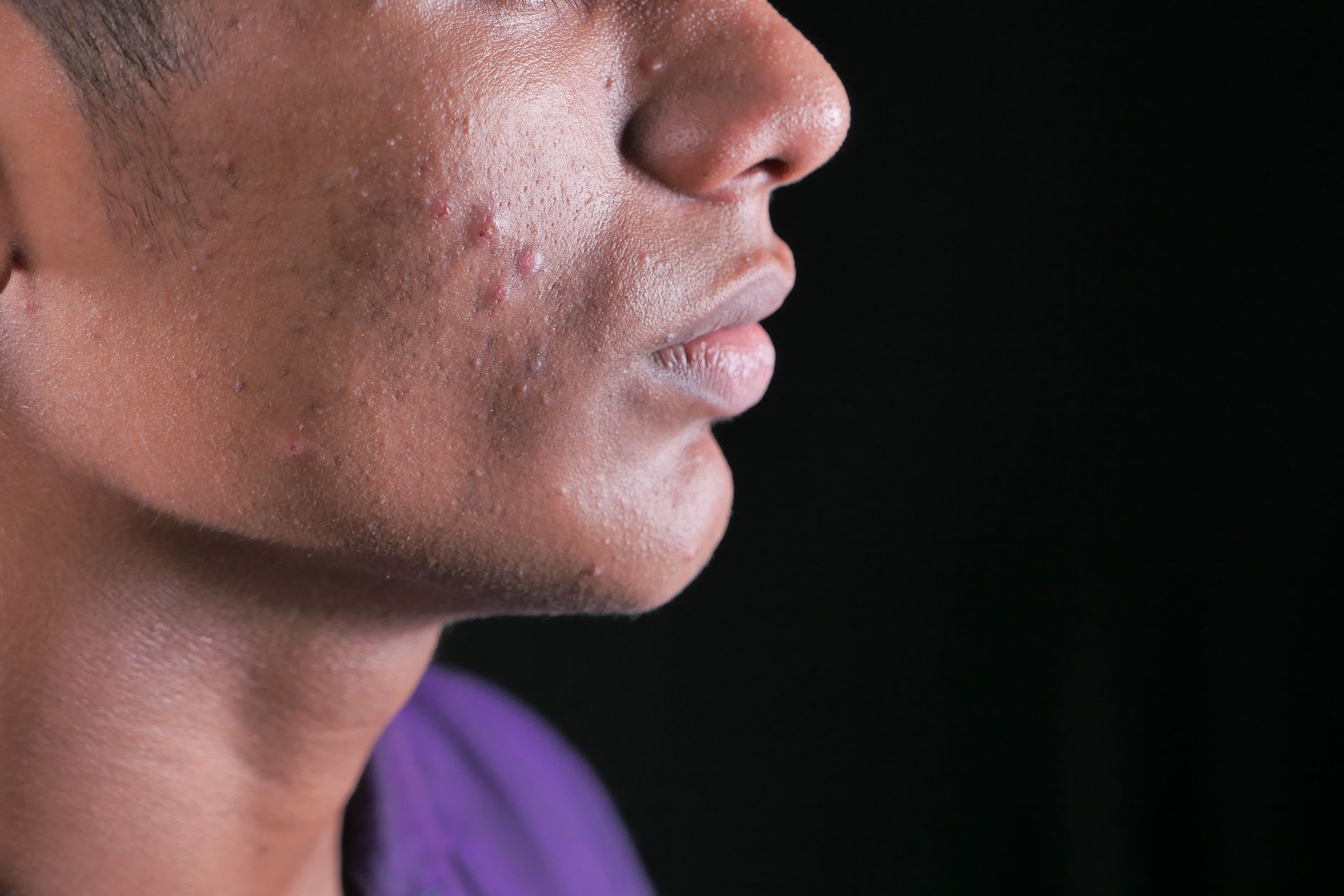
An acne cluster is a grouping of blackheads, whiteheads, papules, pustules, nodules or cysts that appear close together on the face, chest or back. Current evidence supports treating their shared causes — plugged follicles, excess oil, bacteria and inflammation — with proven combination therapy and steady follow-through. Acne vulgaris forms when oil, dead skin cells and Cutibacterium acnes plug hair follicles, according to the National Institute of Arthritis and Musculoskeletal and Skin Diseases in its acne diagnosis and treatment guide. That process explains why several lesion types can erupt in one area at once.
Medical information disclaimer: This article is for general educational purposes only and does not provide medical advice, diagnosis, or treatment. Always consult a physician or other qualified health professional about symptoms, medications, tests, or treatment decisions.
Table of Contents
- Why do spots group together?
- Which treatments have the strongest backing?
- Why do adult clusters favor the jawline and trunk?
- Do food and daily habits matter?
- How long should you stay with treatment?
Why do spots group together?
A cluster reflects several nearby follicles plugging at the same time. Oil and shed skin narrow the opening, bacteria grow, and inflammation builds. The result can mix non-inflamed blackheads and whiteheads with red papules, pus-filled pustules, or deeper nodules and cysts.
Face, chest and back have many oil-rich follicles. When oil output rises or cells clump inside pores, neighboring pores can block together. The National Institute of Arthritis and Musculoskeletal and Skin Diseases states that treatment targets that cell clumping, excess sebum, bacteria and inflammation in its acne diagnosis and treatment guide.
Which treatments have the strongest backing?
For many people, dermatology groups favor fixed combinations over single products. The American Academy of Dermatology 2024 acne guidelines give strong recommendations to topical benzoyl peroxide, topical retinoids and topical antibiotics in fixed combinations, plus oral doxycycline and oral isotretinoin for severe disease, as summarized in this report on the updated AAD acne guidelines.
For mild-to-moderate acne, UK NICE guidance recommends first-line fixed combinations such as adapalene with benzoyl peroxide, tretinoin with clindamycin, or benzoyl peroxide with clindamycin because combinations beat monotherapy. Ask a clinician which combination fits your severity, skin sensitivity, prior response and pregnancy plans.
Why do adult clusters favor the jawline and trunk?
Adult breakouts disproportionately affect women and often cluster on the lower face, jawline, chin and trunk. Harvard Health Publishing links flares to menstrual cycles, polycystic ovary syndrome, stress-related androgen increases and excess sebum in its guide to adult female acne.
That pattern helps explain monthly chin breakouts, jawline papules and chest or back flares. Track cycle timing, new facial oils, tight chin straps, masks and backpack friction. Share the pattern with your clinician because persistent jawline nodules, irregular periods, excess facial hair or hair loss may prompt hormone review.
Do food and daily habits matter?
Reviews of 10 years of diet research conclude high glycemic-load diets may worsen acne and frequent dairy intake is weakly linked, but diet alone has not been shown to cause acne. Sugary drinks, white bread, pastries and large portions of sweets raise glycemic load, while skim milk has drawn attention in dairy studies.
Use diet as a supporting step, not a replacement for proven care. Keep a short log of breakouts, sleep, stress, menstrual dates and major diet shifts. Bring two to three months of notes to an appointment rather than cutting whole food groups on your own.
How long should you stay with treatment?
Expect 6-8 weeks of steady use before topical and oral therapies show visible change. Early dryness, mild peeling or slow progress does not mean the plan failed. Frequent product switches and stopping early allow new plugs to form and raise scarring risk.
- Use the prescribed amount on the full prone area, not only visible spots.
- Keep routine simple while waiting for effect.
- Do not pick, squeeze or probe clustered lesions.
- Photograph the area every two weeks in the same light.
- Contact your clinician if pain, swelling, crusting or dark marks spread.