
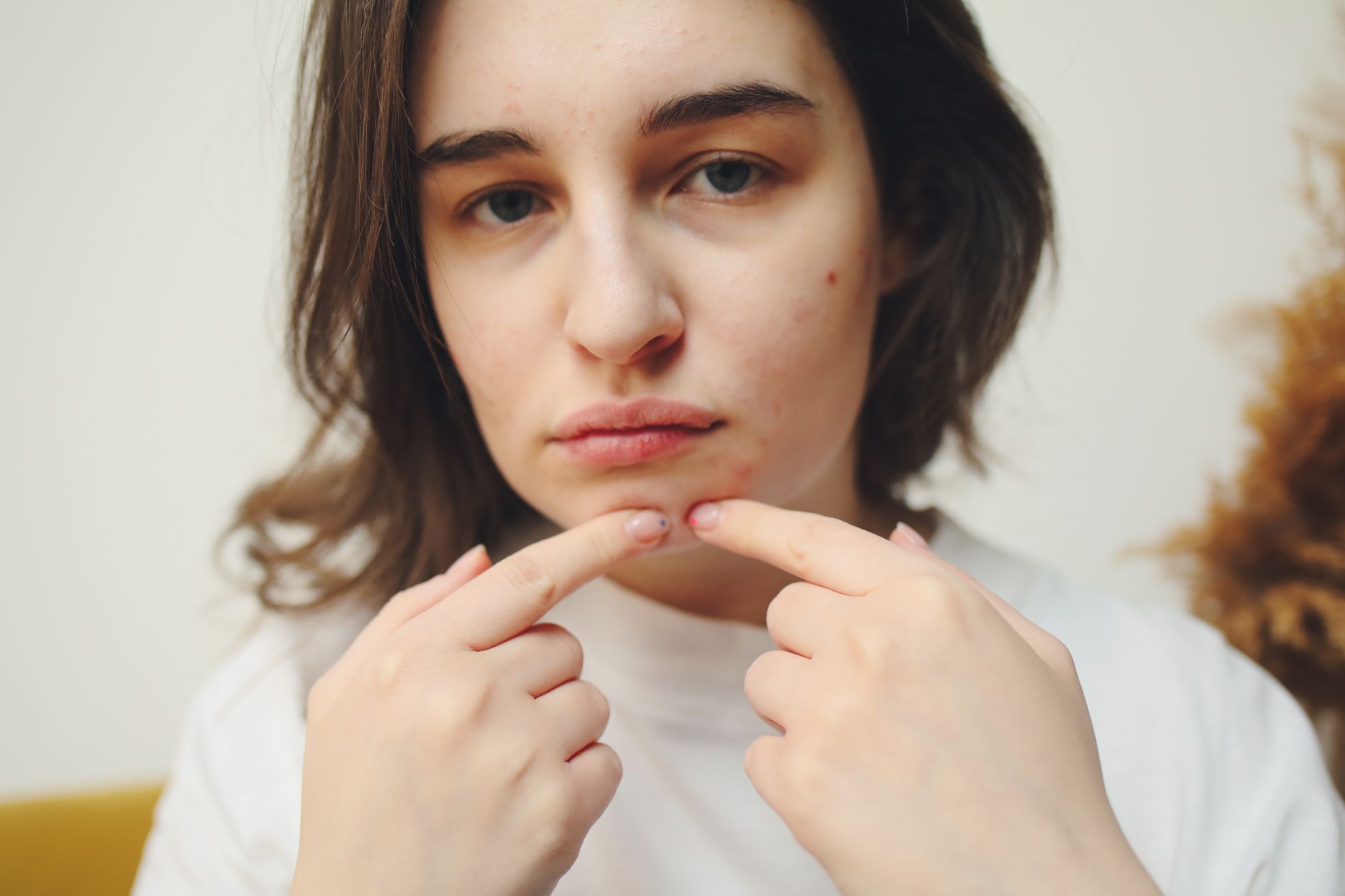
Chin acne in adult women usually means androgen activity is driving excess oil and clogged pores along the lower face. Androgens are hormones that stimulate oil glands and hair follicles, and hormonal acne often appears as deep, tender bumps on the chin and jawline.
Timing gives useful clues. Flares before a period, during menopause transition, or with other androgen signs can point to different causes. Chin location alone does not diagnose a hormone disorder.
Medical information disclaimer: This article is for general educational purposes only and does not provide medical advice, diagnosis, or treatment. Always consult a physician or other qualified health professional about symptoms, medications, tests, or treatment decisions.
Table of Contents
- Why the chin and jawline?
- How does the menstrual cycle trigger flares?
- When is it menopause or PCOS?
- What treats the hormonal cause?
Why the chin and jawline?
Cleveland Clinic notes that adult hormonal acne clusters on the lower face, especially the chin and jawline, as described in its adult acne guide. Rising or relatively dominant androgen activity stimulates oil glands and follicles there. Excess oil then mixes with dead skin and blocks pores.
That blockage often turns inflammatory. The result is deep, sore bumps rather than small surface whiteheads. Tenderness, slow healing, and monthly repeats strengthen the hormonal pattern.
How does the menstrual cycle trigger flares?
Cleveland Clinic gynecologist Niccia diTrapano explains that cycle-related hormone shifts raise sebum, which clogs pores and feeds inflammation, in its period acne explainer. Oil rises, dead skin sticks, and bacteria grow in the plugged follicle. Breakouts often appear in the week before bleeding.
Period-related breakouts favor the lower third of the face. The chin and jawline lead, but cheeks, mouth area, neck, shoulders, and back can flare too. A diary of sleep, stress, products, and cycle dates helps separate a cycle pattern from constant triggers.
When is it menopause or PCOS?
Falling estrogen at menopause can leave androgen activity relatively higher. Cleveland Clinic dermatology specialist Lauren Zamborsky links that shift to renewed oiliness and adult acne. New chin breakouts in the mid-40s and 50s fit that window.
Polycystic ovary syndrome involves high androgen levels that disrupt ovulation and drive acne plus excess facial or body hair. Severe, late-onset, or hard-to-treat acne can be a PCOS symptom. Harvard Health Publishing cautions that location alone does not prove PCOS, as explained in its PCOS and skin overview. Ask a clinician promptly when chin acne comes with these signs:.
- irregular or missed periods
- scalp thinning or hair loss
- coarse chin, upper-lip, chest, or belly hair growth
- dark, velvety skin patches
What treats the hormonal cause?
Daily care lowers clog risk, but it does not change androgen drive. The American Academy of Dermatology conditionally recommends combined oral contraceptives or spironolactone for hormonal acne in appropriate women, in its 2024 acne-management guideline summary.
These drugs target the oil signal rather than only the pimple. A dermatology visit can match treatment to history, blood pressure, clot risk, pregnancy plans, and past response. Bring a two-cycle breakout log to the visit to guide the choice.