
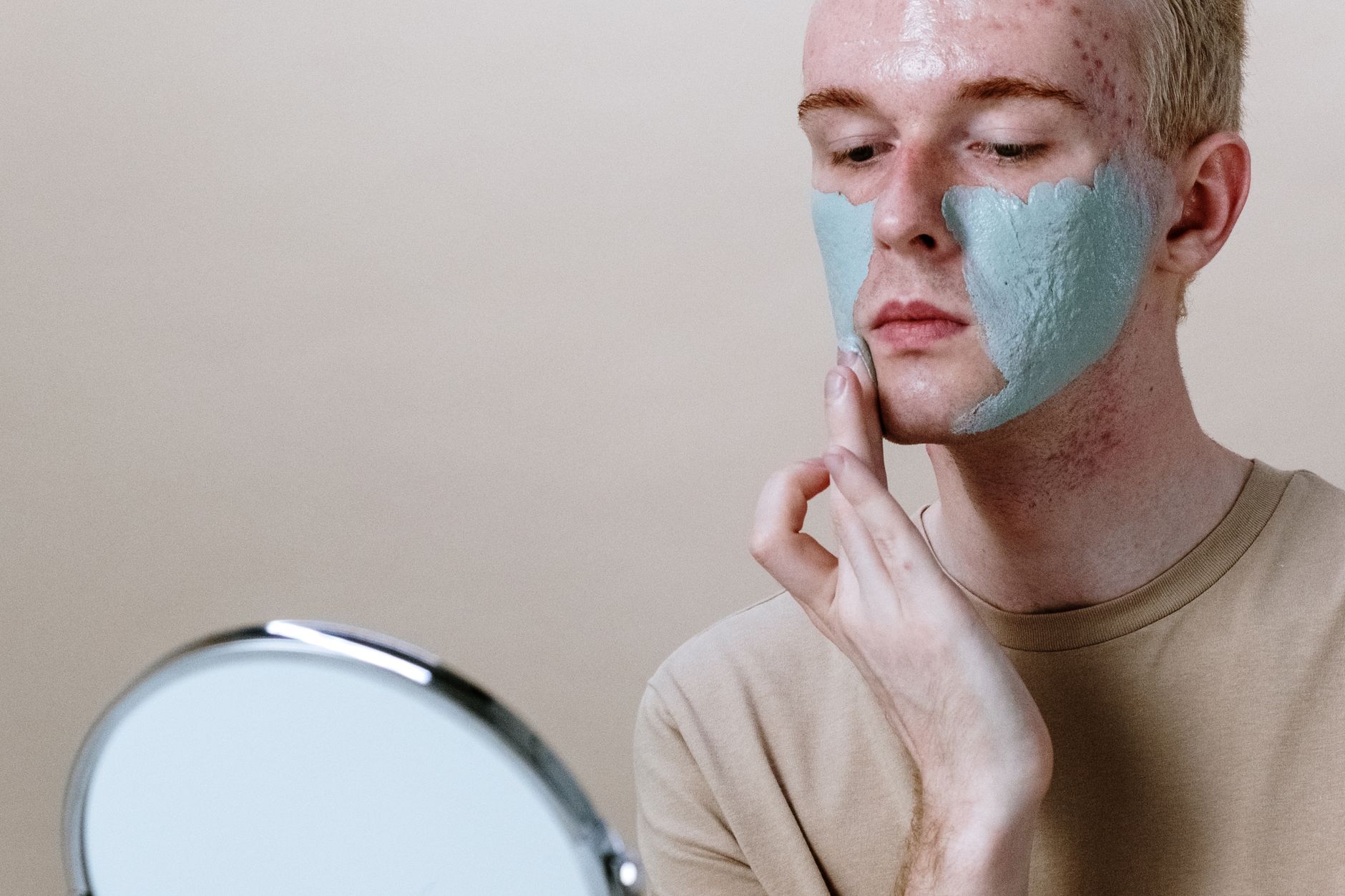
Prevent winter acne by keeping your acne treatment in place while adding barrier repair on top of it — a heavier ceramide cream, shorter warm showers, and noncomedogenic moisturizers. The counterintuitive part is that your skin is producing *less* oil in winter, not more, so dropping actives or scrubbing harder usually makes things worse rather than better.
That matters because the thing most people blame for winter breakouts — excess sebum — is at its seasonal low. What rises in winter is water loss through a weakened barrier, and a compromised barrier is less able to tolerate the benzoyl peroxide and retinoids that keep acne under control. The routine that works is one that protects the barrier and keeps treating the acne at the same time.
Medical information disclaimer: This article is for general educational purposes only and does not provide medical advice, diagnosis, or treatment. Always consult a physician or other qualified health professional about symptoms, medications, tests, or treatment decisions.
Table of Contents
- Winter skin is less oily and more fragile at once
- Why breakouts persist when oil output drops
- Build the routine — moisture on top, actives intact
- Washing habits that cost you barrier lipids
- When to adjust your medication instead
- Frequently Asked Questions
Winter skin is less oily and more fragile at once
Measurements in a self-controlled cohort of women in Kunming, China found that cheek sebum output and stratum-corneum hydration both peaked in summer and bottomed out in winter, while transepidermal water loss — the rate at which water evaporates from the skin surface — did the opposite, running highest in winter. The study, published in the Journal of Cosmetic Dermatology, reported all seasonal differences at P < .05. A second population shows the same shape.
A study of 100 Korean men comparing summer and winter found sebum content higher in summer than winter, with seasonal variation in water loss as well. So "oily skin in winter" is usually relative, not absolute: skin that reads as oily in January is producing less oil than the same skin did in July. The shine you notice sits on top of a drier, leakier surface.
Why breakouts persist when oil output drops
Sebum is not the whole story. In adolescent males tracked across seasons, sebum production was significantly greater in those with acne than without in every season (P < 0.019) — yet production was lowest in winter and highest in fall. Acne-prone skin oils more than non-acne skin year-round, but the season of worst breakouts is not the season of peak oil. The barrier side fills the gap.
Measured in 25 women, stratum-corneum ceramides, total fatty acids and cholesterol were all higher in summer than winter, with hydration significantly higher and water loss significantly lower in summer. Ceramides are the fatty lipids that hold skin cells together; that lipid depletion is what leaves winter skin irritable. Practically: a barrier short on lipids reacts badly to actives it handled fine in August. The flaking, stinging and redness that follow get mistaken for a treatment that stopped working.
Build the routine — moisture on top, actives intact
The American Academy of Dermatology is direct about the texture change: switch to heavier creams and ointments rather than lotions when it is cold, because creams and ointments protect better against moisture loss. You do not need to replace every product — the moisturizer is the one that has to change. For ingredients, the AAD names ceramide, dimethicone, glycerin, jojoba oil and lanolin as what to look for, which maps directly onto the lipids the seasonal studies found depleted. For acne-prone skin, Mayo Clinic advises washing twice daily and choosing nonoily (noncomedogenic) moisturizers, concealers and cosmetics, which help avoid clogged pores while easing dry, peeling skin.
Those two rules together are the winter routine: more occlusive, still noncomedogenic. Keep the treatment. The AAD's acne management guidelines give a strong recommendation to topical benzoyl peroxide to reduce acne-causing bacteria, and a 2025 American Family Physician guideline summary adds that pairing benzoyl peroxide with a topical antibiotic prevents antibiotic resistance. Winter is a reason to buffer actives, not to stop them.
Washing habits that cost you barrier lipids
Most winter barrier damage is self-inflicted at the sink. The AAD's dry-skin guidance is specific: Each item protects the same thing.
The AAD frames the goal as retaining the skin's natural oils — the oils already at their seasonal minimum. The habit that backfires most often is treating winter shine as dirt and adding a third wash or a scrub. Mayo Clinic's figure is twice daily; past that you are removing lipids the barrier has not replaced.
- Keep showers and baths to 5–10 minutes, warm rather than hot
- Pat skin dry instead of rubbing
- Apply moisturizer immediately after washing, while skin is still damp
- Choose fragrance-free products
- Avoid products containing alcohol
When to adjust your medication instead
If an acne medication is making winter dryness worse, the move is to change its frequency or switch to a gentler option rather than quit. Nebraska Medicine's dermatology guidance advises exactly that adjustment. Dropping to alternate nights, applying moisturizer before the active, or using a lower strength all keep treatment going while the barrier recovers. A caveat on all of this: the seasonal measurements above come from small, regional samples — women in Kunming, 100 Korean men, 25 women.
They establish that sebum falls and water loss rises in winter across those groups. They do not establish that any particular person's acne gets worse in winter, and some people's clears. Track your own skin before rebuilding a routine around the season. Signs the barrier, not the acne, is the current problem: stinging on application, tightness after washing, fine flaking around the nose and mouth, and redness that spreads beyond the lesions. Treat those with moisture and reduced active frequency first, then reassess the acne itself in two to three weeks.
Frequently Asked Questions
Should I stop using benzoyl peroxide in winter?
No. The AAD guidelines give topical benzoyl peroxide a strong recommendation for reducing acne-causing bacteria. If it irritates dry winter skin, reduce how often you apply it or switch to a gentler option rather than stopping.
Can a heavier cream clog my pores?
Heavier texture and comedogenicity are separate properties. Mayo Clinic's advice for acne-prone skin is to choose nonoily, noncomedogenic moisturizers — look for that label on a cream, not a lighter lotion.
Why does my skin look shiny in winter if sebum production is lower?
Shine is relative to the surrounding surface. Measured sebum output is at its seasonal low, but a dehydrated, flaking stratum corneum reflects light unevenly and makes the oil that is present more visible.