
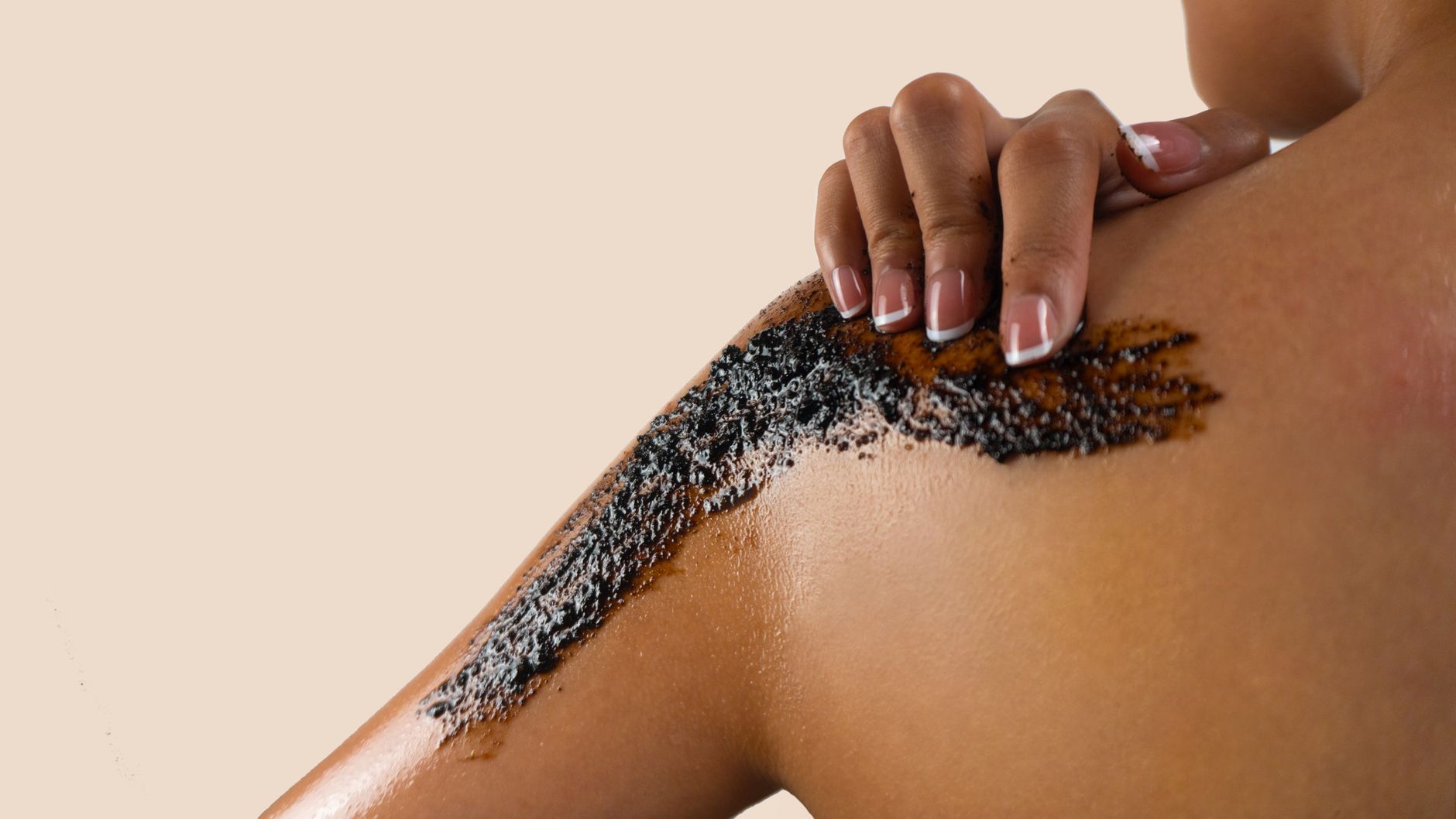
Yes. Over-exfoliating can trigger or worsen acne breakouts, and the American Academy of Dermatology says so directly: exfoliating while you use a prescription retinoid, retinol or benzoyl peroxide "may worsen dry skin or even cause acne breakouts," which is why the AAD's guide to exfoliating safely at home tells you to check what is already in your routine first.
Exfoliation means removing dead cells from the skin's surface — either mechanically, with a scrub, brush, sponge or cloth, or chemically, with acids like glycolic or salicylic. Both routes can go too far. The damage shows up two ways: friction-driven bumps that look like acne, and a weakened skin barrier that leaves genuine acne harder to treat.
Medical information disclaimer: This article is for general educational purposes only and does not provide medical advice, diagnosis, or treatment. Always consult a physician or other qualified health professional about symptoms, medications, tests, or treatment decisions.
Table of Contents
- Why scrubbing harder produces more spots, not fewer
- Acne skin has less barrier to spend
- Chemical exfoliants break people out too
- Signs you have gone too far, and what to do
- How much exfoliation is reasonable on acne-prone skin
- Frequently Asked Questions
Why scrubbing harder produces more spots, not fewer
Repeated mechanical friction causes acne mechanica — breakouts driven by rubbing rather than by clogged pores alone. Acne.org's review of physical irritation notes that washing harshly with washcloths, loofahs, exfoliating sponges or gloves can produce more body acne, and recommends washing with bare hands and a gentle cleanser instead. The pattern is documented in the medical literature too.
A 2015 review in the European Journal of Dermatology collected 135 published cases of mechanically induced follicular lesions, proposed the term "folliculitis mechanica," and advised treating such a flare with conventional acne medication. The practical consequence is that the instinct to attack a breakout with a scrub works against you. The bumps you are sanding are inflamed follicles, and the sanding adds a second cause on top of the first.
Acne skin has less barrier to spend
Acne-prone skin starts out leakier than clear skin. A 2024 cross-sectional study in Clinical, Cosmetic and Investigational Dermatology found a significantly impaired barrier in acne patients versus controls — transepidermal water loss of 13.16 against 10.63 g/m²/day (p<0.001), alongside higher sebum output (p=0.002). The same study found acne treatment pushed those barrier measures further in the wrong direction.
Transepidermal water loss is simply how fast water escapes through the skin; a higher number means a weaker seal. The chemistry behind it was mapped decades ago: Yamamoto, Takenouchi and Ito measured sebum, stratum corneum lipids and barrier function in 36 acne patients and 29 controls in 1995 and reported that lower ceramide levels went with diminished barrier function. So exfoliation is not a neutral act on acne skin. You are removing surface cells from a barrier that is already compromised, often while a retinoid or benzoyl peroxide is compromising it further.
Chemical exfoliants break people out too
Swapping a scrub for an acid does not remove the risk. In a trial of a 35% glycolic acid peel summarised in StatPearls' chapter on chemical peels, 4.5% of patients had an initial acne flare-up and 17.3% reported burning or stinging; repeated 70% glycolic peels left four patients with redness lasting several days. Those are clinical-strength procedures, not drugstore toners, but the direction holds: the stronger the acid and the more often it is applied, the more likely the irritation.
The AAD's rule of thumb is that the more aggressive the exfoliation, the less often you should do it, and that over-exfoliating leaves skin red and irritated. There is a second cost that is easy to miss. The AAD warns against strong chemical or mechanical exfoliation for people with darker skin tones, or anyone who develops dark spots after burns, bites or breakouts — so exfoliating an active breakout risks post-inflammatory hyperpigmentation instead of clearing it.
Signs you have gone too far, and what to do
Over-exfoliated skin is red and irritated, often tight, stinging on product application, and newly bumpy. Treat that as a signal to stop, not to switch products.
The repair step has trial evidence behind it. A 2023 double-blind trial by Draelos and colleagues in the Journal of Drugs in Dermatology found that adding a ceramide-containing cleanser and moisturizer to acne treatment significantly reduced dryness, redness and scaling, and resolved barrier damage faster. The fix for over-exfoliated acne skin is barrier repair, not a gentler exfoliant.
- Stop all exfoliation — scrubs, brushes, cloths and acids — rather than reducing frequency.
- Check your routine for a retinoid, retinol or benzoyl peroxide; per the AAD, these plus exfoliation is the combination that breaks skin out.
- Wash with bare hands and a gentle cleanser.
- Apply moisturizer immediately after cleansing, which the AAD advises in its "evaluate before you exfoliate" guidance.
- Never exfoliate skin with open cuts, wounds or sunburn.
How much exfoliation is reasonable on acne-prone skin
The AAD's position on exfoliation by skin type is that people with dry, sensitive or acne-prone skin should use only a washcloth and a mild chemical exfoliant, because scrubs, brushes and sponges may be too irritating for that skin type. That puts mechanical exfoliation largely off the table for the readers most tempted by it.
Frequency scales inversely with strength: a mild chemical exfoliant tolerates more regular use than an aggressive one, and anything that leaves the skin pink afterwards is being used too often. If a prescription retinoid is already doing the cell turnover, added exfoliation is usually redundant work on an already-thin barrier.
Frequently Asked Questions
Can exfoliating clear up a breakout faster?
No. The AAD warns that strong exfoliation on breakout-prone skin risks dark spots where the breakout was, and mechanical friction can add acne mechanica on top of the existing spots.
Is salicylic acid in a cleanser the same as exfoliating?
It is chemical exfoliation, so it counts toward your total. Stacking an acid cleanser with a separate acid treatment and a retinoid is where irritation usually starts.
How long does over-exfoliated skin take to settle?
The Draelos trial found ceramide-containing cleansers and moisturizers resolved barrier damage faster than acne treatment alone, which is the practical lever while the redness fades.