
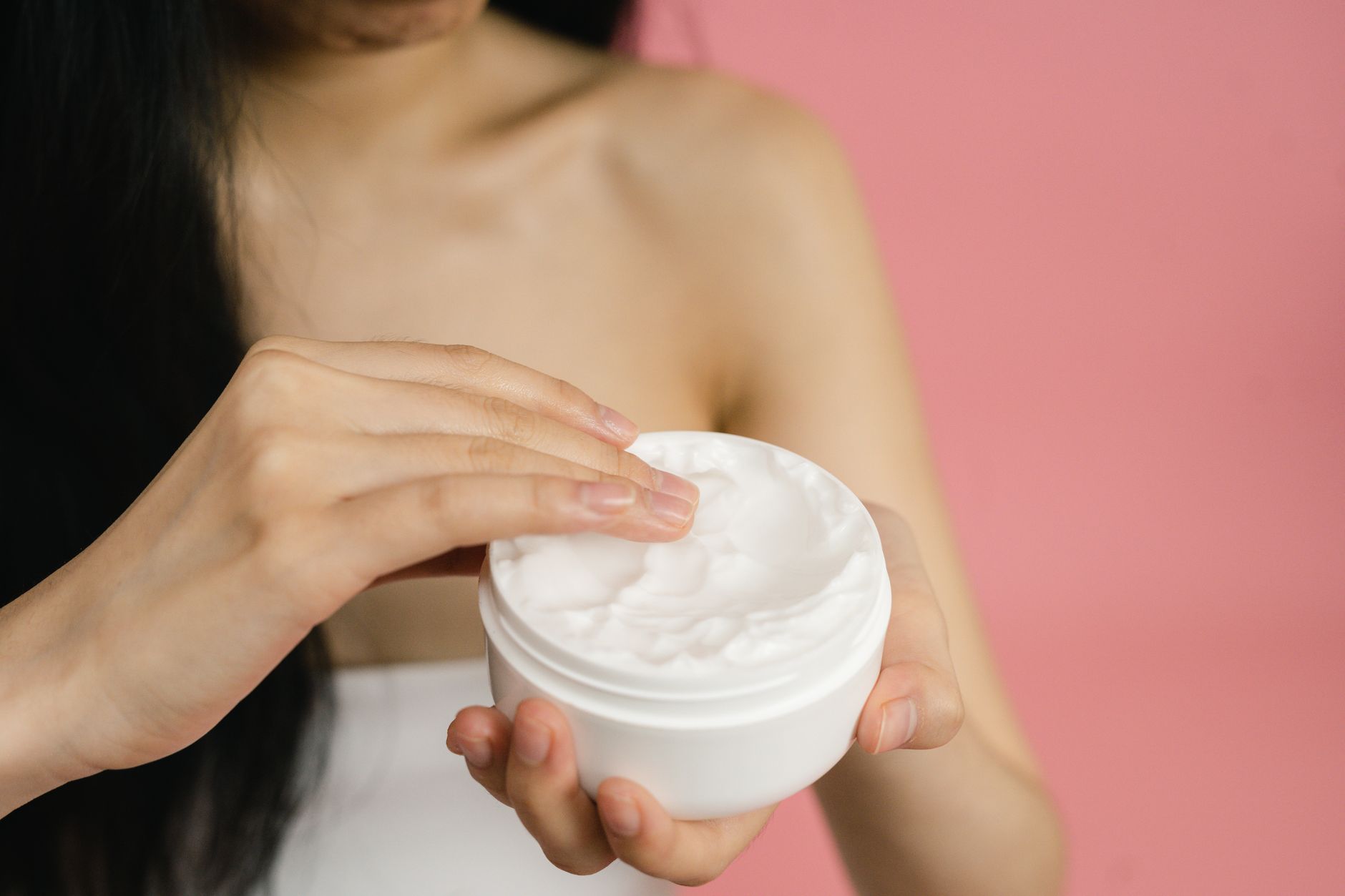
Yes, a moisturizer can clog pores and trigger breakouts, but it is one of the weaker cosmetic culprits and the risk rises with how much you use rather than with moisturizing itself. For most people with acne, the right moisturizer does more good than harm, because it keeps drying treatments tolerable. The useful question is not whether to moisturize but which product, how much, and layered under what. Comedogenic means pore-clogging: a comedogenic ingredient helps form the plug of oil and dead skin that becomes a whitehead, blackhead, or inflamed pimple.
Medical information disclaimer: This article is for general educational purposes only and does not provide medical advice, diagnosis, or treatment. Always consult a physician or other qualified health professional about symptoms, medications, tests, or treatment decisions.
Table of Contents
- What the dose evidence actually shows
- Why the "non-comedogenic" label is weaker than it looks
- Moisturizer as part of acne treatment, not against it
- How to tell your moisturizer is the problem
- Building a routine that moisturizes without clogging
- Frequently Asked Questions
What the dose evidence actually shows
A 2025 case-control study of 151 women in Guangzhou — 81 with acne, 70 without — found that moisturizer dose was independently associated with acne after the researchers adjusted for other factors, at an odds ratio of 1.03 per unit of exposure (95% CI 1.01–1.06, P=0.03). That is a small effect per unit. It matters because it accumulates: heavy, repeated application carries more risk than a thin daily layer. Context sharpens the picture.
In the same study, powders were the strongest cosmetic risk factor at an odds ratio of 3.47 (95% CI 1.58–7.59) after adjustment for age, occupation, parental history, and milk consumption. If you are auditing a routine for breakout triggers, loose and pressed powders deserve scrutiny before your moisturizer does. The evidence is also not one-directional. An earlier case-control study of post-adolescent acne found a dose-dependent *inverse* association between overall cosmetic use and acne, even though a few individual product types still carried odds ratios above 1. Two studies pointing opposite ways on total cosmetic use is a signal that the product category matters more than the habit.
Why the "non-comedogenic" label is weaker than it looks
The label is a manufacturer's claim, not a regulatory finding. The FDA states that cosmetic labeling needs no agency approval before marketing and that it keeps no list of approved or accepted claims. Nobody checks the word before it goes on the jar. Comparable marketing terms have even less behind them. The FDA notes that "hypoallergenic" has no governing regulation at all: a federal appeals court struck down its defining rule, manufacturers submit no substantiation, and the agency knows of no studies showing such products cause fewer reactions.
The underlying test method is shaky too. Comedogenicity screening leans on the rabbit-ear assay, and a 2017 review in the Journal of Cosmetic Science concluded it cannot mimic human comedogenesis and works only as a first screen. A 1996 reappraisal found neither the rabbit nor the human assay satisfactory, and the human method was never standardized. None of that makes the label useless. The American Academy of Dermatology still advises choosing products labeled "non-comedogenic" or "won't clog pores," since clogged pores lead to breakouts, and names cocoa butter — comedogenic index 2 to 5 — as one to avoid. Treat the label as a reasonable filter, not a guarantee.
Moisturizer as part of acne treatment, not against it
Skipping moisturizer to avoid clogged pores usually backfires, because the drugs that clear acne dry and irritate skin. A prospective multicenter observational study of 304 acne patients who added a standardized cleanser-and-moisturizer routine for 12 weeks reported improved skin sensitivity, with the largest gains in the group also using a retinoid. Adherence is the real stake.
An 11-member expert consensus panel concluded that dryness and irritation are a leading reason patients abandon acne treatment, and that ceramide-containing moisturizers may improve adherence. The panel flagged its own limit: most of the studies it reviewed tested acne drugs, not moisturizers as an add-on. So the trade is lopsided. A moisturizer carries a small, dose-related risk of contributing to breakouts; going without one risks quitting the treatment that would have cleared them.
How to tell your moisturizer is the problem
Breakouts have many causes, and attributing them to the newest product is a common error. A few patterns make moisturizer a plausible suspect: Change one variable at a time. If you swap your moisturizer, cleanser, and sunscreen in the same week, the result tells you nothing about any of them.
- New or worsening comedones — whiteheads and blackheads rather than deep cysts — appearing within four to six weeks of starting a product.
- Breakouts clustered exactly where you apply most heavily, such as the cheeks or jawline, and absent where you apply little.
- Flares that track with switching to a thicker balm, or with doubling up on layers in cold weather.
- Clearing within a month or two of dropping that one product while everything else stays the same.
Building a routine that moisturizes without clogging
Start with the amount, since that is what the 2025 study tied to risk. Use a pea-sized to dime-sized layer, once or twice daily, instead of reapplying through the day. Then simplify what sits on the skin.
AAD warns that many skin and hair care products contain oil or other ingredients that can cause breakouts, and recommends gentle, alcohol-free products while avoiding drying toners and harsh exfoliants — which push you toward needing more moisturizer, not less. Hair conditioners and styling products that run onto the forehead and back count here. Practical adjustments, in rough order of payoff: If breakouts persist after a month on a single light moisturizer and no other new products, the moisturizer is probably not the driver, and the acne itself needs treatment rather than subtraction.
- Drop heavy occlusives like cocoa butter from the face; keep them for dry hands and body if you want them.
- Prefer a light lotion or gel-cream over a balm for oily or acne-prone skin.
- Look for ceramides if a retinoid or benzoyl peroxide is leaving you tight and flaky.
- Audit powders and primers before blaming your moisturizer.
- Give any change six to eight weeks before judging it, since existing comedones take that long to surface and resolve.
Frequently Asked Questions
Does "non-comedogenic" mean a product was tested on human skin?
Not necessarily. Screening typically relies on the rabbit-ear assay, which the Journal of Cosmetic Science review called only a first screen, and the human testing method was never standardized.
Is moisturizer or makeup more likely to break me out?
In the 2025 Guangzhou study, powders carried an odds ratio of 3.47 versus 1.03 per unit for moisturizer, so powders were the far stronger risk factor.
Should I stop moisturizing while using a retinoid?
No. The 304-patient observational study found skin sensitivity improved most in the retinoid-treated group once a cleanser-and-moisturizer routine was added.