
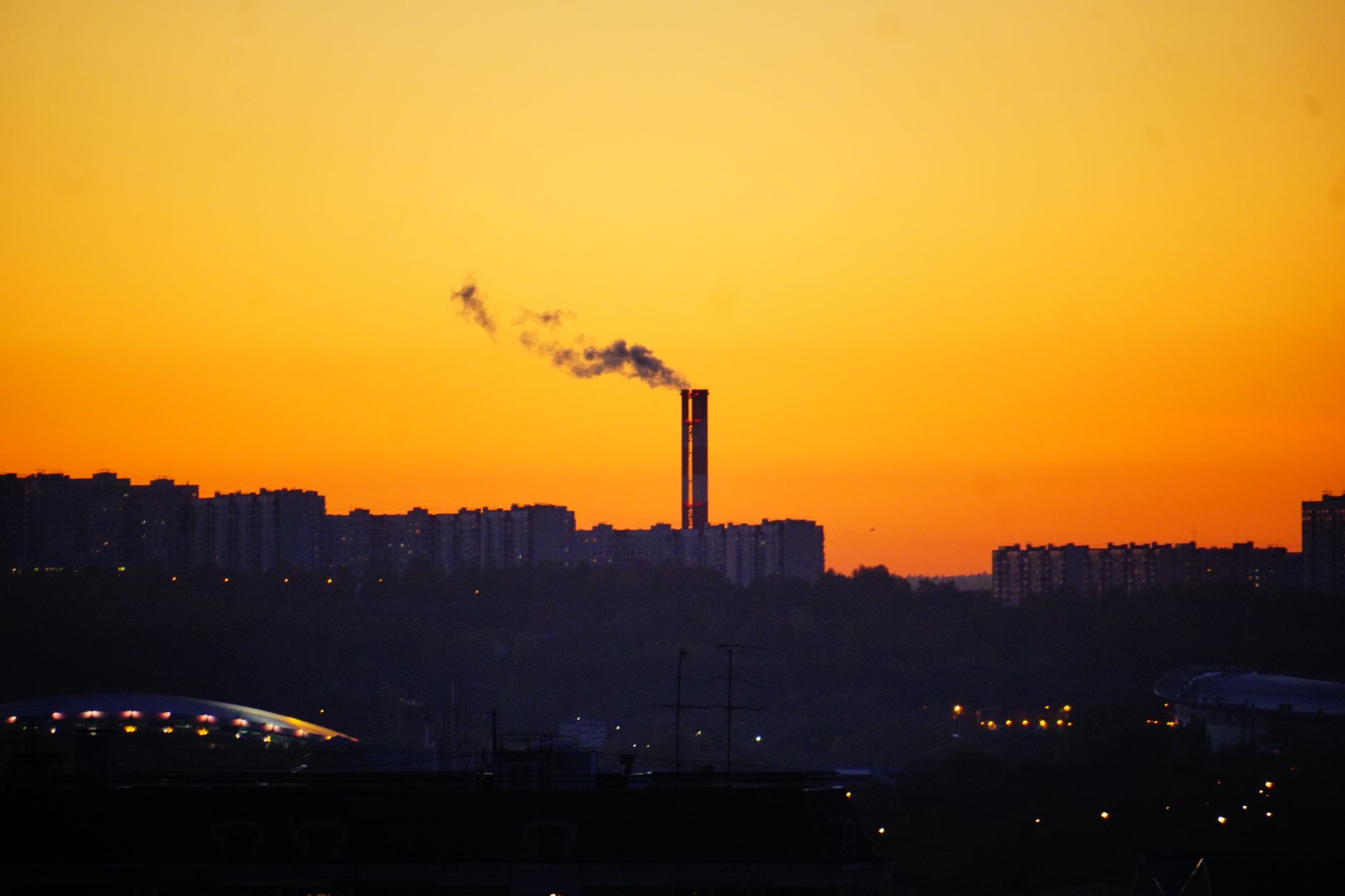
Yes — air pollution is linked to more acne, and winter is when many people breathe the most of it. Time-series studies in Chinese cities have repeatedly tied short-term rises in particulate matter and traffic gases to measurable jumps in acne clinic visits within the following week, and wintertime air in valleys and wood-burning neighborhoods carries a heavier particle load than summer air does.
What the evidence does not show is a clean, isolated "winter pollution acne" effect. No published study has separated winter-only particle exposure from everything else that changes in cold months — indoor heating, drier air, lower humidity, different skincare habits. The honest reading is that pollution is an aggravating factor with real biological support, and winter raises the dose for people who live where cold air traps it.
Medical information disclaimer: This article is for general educational purposes only and does not provide medical advice, diagnosis, or treatment. Always consult a physician or other qualified health professional about symptoms, medications, tests, or treatment decisions.
Table of Contents
- What the studies actually measured
- Why pollution reaches a pore at all
- What winter changes about the exposure
- Where the evidence stops
- What to do on a bad-air week
- Frequently Asked Questions
What the studies actually measured
The strongest data come from hospital visit counts, not from before-and-after photos. A time-series study of 120,842 acne vulgaris outpatient visits at three Chongqing hospitals between December 2013 and December 2019 found that each 10 μg/m³ rise in PM2.5 — fine particles small enough to settle on and penetrate skin — was associated with a 1.71% increase in visits over the following week. Writing in *Environmental Science and Pollution Research*, Li and colleagues reported the effect was strongest in patients aged 25 and older. A separate analysis of 27,190 post-adolescent acne visits in Xi'an between 2010 and 2013 found similar patterns across several pollutants.
Per 10 μg/m³ over lag days 0–7, visits rose roughly 0.84% for PM10, 1.61% for sulfur dioxide and 3.50% for nitrogen dioxide, according to the study in *Clinical, Cosmetic and Investigational Dermatology*. The PM10 effect was stronger in women than in men. Those percentages are small per unit, but pollution does not move in single units. A city going from a clear day to a heavy inversion day can shift PM2.5 by 30 to 50 μg/m³ or more, which is where the arithmetic starts to matter for a dermatology waiting room.
Why pollution reaches a pore at all
The leading mechanism is oxidation of the oil already on your face. Sebum contains squalene, the lipid most prone to oxidation, and reactive oxygen species generated by pollutants convert it into squalene peroxides. A review by Pham and colleagues in the *International Journal of Cosmetic Science* describes these peroxides as comedogenic — they encourage the plugged follicle that becomes a blackhead or a pimple — while levels of surface linoleic acid fall, which weakens the skin barrier.
This is not purely theoretical. Clinical measurements in Shanghai and Mexico City found pollution-associated changes in residents' sebum composition, reduced vitamin E and squalene, and increased lipid peroxidation on the skin surface, as summarized in a 2023 review of air pollutants and skin function. So the chain is plausible end to end: particles and gases land on oily skin, the oil oxidizes, oxidized oil is more comedogenic, and the barrier that would normally limit irritation is doing worse. That is a different pathway than hormonal acne, which is why pollution is best understood as something that worsens existing acne rather than the thing that causes it.
What winter changes about the exposure
Cold weather does not create pollution, but it concentrates it. Temperature inversions — a layer of warm air sitting on top of cold air, which stops the cold air from rising — form repeatedly through winter in mountain valleys and cap the pollutants underneath. Research by Ward and Lange in *Environmental Pollution* found that in northern Rocky Mountain communities these inversions trapped pollutants for extended periods, with wood smoke supplying 56–77% of measured wintertime PM2.5. Wood burning is a national winter story, not just a valley one.
A 2026 Northwestern University analysis of EPA's National Emissions Inventory estimated that residential wood burning accounts for about 22% of wintertime PM2.5 nationally, against roughly 6% of fine-particle emissions year-round, according to Northwestern Now. Your skin is also in a different state in winter. In adolescent males studied in New Jersey, transepidermal water loss — moisture escaping through the skin — was higher in those with acne than those without in every season, while skin moisture was lower in winter than in summer or fall and sebum output was at its lowest, per the *Journal of Drugs in Dermatology* seasonal analysis. Less oil but a leakier barrier is a combination that tolerates oxidative stress poorly.
Where the evidence stops
Two limits matter before anyone reorganizes a routine around this. Clinic-visit studies also measure when people seek care, not when skin worsens. Holidays, school breaks and cold-weather appointment patterns all affect that count, and the researchers adjust for what they can rather than eliminating it.
- **The seasonal direction is contested.** A cross-sectional study of 3,120 patients at Razi Hospital found acne peaked in winter. A Delhi study of 171 patients found the opposite: summer was the main aggravating season, and only 11 patients — 6.42% — reported winter aggravation. Both findings are published, and the Razi data and the Delhi data describe very different climates.
- **No study isolates winter PM2.5.** A Beijing analysis found no significant single-pollutant association at all, and a 2022 *Siriraj Medical Journal* systematic review called the Chongqing PM2.5 and Xi'an results inconclusive. A 2025 PRISMA-registered systematic review of PubMed studies from 2010–2025 still concluded the overall association is positive, citing a Chinese time-series of 71,625 visits in which a 10 μg/m³ NO2 rise tracked a 2.13% increase in acne visits — published by Okeah, Afzal and Ali in *Skin Health and Disease*.
What to do on a bad-air week
The practical moves follow the mechanism — remove deposited particles, limit oxidation, and protect the barrier that winter is already thinning.
- Check a local air-quality index before deciding whether a day needs extra attention, rather than treating all winter days alike.
- Cleanse in the evening after extended time outdoors on high-particle days. Oxidized sebum sitting overnight is the specific thing the lipid research points at.
- Do not escalate to harsher scrubs or more frequent exfoliation. Barrier function is already measurably worse in winter, and stripping it further trades one problem for another.
- Keep using whatever prescription or over-the-counter acne treatment is working. Pollution is an aggravating input, not a reason to change an effective regimen.
- Reduce indoor wood-smoke exposure where you control it — a well-maintained stove, dry seasoned wood, or a different heat source on inversion days.
Frequently Asked Questions
Is indoor air a factor, or only outdoor pollution?
Residential wood burning contributes about 22% of wintertime PM2.5 nationally per the Northwestern analysis, and in Rocky Mountain valleys wood smoke supplied 56–77% of winter PM2.5. Combustion sources you live with are part of the exposure, not separate from it.
Does an air purifier help my skin?
No acne study has tested that. The research measures outdoor pollutant levels against clinic visits, so purifiers are a reasonable inference from the mechanism rather than a demonstrated acne treatment.
Who appears most affected?
The Chongqing study found the PM2.5 association strongest in patients aged 25 and older, and the Xi'an study found the PM10 effect stronger in women than men. Both looked at adult and post-adolescent acne populations.