
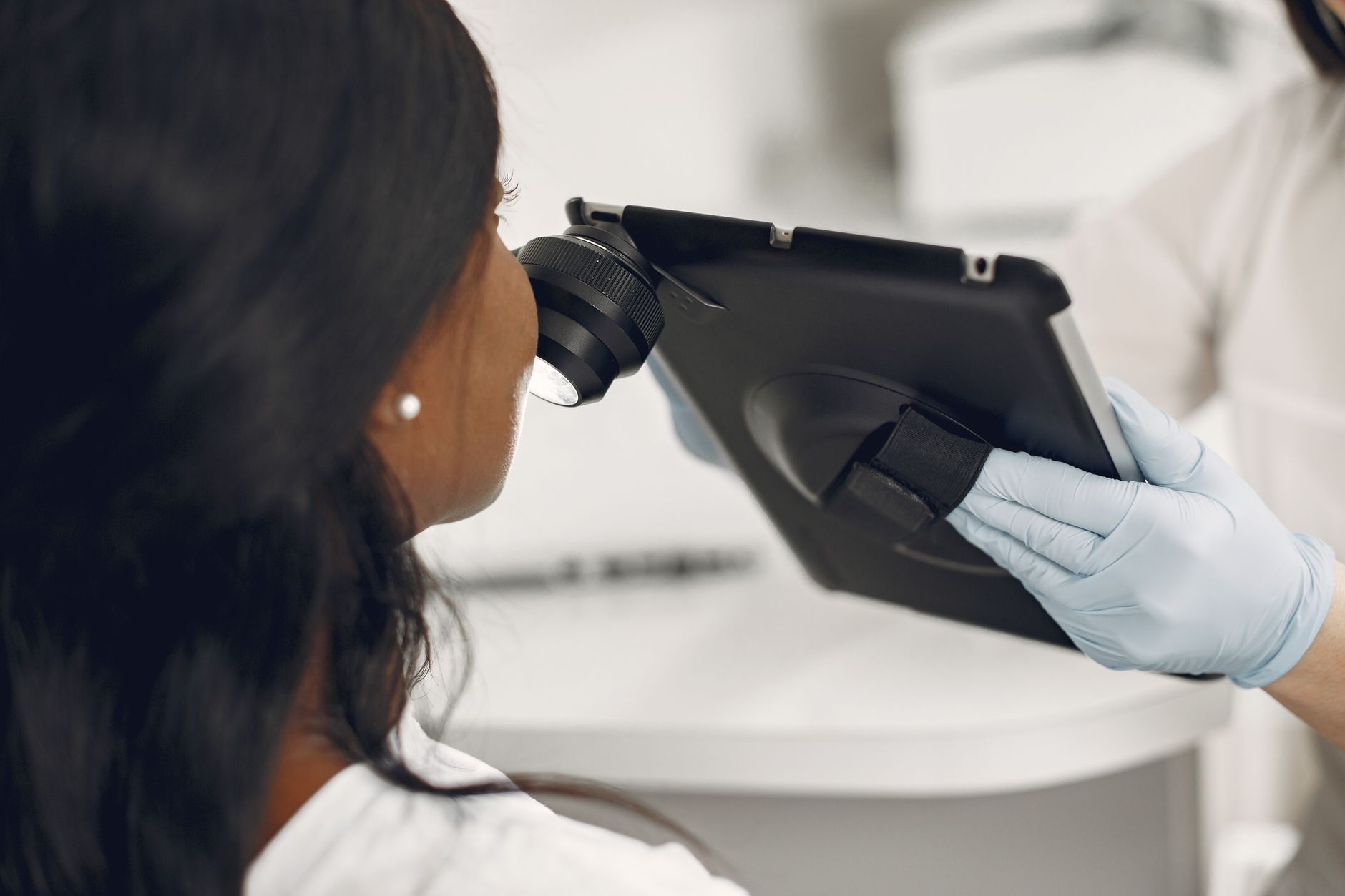
A dermatologist checks your lesion types, acne extent, scarring risk, past treatments, possible triggers, and daily-life impact before prescribing acne treatment. The visit pairs a close skin exam with medical, product, and menstrual history plus safety checks for stronger drugs. Acne vulgaris is the common form with clogged pores and inflamed spots. Comedones are blackheads and whiteheads, while papules, pustules, nodules, and cysts are red or painful bumps of rising severity.
Medical information disclaimer: This article is for general educational purposes only and does not provide medical advice, diagnosis, or treatment. Always consult a physician or other qualified health professional about symptoms, medications, tests, or treatment decisions.
Table of Contents
- What does the skin exam measure?
- What history will you be asked about?
- Could it be something other than acne?
- How do scarring and daily life affect the choice?
- What extra checks come with isotretinoin?
What does the skin exam measure?
The clinician maps which lesions you have, how many, and where they sit. Face, chest, and back are checked, along with oiliness and overall severity.
That pattern helps match treatment to disease. The exam also looks for damage and danger signs. According to the NHS acne guidance, scars, lasting colour or texture change, pain, hot swollen skin, and deep painful lumps matter because they raise scarring or infection risk.
What history will you be asked about?
Expect questions about prior over-the-counter and prescription treatments, response, and how steadily you used them. Bring your skin-care, cosmetic, and hair products, plus family history of acne. Those details reveal irritation, pore clogging, or poor adherence.
The clinician also reviews drugs that can cause acne and menstrual history. The Merck Manual points to signs of excess male-type hormones, such as facial hair growth, irregular periods, or related syndromes, in its acne vulgaris overview. A list of medicines, supplements, and cycle changes saves time.
Could it be something other than acne?
Diagnosis rests on history and physical exam, not a single lab test. The clinician explicitly rules out mimics before prescribing. Common look-alikes are rosacea without comedones, folliculitis, perioral dermatitis, and drug-induced acne.
Rosacea is a useful contrast. It can cause red bumps but lacks blackheads and whiteheads. Naming the exact mimic guides the right therapy and avoids wasted acne drugs.
How do scarring and daily life affect the choice?
Painful, deep, or already scarring acne pushes treatment toward stronger options. Mood and daily function count too, because acne can bring anxiety, depression, and low self-esteem.
High burden can raise urgency and referral priority. The 2024 American Academy of Dermatology guideline reserves isotretinoin for severe acne, failed standard oral or topical therapy, scarring, or psychosocial burden. Under that AAD severe-acne guidance, scarring and psychosocial burden count as severe disease.
What extra checks come with isotretinoin?
Isotretinoin carries strict safety steps because of pregnancy risk. Pregnancy prevention is mandatory, with consideration of liver-function and lipid monitoring but not routine blood-count testing in healthy patients.
Under FDA iPLEDGE, prescribers and pharmacies must be enrolled. Bring photo ID, medicine and product lists, period dates, and contraception plans to that visit.
- enrolment of prescriber and pharmacy in iPLEDGE
- agreement to contraception or abstinence for patients who can become pregnant
- negative confirmatory lab pregnancy test before starting treatment
- repeat negative lab pregnancy test before each dispense, described in the FDA iPLEDGE safety program