
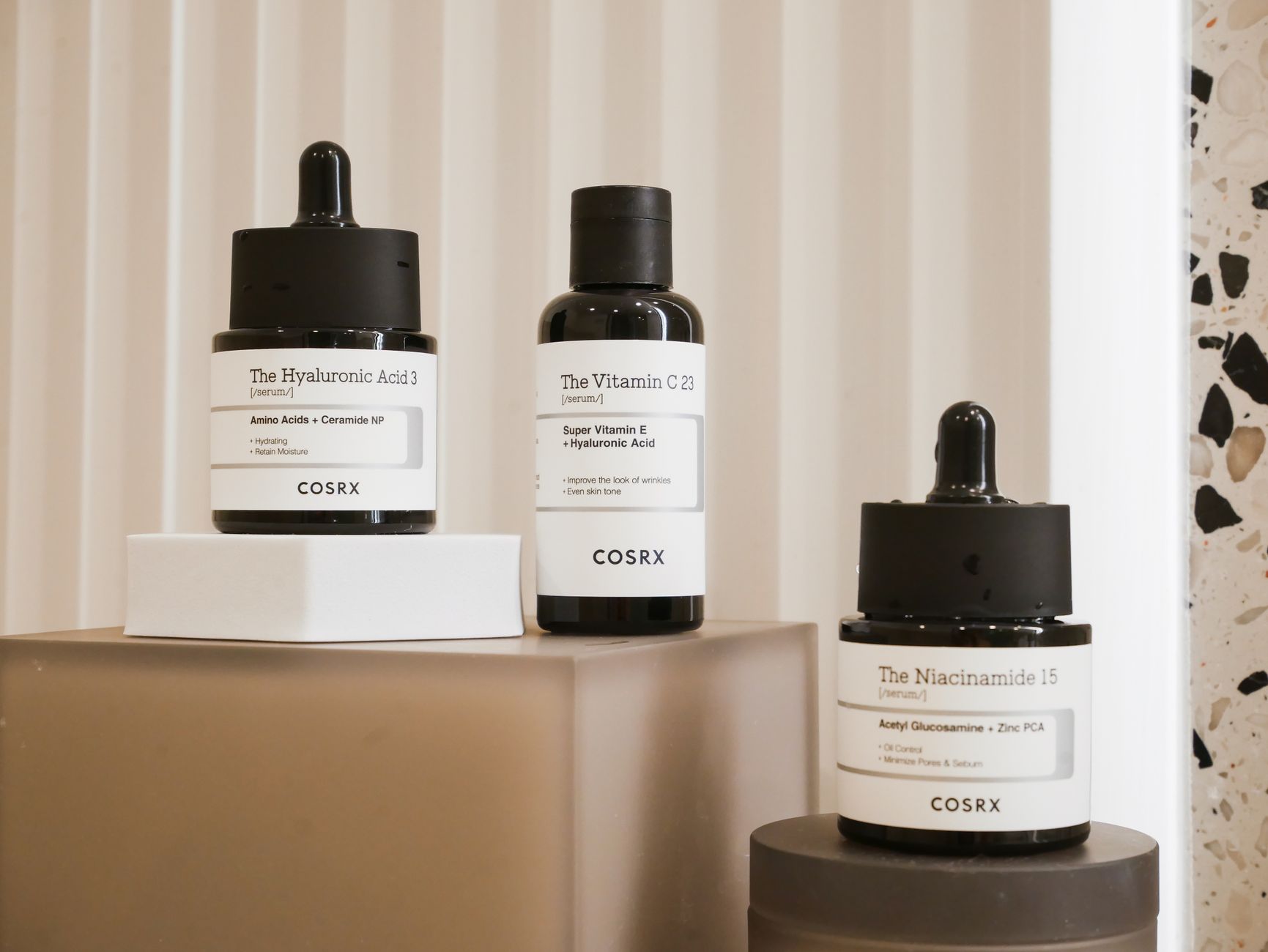
Yes, niacinamide serums can fade flat red marks left by chest acne. They work on lingering discoloration, not on pits or raised scars. Niacinamide is a form of vitamin B3 used in water-based serums and moisturizers. Cleveland Clinic explains that it eases acne-linked inflammation while supporting the skin barrier, as detailed in Cleveland Clinic's niacinamide guide.
Medical information disclaimer: This article is for general educational purposes only and does not provide medical advice, diagnosis, or treatment. Always consult a physician or other qualified health professional about symptoms, medications, tests, or treatment decisions.
Table of Contents
- Which chest marks will fade?
- What does the evidence show?
- How should you use it on your chest?
- When is niacinamide not enough?
Which chest marks will fade?
Chest redness after acne is often post-inflammatory erythema. These are flat pink or red spots where pimples have healed. Brown spots can sit beside them, especially after sun exposure. Niacinamide suits both types of flat discoloration.
It calms visible redness while helping tone look more even. True dents or thick raised scars are different tissue changes. Chest skin is prone to friction, sweat, and sun. Those factors can keep flat marks looking redder for longer. A calm, barrier-supporting routine helps them fade faster.
What does the evidence show?
Bissett and colleagues tested 5% niacinamide twice daily in a 12-week split-face trial in 50 women. Red blotchiness and dark spots improved significantly versus vehicle alone, as shown in the split-face trial report. The benefit was not only less redness.
Tone, sallowness, texture, and fine lines also improved. That pattern fits chest marks, where redness and uneven tone often overlap. Results take weeks, not days. Expect gradual fading over 8 to 12 weeks with steady use.
How should you use it on your chest?
Strength matters less than consistency. Dr. Rachel Ho's dermatology guide describes 5% as the benchmark for spots and redness, explained in Dr. Rachel Ho's niacinamide guide.
Higher percentages are not automatically stronger for sensitive chest skin. A 10% serum may sting or dry some users. Start with 2 to 5% once daily, then move to twice daily if tolerated. Use this simple routine: Stop and reassess if you get lasting burning, itching, or rash. Do not apply to open sores or freshly picked spots.
- Cleanse gently, then pat the chest dry.
- Apply a thin niacinamide layer to dry, unbroken skin.
- Moisturize, then use broad-spectrum sunscreen on exposed chest during the day.
When is niacinamide not enough?
Niacinamide cannot resurface pitted scars or flatten thick raised scars. Those raised hypertrophic and keloid scars occur often on the chest, back, and jawline. Scar-type guidance makes that limit clear in the Art of Dermatology scar guide. See a dermatologist for dents, firm bumps, spreading growth, pain, or itch.
In-office care may include pressure, injections, laser, or surgery referral. Early review matters for keloid-prone skin. For flat marks alone, keep sun protection strict. A hat, shade, and sunscreen help prevent red-brown marks from darkening again.