
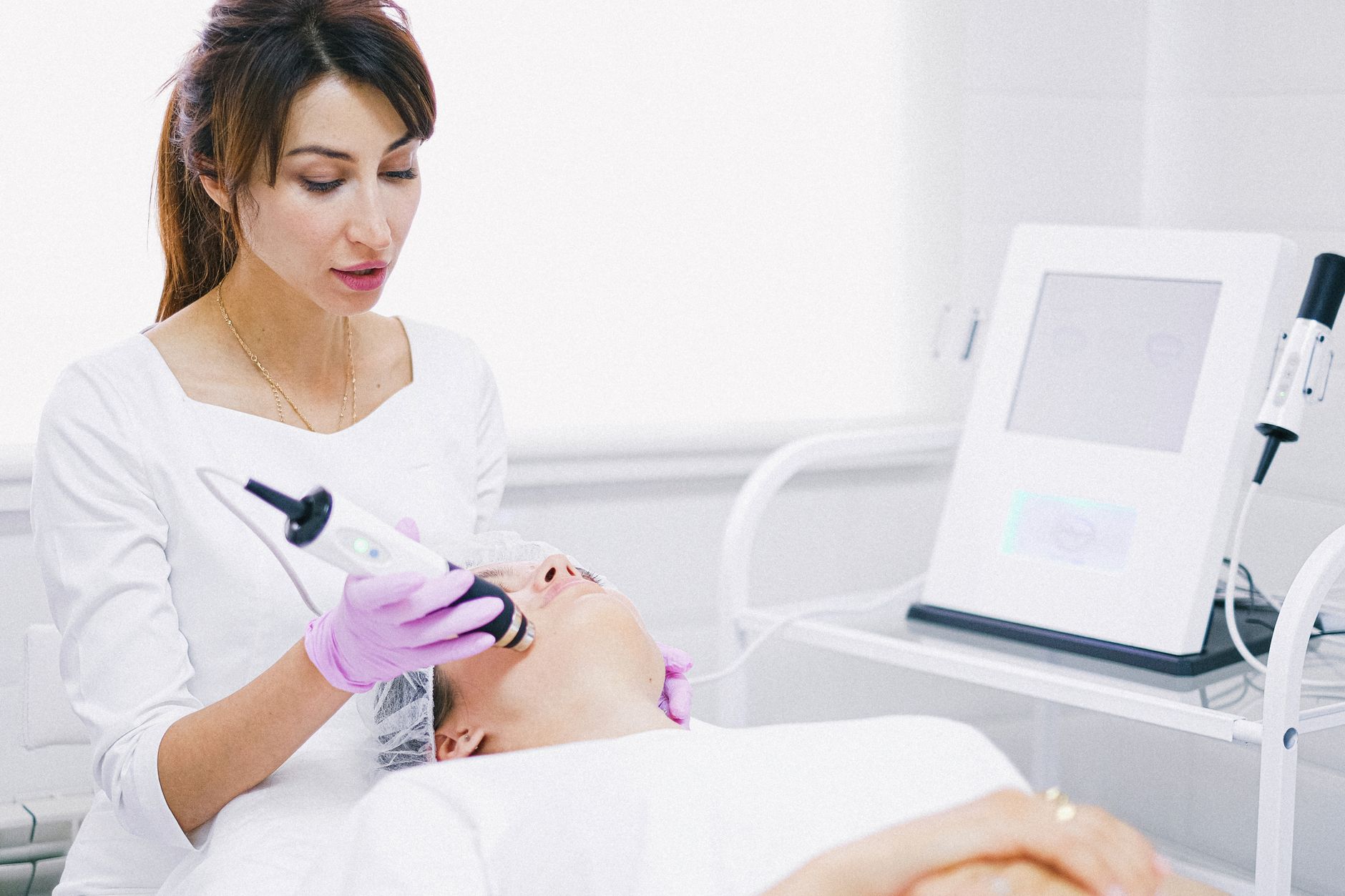
Yes, early clinical reports show 308-nanometer excimer light can reduce inflammatory acne lesions. Excimer laser phototherapy means focused ultraviolet-B energy aimed directly at breakouts rather than whole-face or whole-body light. That focused approach may appeal when standard drugs fail or are off-limits, including during pregnancy. Evidence remains early and small, and acne is not a routine indication.
Medical information disclaimer: This article is for general educational purposes only and does not provide medical advice, diagnosis, or treatment. Always consult a physician or other qualified health professional about symptoms, medications, tests, or treatment decisions.
Table of Contents
- How does excimer light target breakouts?
- What results have studies reported?
- Is it an approved acne treatment?
- How should you discuss cost and next steps?
How does excimer light target breakouts?
The 308-nm device delivers ultraviolet-B energy directly to acne lesions. This limits exposure of surrounding healthy skin compared with whole-body narrowband UVB, according to the Wiley pilot study described in the 2026 pilot study. The proposed anti-acne effect combines several actions at the treated spot.
A dermatology review describes T-lymphocyte death, reduced keratinocyte activity from 308-nm-induced DNA damage, and high local-dose reduction of Cutibacterium acnes colonization and biofilm in the dermatology review. In practical terms, the beam treats the pimple and a narrow margin. It does not treat the whole face at once. That makes it a spot treatment, not a full-face clearing method.
What results have studies reported?
A 2026 prospective pilot study tested 308-nm excimer light for inflammatory acne in pregnancy. It reported clinically meaningful reductions in inflammatory lesions with reassuring safety signals and obstetric outcomes. An earlier open-label study by Gold and colleagues treated 20 patients with therapy-resistant inflammatory acne.
Treatment was well tolerated, with only transient redness and mild scaling and no serious adverse events. These are small, early studies without large control groups. A planned Cairo University split-face trial aims to compare excimer light with blue light in about 24 patients, but it was listed as not yet recruiting.
Is it an approved acne treatment?
No. FDA 510(k) clearances for 308-nm excimer systems list psoriasis and vitiligo, and in some models atopic dermatitis and leukoderma, according to the FDA clearance summaries. The summaries do not list acne as an indicated use.
Dermatology guidance also stays cautious. The American Academy of Dermatology's 2024 acne guidance finds only limited evidence to recommend light and laser devices for routine acne and calls for large prospective randomized trials. That means dermatologists may discuss it as an off-label option in selected cases. It is not a first-line acne therapy.
How should you discuss cost and next steps?
Insurance often does not cover light treatment for acne. Aetna classifies laser, LED, intense pulsed light, photodynamic and photopneumatic therapies as experimental and unproven for acne vulgaris, which affects coverage, as stated in Aetna's policy bulletin.
Ask your dermatologist direct questions before booking. Useful checks include: Bring your full acne history, current products, and pregnancy status. Ask what standard care you will continue alongside any light sessions.
- Is my acne mainly inflammatory and treatment-resistant?
- Am I pregnant, planning pregnancy, or unable to use standard acne drugs?
- What spot-treatment goal makes sense for me?
- What cash price, visit count, and skin-reaction plan apply?