
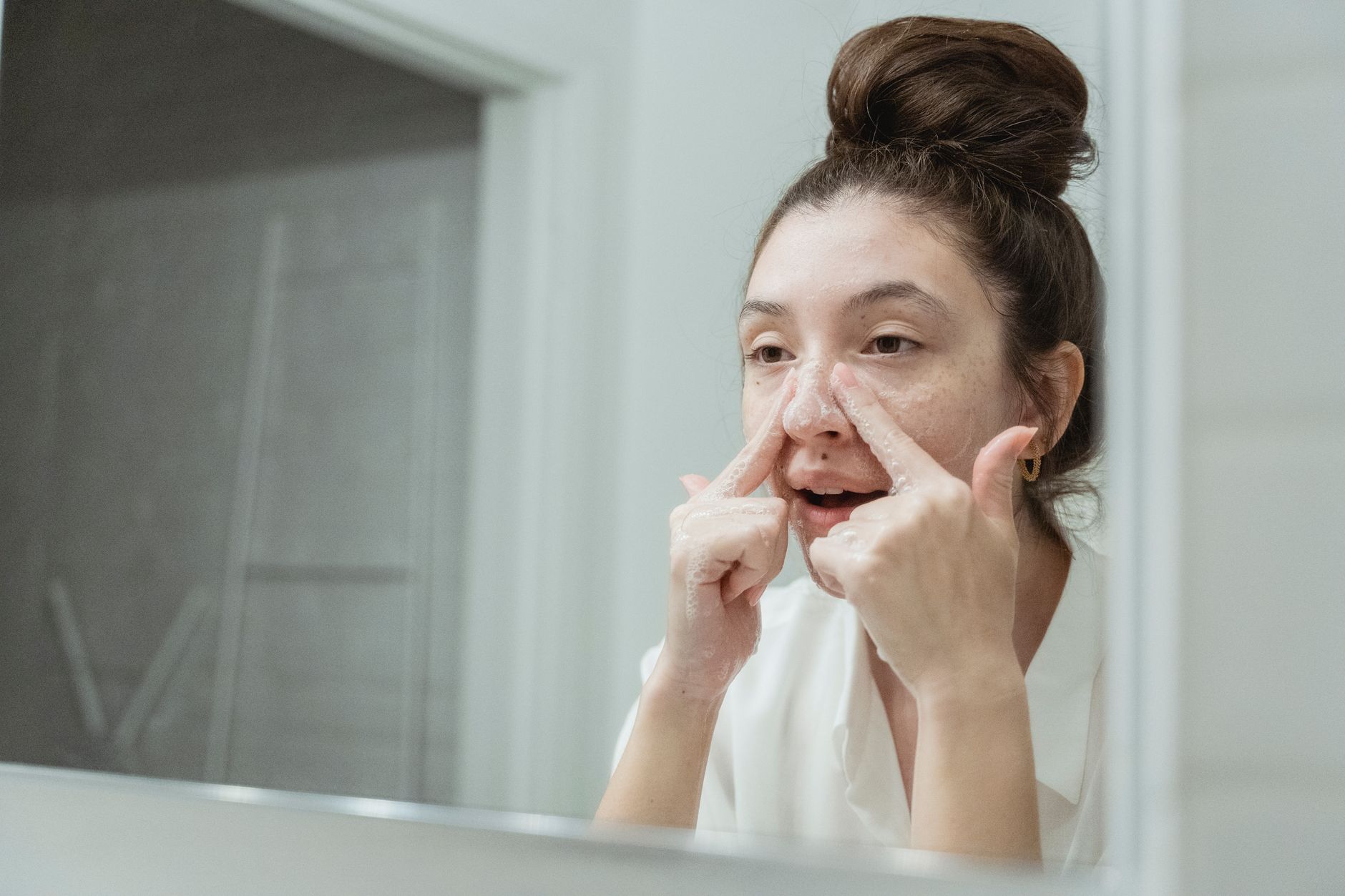
An acne cleanser is a facial or body wash that contains an acne drug such as salicylic acid or benzoyl peroxide. It can reduce breakouts and redness with daily washing, but it can also irritate skin and rarely trigger a severe allergic reaction.
Salicylic acid and benzoyl peroxide washes act during brief skin contact, then rinse off. Guidelines place stronger support behind benzoyl peroxide than salicylic acid for acne care. A clinician can match the active ingredient, strength, and routine to your breakout pattern and sensitivity.
Medical information disclaimer: This article is for general educational purposes only and does not provide medical advice, diagnosis, or treatment. Always consult a physician or other qualified health professional about symptoms, medications, tests, or treatment decisions.
Table of Contents
- How do active cleansers work?
- What benefit can you expect?
- What are the main risks?
- What should you ask your clinician?
How do active cleansers work?
The U.S. National Library of Medicine DailyMed label describes salicylic acid 2% wash as an over-the-counter acne treatment. Wet skin, massage the wash for 1-2 minutes, then rinse. Use less often if dryness or peeling occurs.
See the current DailyMed drug label for directions. The DailyMed label for SLMD BP Body Wash describes benzoyl peroxide 5% for acne, including body acne. It kills acne-associated bacteria and reduces redness and inflammation. Washing puts the drug on the chest, back, and shoulders where creams feel heavy.
What benefit can you expect?
Acne guidelines reported by MDedge in 2024 rate evidence as strong for topical benzoyl peroxide, retinoids, antibiotics and combinations, and oral isotretinoin for severe acne. Support for salicylic acid, azelaic acid, and other options is conditional. Read the MDedge report on the dermatology guidelines for the ratings.
That rating means a benzoyl peroxide wash has stronger backing than a salicylic acid wash alone. Results still depend on breakout type, consistent use, and tolerance for dryness. Body breakouts can be easier to manage with a wash than with leave-on creams.
What are the main risks?
DailyMed labels warn that irritation and dryness rise when another topical acne drug is used at the same time. They advise using one acne medication at a time, using sunscreen, and avoiding eyes, lips, and mouth. Starting once daily helps skin adjust.
The SLMD benzoyl peroxide label warns of redness, burning, itching, peeling or swelling and bleaching of hair or dyed fabrics. It advises new users to test one or two small areas for three days. The FDA warned in a June 2014 safety communication that these products can rarely cause serious hypersensitivity needing emergency care, described in the FDA safety communication. Stop use and seek urgent care for:.
- throat tightness or breathing difficulty
- faintness
- facial swelling, hives, or severe irritation
What should you ask your clinician?
Independent lab Valisure reported in March 2024 that benzoyl peroxide can degrade into benzene, sometimes far above limits, especially with heat. Later FDA testing of 95 products found more than 90% had undetectable or extremely low benzene.
The FDA sought retail-level recall of six products plus Zapzyt and said long-term cancer risk from daily use appears very low, as stated in the FDA benzene testing update. Ask how storage, product choice, and skin response affect your plan: Bring your current wash and moisturizer labels to the visit so the clinician can check actives and avoid doubling drugs.
- Is salicylic acid or benzoyl peroxide better for my breakouts?
- How often should I wash, and when should I cut back?
- Can I use this wash with a retinoid, antibiotic, or moisturizer?
- How should I store the product and check for recalls?