
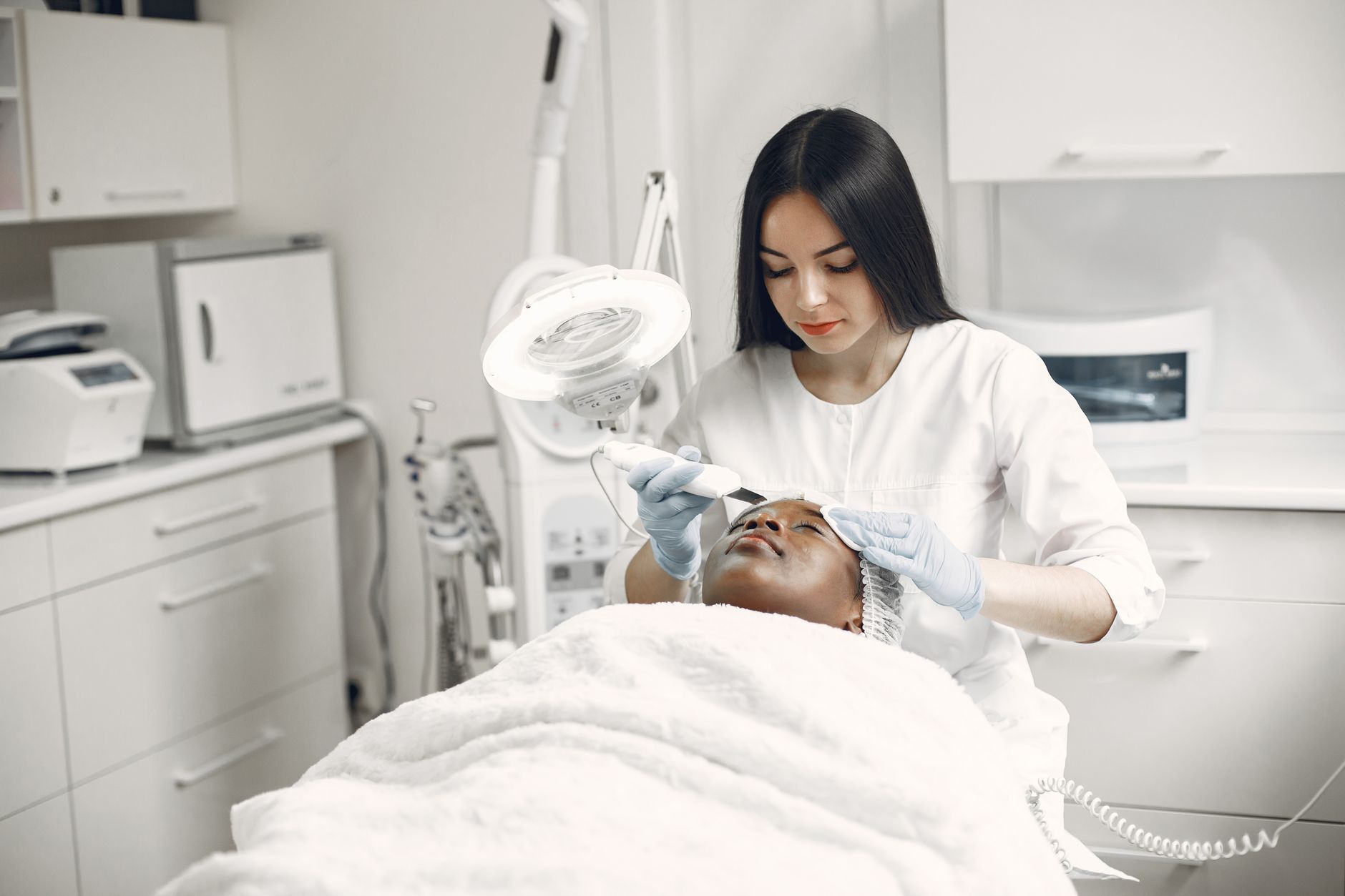
Laser treatment for acne scars uses focused light to remodel scar tissue and build new collagen. It smooths pitted texture and softens marks, but it improves scars rather than erasing them completely.
A fractional laser is a device that treats thousands of tiny spots while leaving skin between them intact. According to the Cleveland Clinic, those microscopic treatment zones remove or heat scar tissue and stimulate new collagen, gradually filling pitted areas and smoothing texture Cleveland Clinic guide. Healing starts from the untreated skin, which shortens recovery compared with older full-surface resurfacing.
Medical information disclaimer: This article is for general educational purposes only and does not provide medical advice, diagnosis, or treatment. Always consult a physician or other qualified health professional about symptoms, medications, tests, or treatment decisions.
Table of Contents
- How does laser resurfacing work?
- Which laser type fits which scar?
- What happens during a treatment course?
- Who needs more than laser alone?
- How do you protect your result?
How does laser resurfacing work?
Fractional beams create controlled columns of injury in scarred skin. The body clears damaged tissue and lays down firmer, more even collagen over weeks to months. Shallow boxcar scars and broad uneven texture show the clearest smoothing.
Deeper resurfacing removes thin layers of scarred surface skin. Less invasive remodeling heats deeper tissue while leaving the surface largely intact. Both approaches depend on new collagen, so change appears gradually rather than overnight.
Which laser type fits which scar?
Dermatologists choose between ablative and nonablative devices, reports the Skin Therapy Letter in its peer-reviewed dermatology review. Ablative fractional CO2 and Er:YAG lasers resurface deeper scars but require longer healing. Nonablative 1,540–1,550 nm erbium-glass and picosecond devices remodel with less downtime.
In a 58-patient Egyptian randomized trial, both fractional CO2 and fractional 1,540 nm erbium-glass safely improved post-acne scars. Ablative CO2 showed higher efficacy but caused more pain and downtime. Fractional systems have FDA clearance for acne scars, including picosecond devices cleared after studies showed improvement in as few as three treatments.
What happens during a treatment course?
Most patients need about three to five sessions spaced weeks apart. Each visit lasts well under an hour, often with numbing cream to reduce discomfort. Skin looks red and swollen afterward, like a strong sunburn.
Nonablative redness and swelling usually settle within days to 10 days. Ablative CO2 can mean up to two weeks of healing plus months of lingering redness. Rare risks include infection, pigment change, and new scarring.
Who needs more than laser alone?
The American Academy of Dermatology advises controlling active acne first and matching treatment to scar type in its acne-scar treatment guidance. Lasers often sit alongside fillers, subcision, punch excision, chemical peels, or microneedling because no single method suits all scars.
Narrow, deep ice-pick scars and tethered rolling scars respond poorly to laser alone. Ice-pick scars often need punch excision, while rolling scars often need subcision to release fibrous anchors. Darker skin also carries higher risk of post-inflammatory darkening, so settings and device choice need extra care.
How do you protect your result?
Strict sun protection matters before and after every session. Ultraviolet exposure raises the chance of uneven color while new collagen forms. Results depend on scar depth, skin tone, and careful aftercare, so follow the wound-care plan even after redness fades.
- Choose a board-certified dermatologist with acne-scar experience
- Pause retinoids, strong acids, and unprotected sun exposure as directed
- Plan time off for redness, peeling, and wound care
- Use gentle cleansing, prescribed ointment, and daily sunscreen
- Report spreading pain, yellow crust, fever, or dark patches promptly