
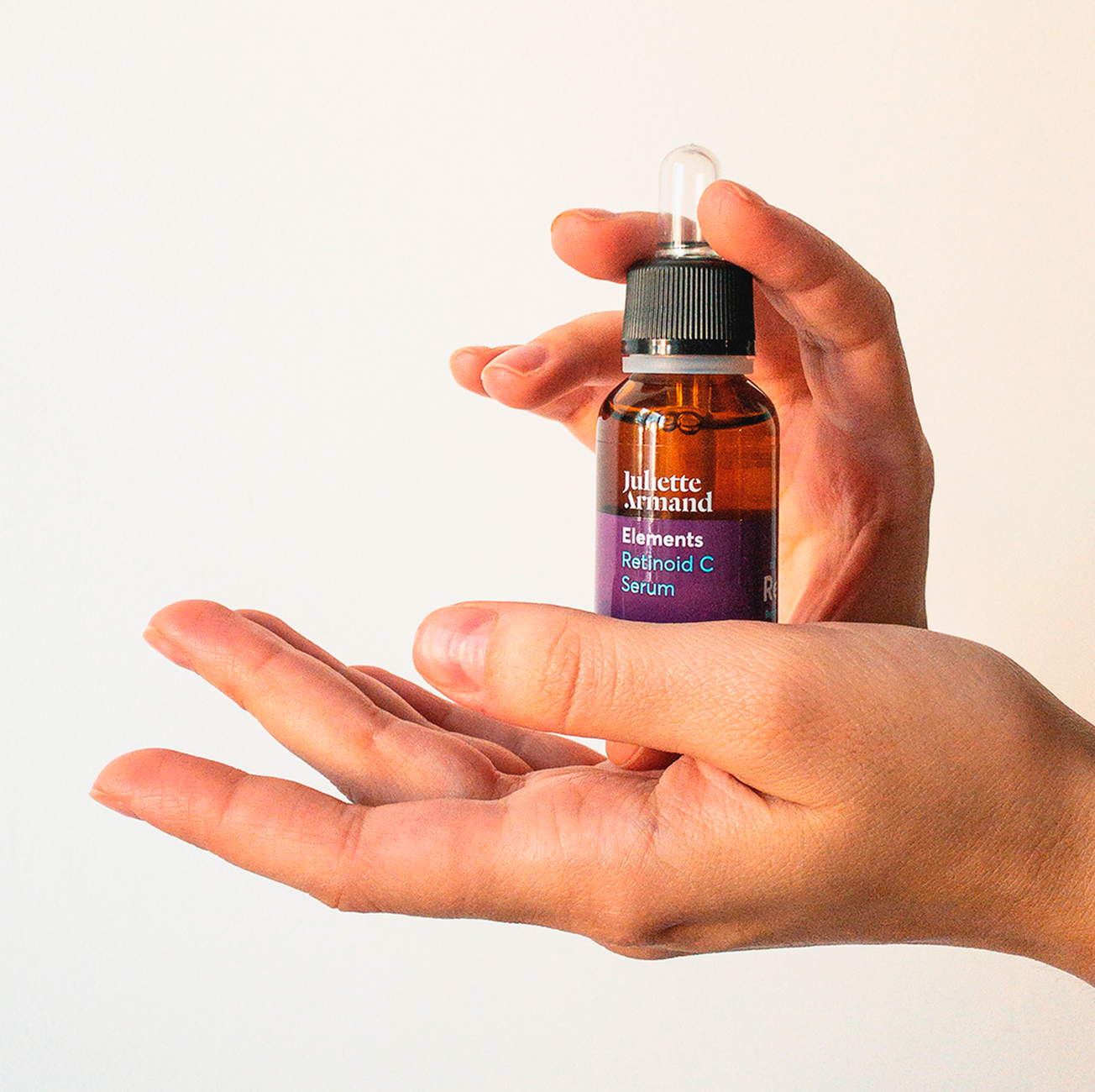
People with rolling acne scars can ask before fractional CO2 laser whether vitamin C, vitamin E and ferulic acid applied after treatment suits their skin and scar plan. Rolling scars are broad, wave-like depressions from dermal tethering, and fractional CO2 remains a first-line laser option for moderate-to-severe atrophic scars by stimulating dermal collagen remodeling. C-E-ferulic means 15% L-ascorbic acid plus 1% alpha-tocopherol stabilized with 0.5% ferulic acid. A 2025 split-face trial in Chinese adults tested that serum against saline after ablative fractional CO2 for moderate-to-severe atrophic scars.
Medical information disclaimer: This article is for general educational purposes only and does not provide medical advice, diagnosis, or treatment. Always consult a physician or other qualified health professional about symptoms, medications, tests, or treatment decisions.
Table of Contents
- Why do rolling scars need a specific plan?
- What did post-laser C-E-ferulic studies find?
- What safety questions should you raise?
- What timing and aftercare should you confirm?
Why do rolling scars need a specific plan?
Rolling scars pull downward where fibrous bands tether skin to deeper tissue. That tethering creates wide shadows and movement with facial expression. Resurfacing alone smooths the surface but may not release the pull.
Evidence rankings cited by 2A Magazine place fractional CO2 as the most evidence-based first-line laser for moderate-to-severe atrophic scars in 2026, often over multiple sessions. Sozo Clinic notes deeply tethered rolling scars often need combination approaches because laser alone resurfaces poorly. Ask whether your scars are mainly rolling, mixed with boxcar or icepick scars, and whether subcision is appropriate. Sozo Clinic lists fractional CO2 for rolling and boxcar scars, subcision especially for rolling scars, and 5-10 CO2 sessions for substantial scarring.
What did post-laser C-E-ferulic studies find?
The 2025 split-face trial found C-E-ferulic serum improved wound healing after ablative fractional CO2 compared with saline. It also reported less erythema and melanin and better hydration, according to the PubMed trial record. Earlier photoprotection work found adding 0.5% ferulic acid stabilized the C-E combination and doubled protection from about 4-fold to 8-fold against solar-simulated UV, measured by erythema and sunburn cells, according to the Journal of Investigative Dermatology via the Medscape abstract.
That test measured sunburn response, not acne-scar improvement. The scar result applies to one serum tested right after one type of ablative fractional CO2 in one adult population. It does not prove every vitamin C product helps healing or prevents pigment change.
What safety questions should you raise?
A retrospective chart review found one immediate post-procedure C-E-ferulic application after fractional ablative CO2 caused no serum-attributed complications, according to the University of Minnesota safety summary. Observed effects were expected laser effects such as erythema, tenderness, peeling, pain or slight bleeding. The U.S.
FDA lists medical-laser surgery risks including incomplete treatment, pain, infection, bleeding, scarring and skin-color changes, in the FDA Medical Lasers page. Ask how your clinic watches for infection, prolonged redness, pigment change and poor healing. Bring a short checklist to the consult:.
- Do I need antiviral prophylaxis for cold sores, especially for laser around the mouth?
- Do I need antibiotics, retinoid or isotretinoin washout, or a pigment-risk plan for my skin type?
- How much downtime, oozing, tenderness and peeling should I expect?
- When can I resume vitamin C, retinoids and other irritants?
What timing and aftercare should you confirm?
Dermatologists advise against fractional laser on tanned skin or before imminent sun exposure, in MDedge coverage of AAD 2018 remarks by Tina Alster. Ask whether to delay treatment after recent tanning, beach travel or outdoor work. Confirm strict sun avoidance and daily mineral or broad-spectrum SPF 30-plus sunscreen after healing begins.
Sun protection matters because healing laser-treated skin can develop post-inflammatory hyperpigmentation. Ask for written cleansing, moisturizing, sunscreen and follow-up instructions before you book, plus a contact plan if pain, swelling, blisters, spreading redness or pigment darkening worsens. AEDIT also flags herpes-simplex reactivation risk and washout and resumption questions as standard laser-resurfacing topics.
You Might Also Like
- Vitamin C, Vitamin E, and Ferulic Acid After Acne Scar Laser in 2026: Sample Size and Evidence Limits for People With Rolling Acne Scars
- Antioxidant Serum After Fractional CO2 Acne Scar Treatment in 2026: Sample Size and Evidence Limits for People With Rolling Acne Scars
- The 33-Patient RF Microneedling vs CO2 Acne Scar Trial in 2026: What the Trial Means for People With Atrophic Acne Scars