
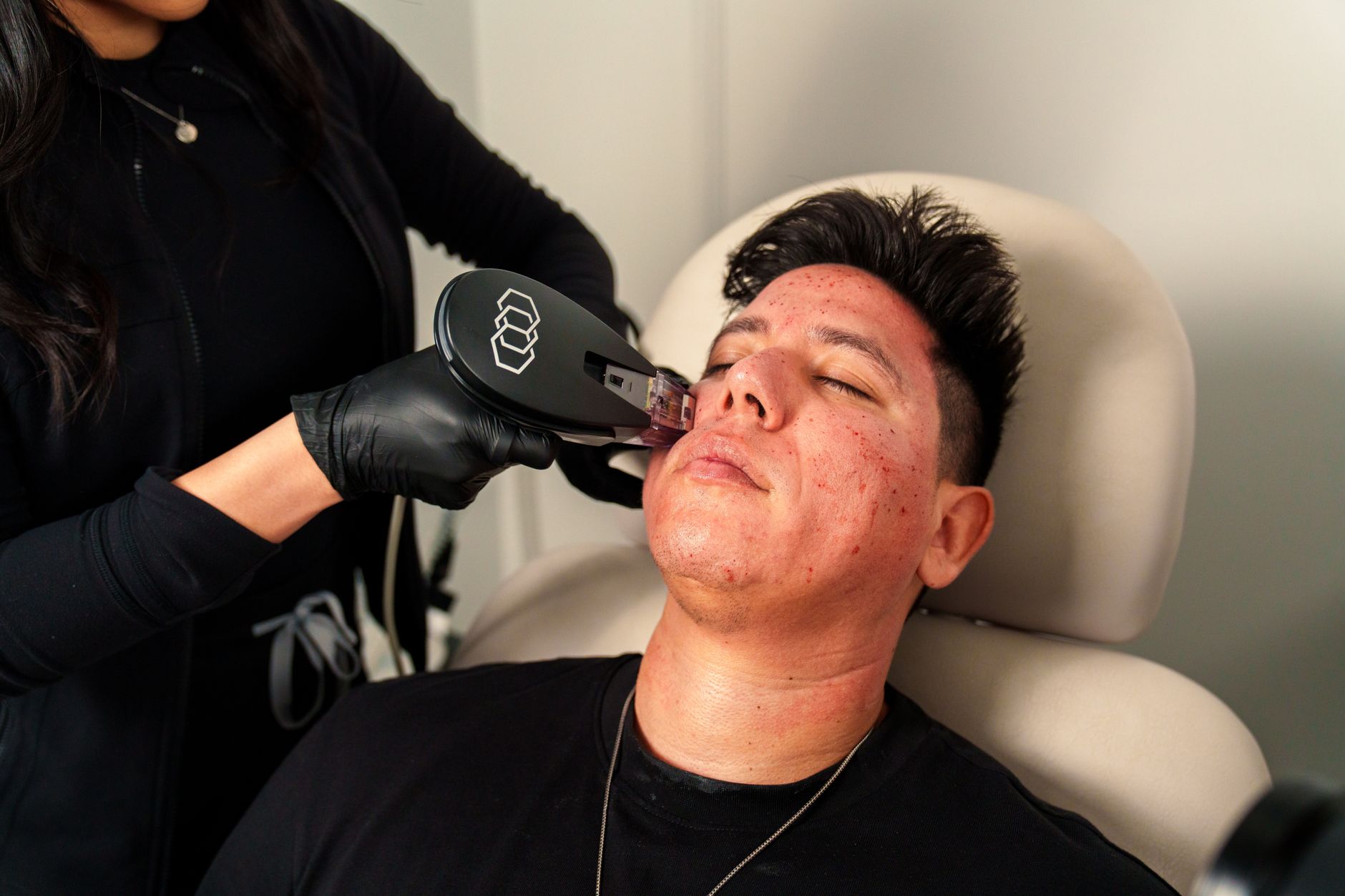
Fractional CO2 laser produced greater scar improvement than radiofrequency microneedling for atrophic acne scars — depressed icepick, boxcar and rolling scars — in a 2026 pooled analysis. It also earned higher overall satisfaction, while radiofrequency microneedling caused less pain and fewer pigment and redness problems. Most people do not need to choose on efficacy alone. Skin tone, scar shape, pain tolerance and available downtime change the balance, and response varies by scar type.
Medical information disclaimer: This article is for general educational purposes only and does not provide medical advice, diagnosis, or treatment. Always consult a physician or other qualified health professional about symptoms, medications, tests, or treatment decisions.
Table of Contents
- How well does each option work?
- What do pain and recovery look like?
- Which trade-off fits you?
- What should you ask before booking?
How well does each option work?
The 2026 meta-analysis in the Journal of Cosmetic Dermatology pooled 8 randomized trials with 249 patients the 2026 meta-analysis. It found fractional CO2 produced significantly greater scar improvement and higher satisfaction than microneedling radiofrequency. The split-face trial listed by the U.S. National Library of Medicine found both treatments improved facial atrophic scars the split-face trial record.
Radiofrequency microneedling earned higher efficacy satisfaction after the first session and higher safety satisfaction at all follow-ups. Response varies by scar shape. One comparative study indexed by DOAJ reported radiofrequency better for M-type depressed scars and CO2 better for V-shaped scars. For darker skin, the Journal of Cutaneous and Aesthetic Surgery study in Fitzpatrick types III-V found both modalities equally effective the JCAS comparative study. Fractional microneedling radiofrequency had less downtime and less hyperpigmentation with good satisfaction.
What do pain and recovery look like?
The Journal of Cosmetic Dermatology analysis found pain scores significantly higher with fractional CO2. The mean difference was 2.14 points on the visual analog scale. Fractional CO2 is linked to more post-inflammatory hyperpigmentation, itching, procedural discomfort and prolonged redness.
Microneedling radiofrequency delivers energy through insulated needles that spare the epidermis. That difference matters most for pigment-prone skin. Less epidermal injury means less trigger for dark marks and often a faster return to work or school.
Which trade-off fits you?
The JCAS findings and the Dermatology Times summary of systematic-review evidence point to a practical split Dermatology Times summary. Patients prioritizing maximum remodeling who can tolerate pain and downtime may favor fractional CO2. Pigment-prone patients or those needing faster recovery may favor radiofrequency microneedling or scar-type-tailored combination care.
- Choose CO2 when your priority is maximum single-modality remodeling and you can accept more pain and redness.
- Choose radiofrequency microneedling when you have medium to deep skin tone, a history of dark marks, or little recovery time.
- Ask about combination care when you have mixed icepick, boxcar and rolling scars.
What should you ask before booking?
Evidence remains limited. The 2026 pooled result rests on only 249 patients across 8 small trials, and the split-face trial describes itself as exploratory. That limits general claims and long-term conclusions.
Use your visit to close that gap for your case. Ask your dermatologist to map your dominant scar types, review your pigment history, and match device settings to your downtime. Bring photos of your scars in different lighting and a list of prior pigment changes to that visit.
- What scar types do I have, and which device suits each area?
- What is my hyperpigmentation risk, and how will you lower it?
- How much pain, redness and time off should I plan for?
You Might Also Like
- Antioxidant Serum After Fractional CO2 Acne Scar Treatment in 2026: A Source-Checked 2026 Briefing for People With Atrophic Acne Scars
- Vitamin C, Vitamin E, and Ferulic Acid After Acne Scar Laser in 2026: What Longer Follow-Up Must Show for People With Atrophic Acne Scars
- Recovery and Pigment Safety in the 2026 Split-Face Acne Scar Trial: Cost, Sessions, and Downtime Questions for People With Atrophic Acne Scars