
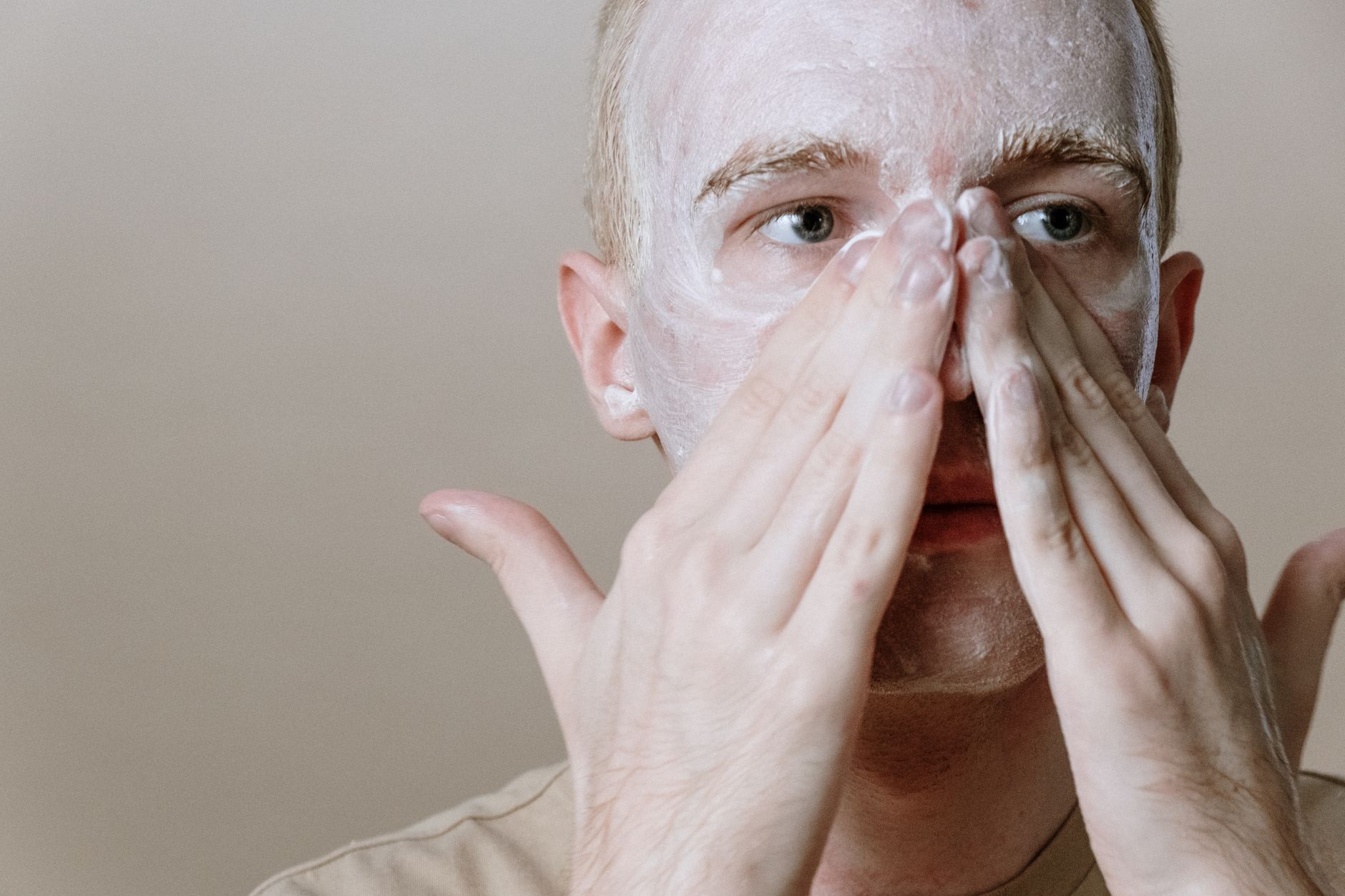
This FAQ gives men source-checked answers to common acne questions for October 2026. Acne vulgaris — plugged hair follicles that form comedones and inflamed lesions — in men stems from androgen-driven oil, abnormal shedding, bacteria, and inflammation. It explains causes, proven treatments, skin care and shaving, plus diet and hormone effects. Each answer focuses on practical decisions and limits.
Medical information disclaimer: This article is for general educational purposes only and does not provide medical advice, diagnosis, or treatment. Always consult a physician or other qualified health professional about symptoms, medications, tests, or treatment decisions.
Table of Contents
- What drives breakouts in men?
- Which treatments have strong guideline support?
- How should men wash, moisturize, and shave?
- Do diet and testosterone affect acne?
- When should men get dermatology care?
What drives breakouts in men?
Male acne starts when androgens raise sebum, skin cells shed abnormally inside follicles, Cutibacterium acnes grows, and inflammation plugs the pore. An NIH review describes this four-part process as the basis for comedones and inflammatory lesions NIH review of acne causes. That process explains common patterns.
Oily areas such as face, chest, and back clog more easily. Picking, harsh scrubbing, and aggressive shaving add irritation and worsen lesions. Hormone shifts raise risk directly. Puberty, exogenous testosterone, and anabolic steroids can trigger or worsen acne in males.
Which treatments have strong guideline support?
The American Academy of Dermatology 2024 acne guidelines strongly recommend topical benzoyl peroxide, retinoids, and antibiotics in fixed combinations, plus oral doxycycline for appropriate patients summary of the AAD acne guidelines. Fixed combinations simplify routines and target multiple causes at once. Oral isotretinoin is reserved for severe acne or disease that causes scarring.
The FDA prescriber guide limits it to severe recalcitrant nodular acne unresponsive to conventional therapy including systemic antibiotics. Isotretinoin can cause severe birth defects and is contraindicated in pregnancy. Men with severe, painful, scarring, or persistent acne should seek dermatology care rather than prolong weak over-the-counter routines.
How should men wash, moisturize, and shave?
Wash acne-prone skin gently up to twice daily and after sweating. Use fingertips and a mild cleanser, avoid scrubbing, then use non-comedogenic moisturizer, sunscreen, and cosmetics to reduce pore blockage.
For shaving, go lightly and never try to shave off lesions. Test electric versus disposable razors to find the least-irritating method.
- Wash after sweating, not just morning and night
- Use fingertips, mild cleanser, and lukewarm water
- Pat dry, then apply non-comedogenic moisturizer and sunscreen
- Shave lightly, soften hair first, and stop if a method irritates
Do diet and testosterone affect acne?
High-glycemic-load diets, sugary foods, and some dairy intake are associated with greater acne presence and severity. A systematic review links these patterns to insulin and IGF-1 signals, oxidative stress, and inflammation, and finds low-glycemic eating may reduce lesion counts systematic review of diet and acne. Elevated androgens show a clearer male-specific risk.
JAMA Dermatology reports steroid-related cases including severe acne fulminans in adolescent boys and bodybuilders. Men using testosterone or muscle-building steroids should discuss breakouts with a clinician. Stopping unsupervised products and treating early reduces scarring risk.
When should men get dermatology care?
Seek prompt care for nodules, cysts, pain, dark marks, pitting, or scarring. Also seek care for chest and back acne that resists topicals, or any breakout tied to testosterone or anabolic steroids.
Most diet-acne studies focus on teens and young adults, so dairy and glycemic findings apply least certainly to older men. Practical priority stays the same: use proven topicals, keep skin care and shaving gentle, and get referral for severe, scarring, or steroid-related acne.