
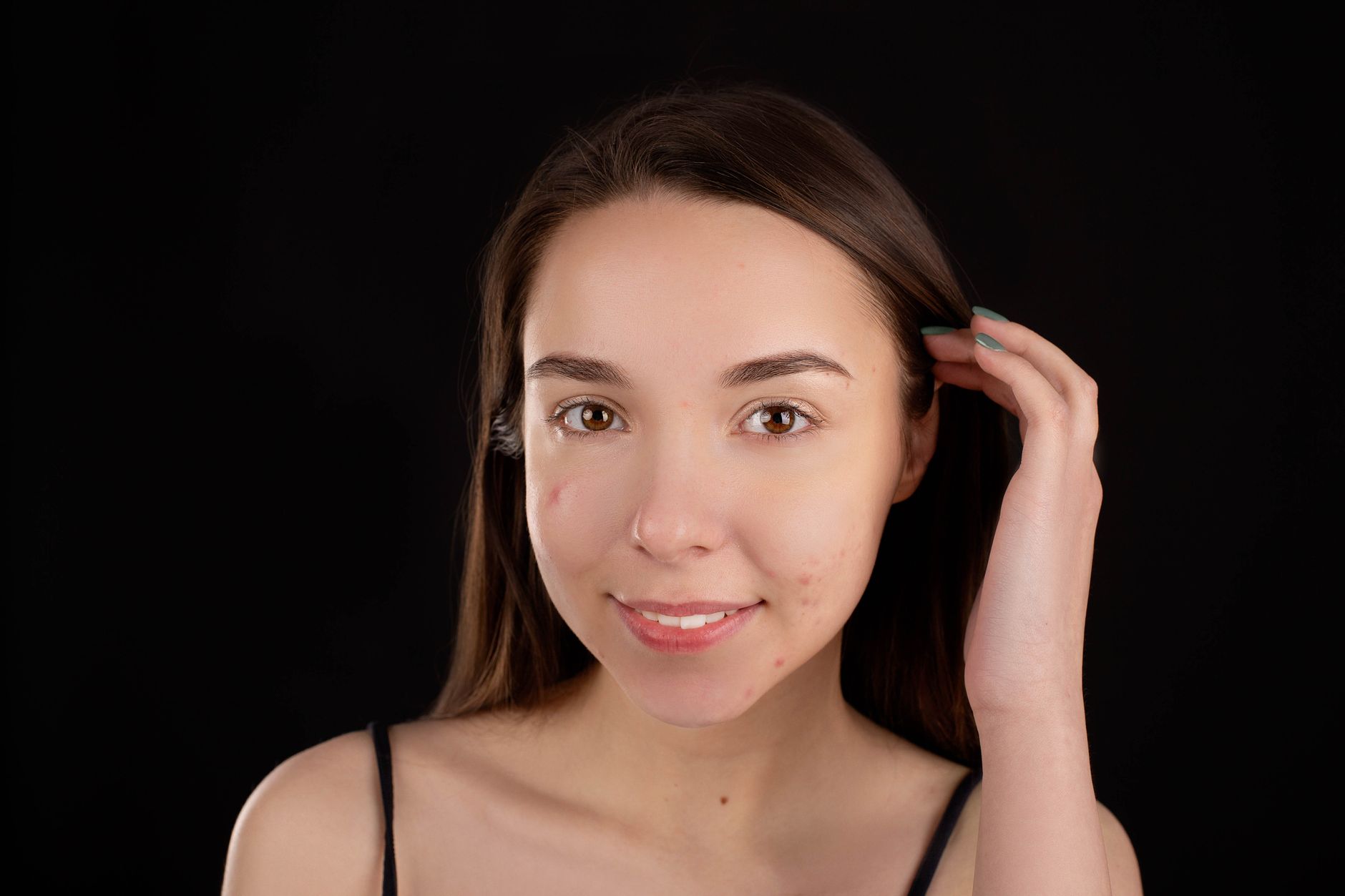
Your acne is gone but dark marks remain because inflammation prompted pigment cells to make extra melanin that stays after the spot heals. Those flat brown to black spots are post-inflammatory hyperpigmentation (PIH), leftover skin color, not a raised or pitted scar.
Harvard Health explains this melanin response in its overview of acne in darker skin. PIH can look tan, brown, dark brown, gray, or black. It fades much more slowly than the original pimple, especially when sun reaches it or new breakouts keep forming.
Medical information disclaimer: This article is for general educational purposes only and does not provide medical advice, diagnosis, or treatment. Always consult a physician or other qualified health professional about symptoms, medications, tests, or treatment decisions.
Table of Contents
- Is it a scar, PIH, or redness?
- Who tends to get lingering marks?
- How long will the marks last?
- What helps dark marks fade?
Is it a scar, PIH, or redness?
A true acne scar changes texture. It leaves a pit, a raised bump, or uneven skin. PIH leaves flat color only, with normal skin texture. Color gives another clue.
Red or pink marks after acne are often post-inflammatory erythema from small healing blood vessels. Brown, gray, or black marks are usually PIH from excess or displaced melanin. Depth also matters. Surface pigment often looks tan, brown, or dark brown. Deeper pigment can look blue-gray, lasts longer, and responds less well to creams.
Who tends to get lingering marks?
People with Fitzpatrick skin types III through VI are most commonly affected. Medium, olive, brown, and black skin makes melanin more readily after inflammation. Even a small or brief breakout can leave a visible spot. Patients often say the remaining color bothers them more than the original acne.
The pimples feel finished, but the face still looks marked. That mismatch causes much of the frustration. Keeping new acne controlled helps limit new spots. Avoid picking, squeezing, harsh scrubs, and drying products that inflame skin again.
How long will the marks last?
Surface PIH often fades over weeks to months once acne stays controlled. Deeper pigment can take up to a year or several years to fade. The American Academy of Dermatology notes this slower course in guidance shared through tips for treating acne in skin of color.
Ultraviolet light stimulates more melanin and darkens PIH. Daily shade, long sleeves or a hat when possible, and broad-spectrum water-resistant SPF 30+ sunscreen help prevent new spots and keep current spots from darkening, according to the American Academy of Dermatology in its skin-of-color acne guidance. Think of sun protection as treatment, not only prevention. A mark that keeps getting sun may look darker even while the rest of the routine is working.
What helps dark marks fade?
Dermatologists first stop new acne without picking or harsh products. Fewer new inflamed spots means fewer new pigment spots. Then they target the remaining color. Cleveland Clinic lists several options used for hyperpigmentation in its hyperpigmentation treatment guide, including tretinoin and other retinoids, azelaic acid 15-20 percent, hydroquinone, vitamin C, and niacinamide.
Resistant cases may receive chemical peels or laser treatment in a clinic. Lightening treatment can irritate skin and worsen PIH. Therapy must avoid strong inflammation and loss of normal skin color, especially in darker skin. Ask a dermatologist before starting a lightening product if you have darker skin, frequent irritation, or spots that keep darkening.
- Keep acne quiet and leave healing spots alone
- Use daily sun protection on exposed skin
- Add only one active pigment product at a time
- Pause a product that burns, stings, peels strongly, or darkens skin
- Ask about peels or laser only for marks that will not fade