
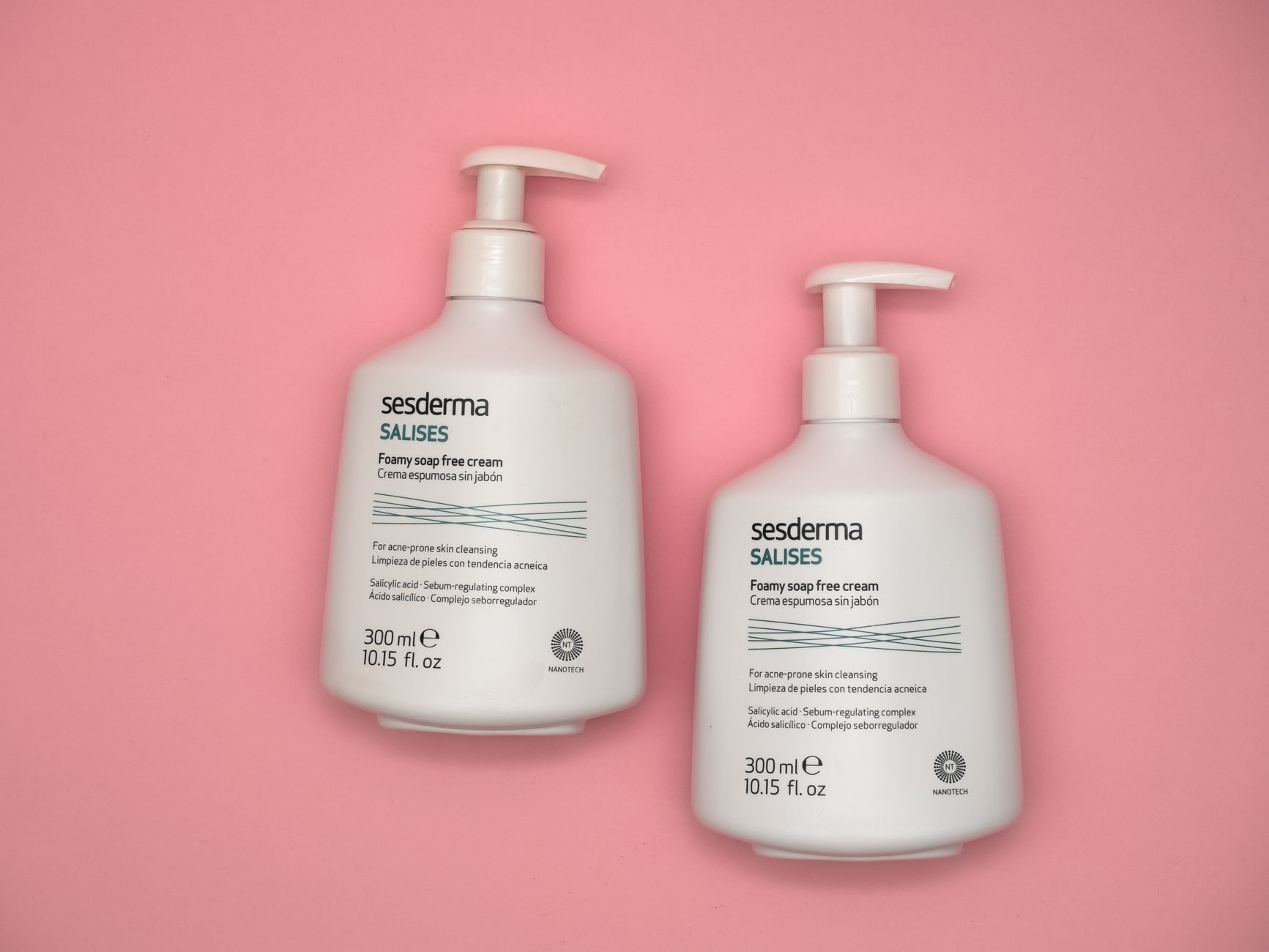
Workout acne has two causes that need different fixes: friction from gear pressing on skin, and the sweat-plus-trapped-heat cycle under clothing. Friction acne responds to padding and looser clothes; the rest responds to standard acne actives, used long enough to judge fairly. The decision is smaller than it looks. Change what touches your skin, pick one proven topical, and give it six to eight weeks before you change anything else.
Medical information disclaimer: This article is for general educational purposes only and does not provide medical advice, diagnosis, or treatment. Always consult a physician or other qualified health professional about symptoms, medications, tests, or treatment decisions.
Table of Contents
- Friction acne versus sweat acne
- Does showering right after a workout matter?
- The low-cost changes worth making first
- Choosing a topical, and what each one costs you
- When to judge the result, and when to escalate
- The whey protein question
- Frequently Asked Questions
Friction acne versus sweat acne
Acne mechanica is acne caused by pressure, heat, and rubbing from equipment or clothing. The American Academy of Dermatology describes the first sign as small, rough-feeling bumps where a chin strap, helmet, or shoulder pad rubs the skin. Left alone under the same gear, those bumps can progress into pimples and deep cysts. The AAD's fix for that pattern is mechanical, not chemical: clean, soft padding between the equipment and the skin.
If your breakouts trace the outline of a strap, a waistband, or a backpack panel, treat the contact point first. A retinoid will not out-argue a helmet. Sweat acne behaves differently. It shows up on the chest, back, and shoulders rather than along a strap line, and it responds to the same treatments as ordinary acne. Deciding which one you have is the first fork in this guide, because it determines whether you buy padding or a tube.
Does showering right after a workout matter?
The evidence here is thinner than the advice. A single-blinded randomized pilot published in Pediatric Dermatology in 2008 put 30 physically active young men with at least ten inflammatory trunk lesions into three groups: no exercise, sweat then shower within an hour, and sweat then shower four or more hours later. Across the 23 who finished, lesion counts differed neither between groups nor within them over two weeks. Read that for what it is.
Thirty men, two weeks, and one narrow outcome cannot prove that delayed showering is harmless in general, and it says nothing about people who sit in wet clothes daily for months. It does mean that a missed shower is not the thing sabotaging your skin, and that guilt about it is misplaced. The practical takeaway: keep showering promptly because it is cheap and pleasant, but do not treat it as your acne treatment. If your routine already includes a fast post-gym shower and your acne persists, the next move is an active ingredient, not a faster shower.
The low-cost changes worth making first
The AAD's workout guidance is four concrete actions, all free or nearly so. It recommends removing makeup before exercising — an oil-free towelette is enough — wearing clothes that have been washed since last worn, patting sweat off with a clean towel instead of rubbing, and showering and changing immediately afterward. Rubbing matters more than people expect. Wiping hard with a towel is friction applied to already irritated skin, which is the same mechanism behind acne mechanica.
Pat, do not scrub. When a shower is not available, the AAD's stated substitute is changing out of workout clothes and wiping breakout-prone skin with salicylic acid pads. It also recommends loose-fitting workout clothes, so heat and sweat are not held against the skin. Compression gear is the obvious trade-off here: if your back acne started when your kit got tighter, that is a testable change.
Choosing a topical, and what each one costs you
The AAD's updated acne guidelines, published in the Journal of the American Academy of Dermatology on 31 January 2024, carry 18 evidence-based recommendations and 5 good practice statements, with strong recommendations for benzoyl peroxide, topical retinoids, topical antibiotics, and oral doxycycline. That is the shortlist. Anything outside it is a weaker bet. The same guideline strongly recommends fixed-dose combinations — benzoyl peroxide plus a retinoid, benzoyl peroxide plus an antibiotic, or a retinoid plus an antibiotic — both to work better and to lower the risk of antibiotic resistance.
It reserves isotretinoin for severe acne or for acne that has failed standard topical and oral therapy. Topical antibiotics are not a solo option; pairing them with benzoyl peroxide is the point. Two specifics matter for gym users: If you want one starting point: an adapalene gel at night for a retinoid, or a benzoyl peroxide wash used with white towels. Pick one and hold it steady, because changing two variables at once tells you nothing.
- Adapalene 0.1% is available without a prescription. The FDA approved Differin Gel for over-the-counter sale on 8 July 2016 for ages 12 and up — the first topical retinoid moved to OTC, and the first new OTC acne active in more than 40 years.
- Benzoyl peroxide bleaches fabric. OTC Drug Facts labels warn to avoid contact with hair and dyed fabrics, "which may be bleached by this product". Coloured shirts, gym towels, and pillowcases are all at risk, which is why a body wash version tends to work better for back and chest than a leave-on under a black training top.
When to judge the result, and when to escalate
Use a product for six to eight weeks before deciding whether it works, and expect complete clearing to take three to four months. That is the AAD's timeline, and most self-declared treatment failures are really impatience at week three. Skin often looks worse before it looks better on a retinoid.
Acne mechanica is the exception in the other direction. The AAD says it clears faster than ordinary acne, so if you have padded the contact points, changed your gear, and still have it after six to eight weeks of treatment, that is the trigger to see a dermatologist rather than to try a fifth product. Signs that should move you to a dermatologist sooner, not later:.
- Deep, painful cysts or nodules rather than surface bumps
- Any lesion that is scarring or leaving dark marks as it heals
- Acne spreading past the friction zone into areas your gear never touches
- Two separate topicals used properly for eight weeks each, with no change
The whey protein question
Whey is worth a trial, not a conviction. The evidence splits: a 2024 double-blind randomized controlled trial in The Journal of Dermatology gave 49 men either 30 g of whey daily or a non-whey supplement and found no difference in total, comedonal, or inflammatory lesion counts. A 2024 Jordanian case-control study pointed the other way, with 47% of acne cases using whey versus 27.7% of controls. Those designs answer different questions.
The randomized trial tests whether whey causes acne; the case-control only shows that people with acne reported using it more often, which could run either direction or reflect who lifts weights in the first place. So treat it as a personal experiment with a clear endpoint. Stop whey for eight weeks, hold everything else constant, and count lesions at the start and end. If nothing changes, put it back and spend your attention on the topical instead.
Frequently Asked Questions
Should I wash my face immediately after lifting, or is that too harsh?
Pat sweat off with a clean towel and wash once, gently. The AAD warns against rubbing, because friction on irritated skin is itself a cause of breakouts.
Can I use benzoyl peroxide and a retinoid together?
Yes — the AAD's 2024 guideline strongly recommends fixed-dose combinations including benzoyl peroxide plus a retinoid, partly because pairing them improves efficacy.
My breakouts only appear where my sports bra or backpack straps sit. What now?
That pattern points to acne mechanica. Put clean, soft padding between the gear and your skin, loosen the fit if you can, and give it six to eight weeks.
Is it worth switching to a plant-based protein powder?
Only as a controlled trial. The randomized evidence found no lesion difference with 30 g of whey daily, so a switch is a reasonable eight-week test rather than a fix you should expect to work.