
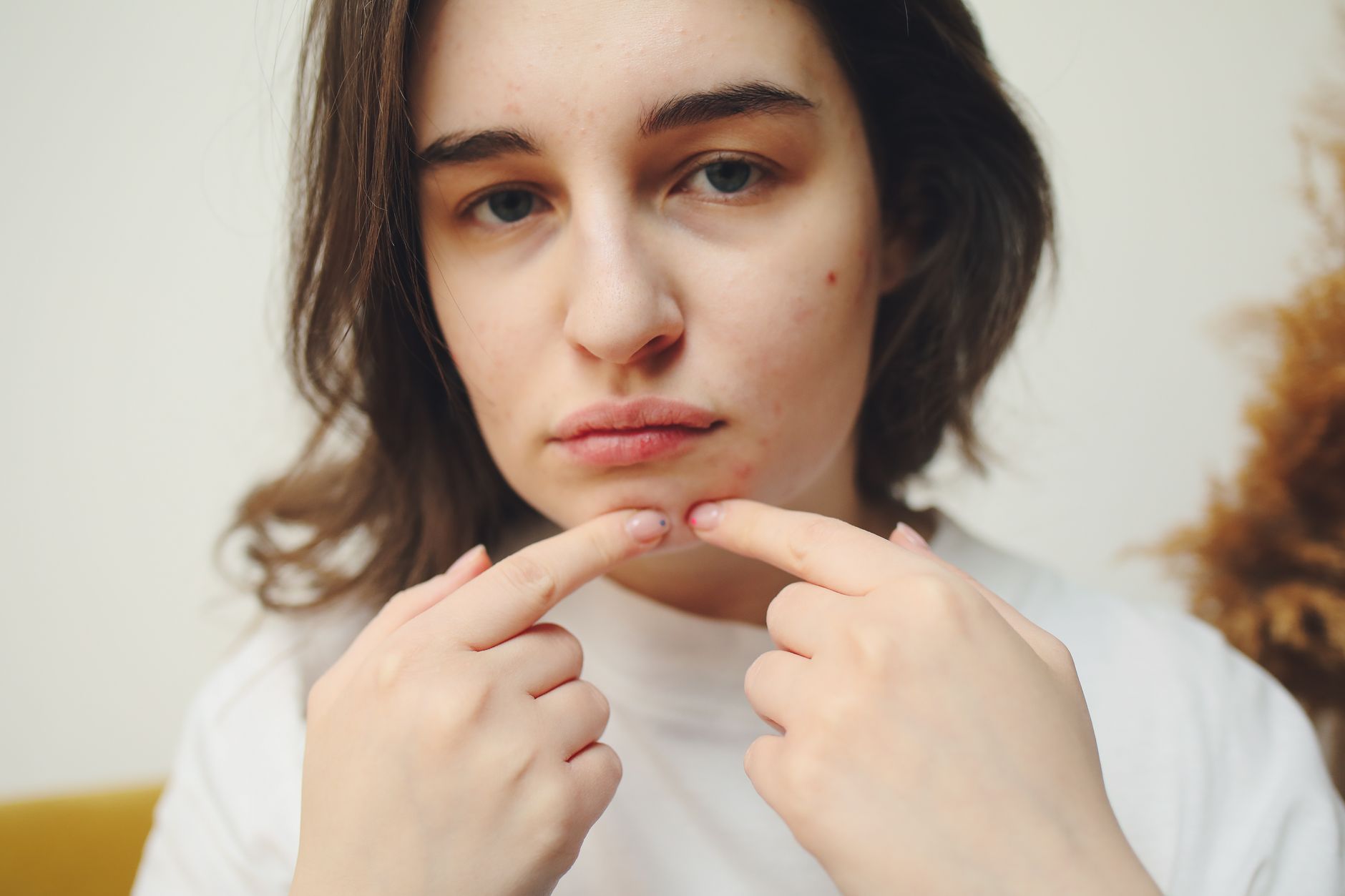
Jawline acne—acne concentrated around the chin and lower jaw—does not by itself prove that you have a hormonal disorder. In 2026, treatment should depend on acne type and severity, while hormonal symptoms, medicine safety, and evidence limits guide the next steps. Several standard acne medicines have strong support, but location alone does not determine the right one. Severe, scarring, psychologically burdensome, or treatment-resistant acne deserves medical evaluation because the options and safety requirements change.
Medical information disclaimer: This article is for general educational purposes only and does not provide medical advice, diagnosis, or treatment. Always consult a physician or other qualified health professional about symptoms, medications, tests, or treatment decisions.
Table of Contents
- Does jawline acne mean a hormonal problem?
- Which treatments have the strongest support?
- When are hormonal treatments worth discussing?
- Where does the evidence remain limited?
- What safety limits matter most?
Does jawline acne mean a hormonal problem?
Not necessarily. In a study of 374 women, only 11.2% had acne limited to the mandibular area, and most did not fit the familiar "hormonal jawline" stereotype, according to the European Academy of Dermatology and Venereology study. This finding does not rule out hormonal influences.
It means clinicians should not diagnose a hormonal disorder from acne location alone. The NHS identifies a more informative combination: sudden adult-onset acne in women alongside excess body hair or irregular or unusually light periods. When that pattern suggests a hormonal imbalance, clinicians may investigate polycystic ovary syndrome with blood tests and an ultrasound. Questions to ask include:.
- Did the acne begin suddenly in adulthood?
- Are excess body hair or irregular or light periods also present?
- Is the assessment based on all symptoms rather than jawline location alone?
Which treatments have the strongest support?
The AAD strongly recommends benzoyl peroxide, topical retinoids, topical antibiotics, and oral doxycycline. Its 2024 acne guideline summary emphasizes matching treatment to lesion type and severity, not simply to the affected part of the face.
Antibiotics require particular care. The AAD advises limiting oral antibiotic use and combining topical or oral antibiotics with benzoyl peroxide to reduce antibiotic resistance. Before starting a plan, ask:.
- What type and severity of acne do I have?
- If an antibiotic is proposed, will benzoyl peroxide be included?
- How long should I follow the plan before it is reassessed?
- What worsening or side effects should prompt earlier advice?
When are hormonal treatments worth discussing?
The AAD conditionally recommends combined oral contraceptives and spironolactone for appropriate patients. A conditional recommendation means the choice depends more heavily on the individual's health factors and preferences. Spironolactone has direct trial evidence in women with persistent facial acne.
In the randomized SAFA trial, 71% of 410 participants taking spironolactone reported improvement, compared with 43% taking placebo. Headaches occurred in 20% and 12%, respectively. Those results show a meaningful average benefit, not a guarantee for every person or every jawline breakout. Ask whether your health history makes hormonal treatment suitable, what monitoring is expected, and which side effects should change the plan.
Where does the evidence remain limited?
The AAD found insufficient evidence to recommend dietary changes, vitamins or plant therapies, chemical peels, microneedling, or laser and light devices as acne treatments. "Insufficient evidence" does not prove that none can ever help; it means reliable clearing should not be promised from the available evidence.
Be especially cautious with strong at-home peels marketed for acne. The FDA safety warning says these products can cause serious skin injuries, no chemical peel products are FDA-approved, and consumers should consider them only with professional supervision. Useful questions for any diet, supplement, or procedure claim are:.
- Is the claim supported by acne-treatment evidence or only personal testimonials?
- What injuries, irritation, or treatment delays are possible?
- Who will manage complications?
- Is the claim promising results specifically from jawline location without assessing severity?
What safety limits matter most?
The 2026 FDA label for an over-the-counter adapalene 0.1% and benzoyl peroxide 2.5% product says early irritation is more likely during the first four weeks. Applying more will not produce faster results. Users should stop and seek advice if irritation worsens or symptoms of an allergic reaction appear. Escalation also matters.
The AAD strongly recommends isotretinoin for severe, scarring, psychologically burdensome, or treatment-resistant acne. The FDA label states that isotretinoin is contraindicated during pregnancy and restricted through iPLEDGE because fetal exposure can cause major birth defects. Ask for medical assessment when acne is scarring, causing substantial psychological burden, becoming severe, or persisting despite treatment. If isotretinoin is being considered, ask exactly how its pregnancy restrictions and iPLEDGE requirements apply before taking it.