
Most people understand that toilet seats harbor bacteria, which is why we approach them with caution. What many don’t realize—or actively ignore—is that the smartphone sitting in your pocket or on your nightstand carries significantly more bacterial contamination than a typical toilet seat. Scientists have documented that cell phones can harbor up to 20 times more bacteria than a toilet seat, with smartphone screens showing some of the highest bacterial counts of any personal item we touch throughout the day. For skincare enthusiasts and acne-prone individuals, this is particularly concerning because your phone comes into direct contact with your face multiple times daily, transferring bacteria directly onto your skin.
The bacteria accumulating on your phone screen includes some of the most problematic strains for skin health: E. coli, MRSA, Streptococcus, and norovirus. These aren’t just abstract microbes—they’re active pathogens that trigger inflammation, infection, and breakouts. When you take a call, swipe through social media, or use navigation apps while driving, you’re essentially using a petri dish as a tool. The fact that so many skincare consumers remain unaware of this risk means they’re unknowingly sabotaging their own skin health through a habit they never questioned.
Table of Contents
- How Much Dirtier Are Phones Than Toilet Seats?
- What Bacteria Are Living on Your Phone?
- The Hidden Connection Between Phone Hygiene and Acne
- Why Standard Cleaning Habits Don’t Eliminate Phone Bacteria
- The Bathroom Connection You’re Not Thinking About
- What Skincare Routines Miss
- Moving Forward: Phone Hygiene as Part of Skincare
- Conclusion
How Much Dirtier Are Phones Than Toilet Seats?
The science here is unambiguous. Researchers at the University of Arizona found that cell phones carry approximately 10 times more bacteria than most toilet seats. In more detailed studies, the numbers are even more alarming: smartphones harbor roughly 25,127 bacteria per square inch, compared to a public toilet seat’s approximately 1,201 bacteria per square inch—making phones roughly 20 times dirtier. When researchers specifically examined smartphone screens, they found the highest bacterial contamination of any surface tested: 254.9 units of infection per square centimeter, which was over 10 times higher than contamination levels on toilet seats and flush handles. Why is the screen the dirtiest part? Because it’s the most-touched surface.
Your fingers, which carry bacteria from everything you’ve touched throughout the day—bathroom visits, food handling, touching your face—make constant contact with the screen. Unlike a toilet seat, which most people approach with protective behaviors (not touching with bare skin, washing hands afterward), phones are touched with bare hands and then brought directly to the face. This creates a direct pathway for bacteria to colonize your skin. Consider a typical day: you wake up and check your phone, touch your face while scrolling, use your phone while eating lunch without washing your hands first, take a call pressed against your cheek, and repeat this cycle dozens of times. You’re essentially inoculating your skin with fresh batches of bacteria every single hour. For someone struggling with acne, this daily bacterial transfer can be the difference between clear skin and persistent breakouts.
What Bacteria Are Living on Your Phone?
The bacterial ecosystem on your smartphone includes some of the most problematic species for skin health. Research has identified E. coli, MRSA (methicillin-resistant Staphylococcus aureus), Streptococcus, and norovirus on phones tested across multiple studies. MRSA is particularly concerning because it’s resistant to many antibiotics and can cause serious skin infections. Streptococcus species are known to trigger inflammatory responses and can worsen existing acne or cause secondary infections in compromised skin. Even more disturbing, one in six cell phones tested in studies contained fecal matter—E.
coli directly from bathroom contact. This happens because phones are frequently used in bathrooms, and despite hand-washing habits, microscopic fecal bacteria transfer to the device. From there, it travels to your face, your lips when you take calls, and anywhere your phone touches your body. For acne-prone skin, which is already dealing with an overactive inflammatory response and colonized with Cutibacterium acnes, introducing additional pathogens is counterproductive to any skincare regimen. The limitation here is important to acknowledge: not everyone who transfers bacteria to their phone will develop acne, and not all bacterial contamination leads to breakouts. Your skin’s immune response, your genetics, your existing bacterial balance, and your overall health all play roles in whether exposure results in visible problems. However, this doesn’t mean the risk is negligible—it simply means the impact varies person to person.
The Hidden Connection Between Phone Hygiene and Acne
For acne sufferers, the phone-to-face pipeline represents a consistent source of bacterial inoculation that most dermatologists address indirectly, if at all. Your skin naturally hosts billions of bacteria, primarily Cutibacterium acnes, and the immune system generally keeps these in balance. However, when you’re introducing additional aggressive bacteria like MRSA or Streptococcus directly onto your skin multiple times daily, you’re tipping the balance toward infection and inflammation. This is especially problematic in areas where your phone contacts your face: along the jawline, cheeks, and around your ear. Many acne sufferers spend considerable time and money on topical treatments—retinoids, benzoyl peroxide, salicylic acid—but undermine their own efforts by using a bacterial-laden phone.
You might apply a carefully formulated acne treatment to your cheek, then immediately press your phone against that same spot during a call, wiping away the treatment and introducing bacteria directly into the area you’re trying to heal. It’s a form of self-sabotage that’s completely invisible because phones feel clean to the naked eye. The connection becomes even clearer when you consider that acne is partly an inflammatory condition. Your skin responds to bacterial overgrowth, sebum buildup, and dead skin cells by triggering an immune response that manifests as redness, swelling, and pus. Adding phone bacteria to this equation intensifies the inflammatory cascade. Someone with mild acne that could resolve with consistent treatment might instead maintain persistent breakouts simply because their phone is actively reinfecting their skin daily.
Why Standard Cleaning Habits Don’t Eliminate Phone Bacteria
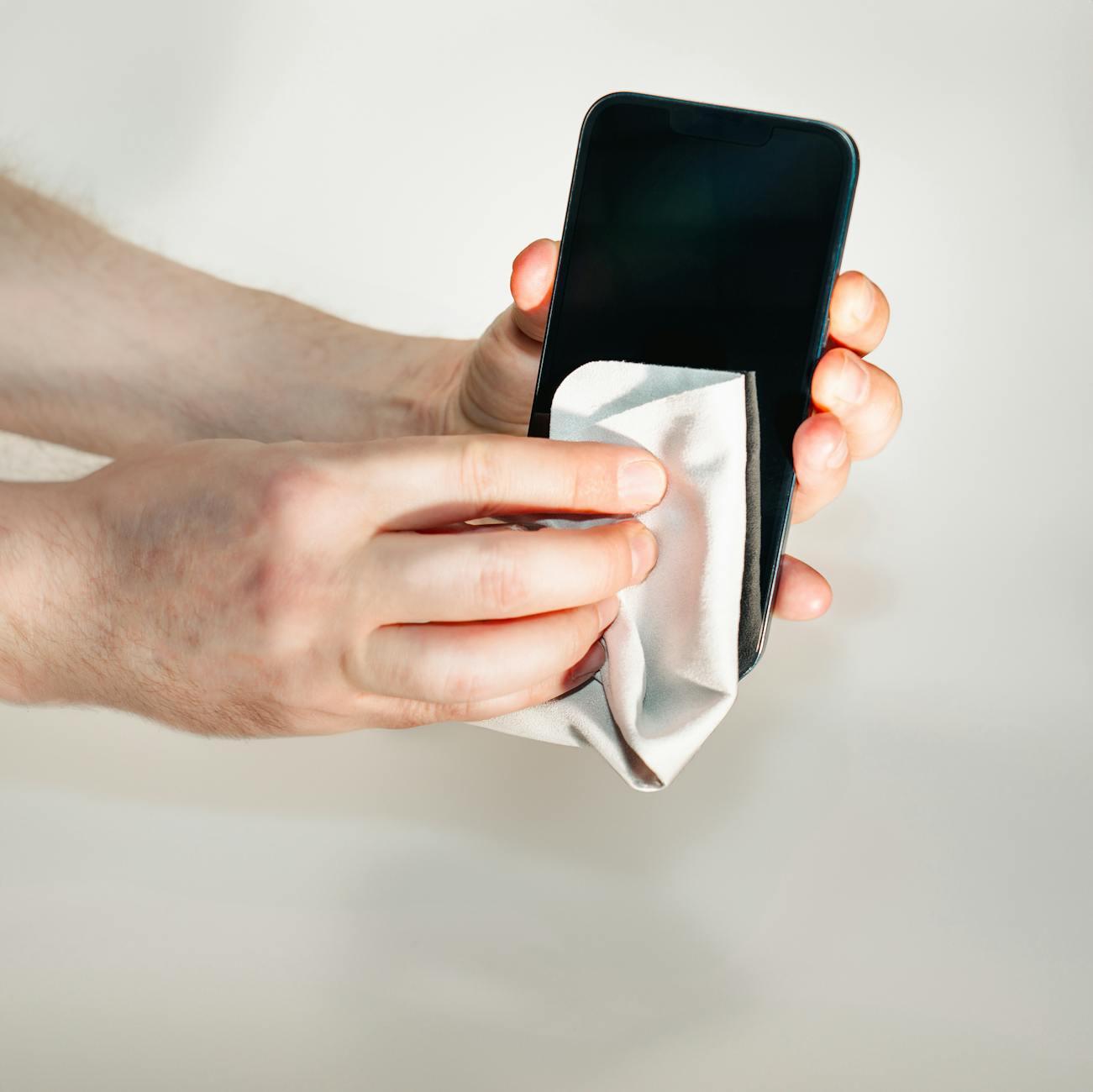
Most people approach phone cleaning the way they approach cleaning their kitchen table: a quick wipe with a dry cloth or the corner of their shirt. This removes visible dust and fingerprints but does virtually nothing to eliminate bacteria. Bacteria are invisible and require active intervention to remove—specifically, either physical friction combined with moisture, or chemical disinfection. A dry wipe won’t accomplish either. The bacteria living on your phone have established biofilms—protective matrices that make them resistant to casual cleaning. These films allow bacteria to survive and proliferate despite surface exposure.
To effectively eliminate them, you need either 70% isopropyl alcohol (which disrupts bacterial cell membranes), a disinfecting wipe specifically formulated for electronics, or intense mechanical scrubbing with a damp cloth. Most people do none of these things. Studies show that over 25% of UK adults never clean their phones at all, and an additional significant percentage clean them only sporadically. The tradeoff here is that aggressive phone cleaning, especially with alcohol-based solutions, can damage phone coatings, accelerate screen degradation, and void warranties on some devices. Manufacturers often don’t recommend isopropyl alcohol on screens because it can strip protective coatings. This creates a genuine conflict: effective bacterial elimination versus device longevity. Many people rationally decide not to aggressively clean their phones because the cost to their device seems higher than the cost of phone bacteria.
The Bathroom Connection You’re Not Thinking About
Here’s a behavioral fact that makes the phone bacteria problem worse: 59% of people admit to using their phones in bathrooms or washrooms. Some are checking messages during a quick visit; others spend considerable time scrolling while sitting. Bathrooms are the primary source of fecal bacteria, including E. coli. Every bathroom visit with your phone significantly increases the bacterial load on your device. When you then bring that phone to your face—and most people do so within hours—you’re transferring bathroom bacteria directly onto your skin.
This behavior is so normalized that most people don’t even think of it as risky. We’ve been trained to wash our hands after the bathroom, but few people clean their phones after bathroom use. Your phone gets the same bacterial exposure as your hands, but without the hand-washing intervention that follows. This creates a disconnect: you leave the bathroom with clean hands but a contaminated phone, then touch your face with that phone minutes later. The warning here is that if you struggle with acne, particularly cystic acne or persistent breakouts, and you frequently use your phone in the bathroom, you’re likely reinfecting your skin multiple times daily with fecal bacteria. Simply changing this one habit—leaving your phone outside the bathroom—could have a measurable impact on your skin health. It’s a free intervention that requires only behavioral change, not products or procedures.
What Skincare Routines Miss
No amount of salicylic acid or benzoyl peroxide can work optimally if you’re continuously reinfecting your skin from your phone. Your skincare routine represents your active effort to improve your complexion, but it operates within the context of your overall hygiene practices. If you’re cleansing your skin twice daily with a quality acne-fighting cleanser, applying targeted treatments, and then immediately pressing a bacteria-laden phone against your face, you’re fighting half the battle. Consider this real-world scenario: someone with moderate acne starts a new skincare routine with adapalene (a retinoid) and benzoyl peroxide.
They see improvement over four to six weeks. But they continue using their unwashed phone constantly, pressing it against their chin and cheeks where they also applied the treatment. Their progress plateaus because the treatment is working against a constant reinfection source. If they added phone cleaning—wiping their phone with an alcohol wipe twice daily—they might see an additional 15-20% improvement in their breakout frequency, simply by removing one variable: phone bacteria.
Moving Forward: Phone Hygiene as Part of Skincare
Effective acne management in the modern world requires treating your phone as a hygiene factor on par with hand-washing and face-washing. This doesn’t mean obsessive behavior—it means intentional, regular practices. Using disinfecting wipes designed for electronics (like Clorox disinfecting wipes or phone-specific products) to wipe your phone once or twice daily takes less than a minute and eliminates the majority of bacteria on your screen. For maximum protection, wipe your phone before and after phone calls, or at minimum, twice daily.
The future of acne treatment likely includes recognizing digital device hygiene as a foundational element of skin health. As phones become even more integrated into our daily lives—augmented reality applications, longer screen time, more frequent face contact—the bacterial load from devices will only increase. Dermatologists may begin asking patients about phone-cleaning habits the way they ask about sleep and diet, because the evidence clearly supports that bacteria from phones are reaching skin and contributing to inflammation. Taking this seriously now, before it becomes mainstream medical knowledge, gives you a competitive advantage in controlling your own acne.
Conclusion
The bacteria on your smartphone far exceed the contamination on a toilet seat, and this fact has direct implications for your skin health. With bacteria counts 10-20 times higher than toilet seats, and containing pathogenic species like MRSA and Streptococcus, your phone represents an ongoing source of skin infection and acne triggers. The majority of skincare consumers remain unaware of this risk or dismiss it as inconsequential, but for anyone struggling with acne, phone hygiene is a free, science-backed intervention that directly impacts treatment effectiveness.
Start treating your phone as part of your skincare routine, not separate from it. Wipe your phone with a disinfecting wipe once or twice daily, avoid using it in bathrooms, and clean it before phone calls. These small behavioral changes, combined with your existing skincare regimen, remove a significant variable in the acne equation. Your skin will thank you—quite literally.
You Might Also Like
- At Least 66% of Parents of Teens With Acne Don’t Realize That Their Hair Products May Be Causing Forehead and Temple Breakouts
- At Least 32% of Men With Back Acne Have Never Been Told That Chemical Sunscreens Can Irritate Acne-Prone Skin More Than Mineral
- At Least 69% of Patients Using Retinoids Have Never Been Told That Fabric Softener Residue on Pillowcases Can Irritate Acne-Prone Skin