
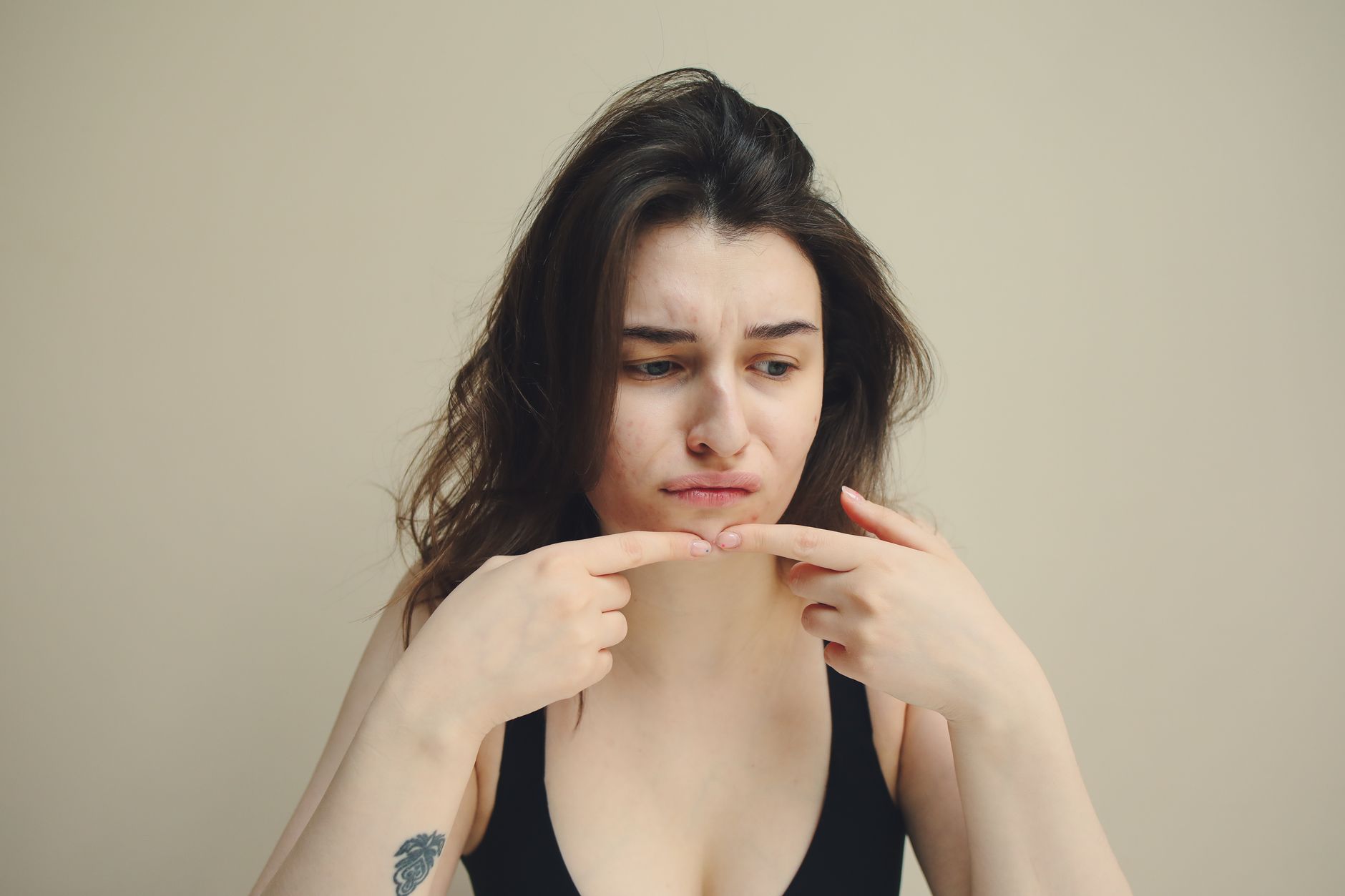
The same chin pimple keeps coming back because a deep cyst leaves a small sac under the skin that never fully clears and can refill. The chin also reacts strongly to hormonal shifts that increase oil, bacteria, and inflammation in the same follicle. A cyst here means a ballooned, oil-filled channel under the surface, not a surface whitehead. That structure heals slowly and reinflames easily, which is why the spot feels tender again in the same place.
Medical information disclaimer: This article is for general educational purposes only and does not provide medical advice, diagnosis, or treatment. Always consult a physician or other qualified health professional about symptoms, medications, tests, or treatment decisions.
Table of Contents
- What stays behind under the skin?
- Why does it favor the chin and jawline?
- Does picking make it return faster?
- What helps stop the cycle?
What stays behind under the skin?
Same-spot breakouts are usually deep cysts. According to Well+Good reporting dermatologist Arielle Kauvar, the blocked channel forms a sac that can refill and reinflame after the visible bump fades dermatologist's explanation of repeat cysts. Acne develops through excess sebum, pore clogging from abnormal keratinization, overgrowth of Cutibacterium acnes in the oily follicle, and inflammation.
The National Institutes of Health describes these as four linked processes in its NIH review of how acne forms. When the deeper sac remains, surface healing is misleading. Oil and dead cells collect again, bacteria multiply in the trapped sebum, and pressure builds until pain and swelling return.
Why does it favor the chin and jawline?
Chin, jawline, and upper-neck acne follows a hormonal pattern. Elevated androgens stimulate sebaceous glands, raise sebum output, feed C. acnes growth, and create deeper lesions that heal slowly, as described by Harvard Health.
Adult women are affected most often. Tender knots under the skin on the cheeks, jawline, chin, and upper neck may flare before menstruation and continue past age 25. This timing matters for decisions. A bump that arrives monthly, feels deep, and fades slowly points more toward cyclical hormonal acne than poor cleansing.
Does picking make it return faster?
Yes. Squeezing or partial extraction leaves residue behind and pushes infected material deeper. Curology's dermatology review notes that this spreads bacteria to nearby pores and raises inflammation and permanent scarring risk.
Fingers and extractors rarely empty a cyst sac. They break the follicle wall, spill contents under the skin, and turn one painful spot into a wider tender area. Hands-off care lowers that risk. Keep the area clean, avoid digging at the center, and do not try to force a deep knot to drain.
What helps stop the cycle?
U.S. dermatology guidance recommends topical benzoyl peroxide to reduce acne bacteria, topical retinoids to unclog pores, and oral doxycycline with topical antibiotics to reduce bacteria and inflammation. The American Academy of Dermatology outlines this approach in its updated acne management guidelines.
For repeated lower-face flares, topicals alone often fall short. According to Harvard Health, women with menstrual flares may need spironolactone or combined oral contraceptives plus medical evaluation for PCOS Harvard Health explanation of hormonal acne care. Useful next steps look like this:.
- Track flares for two to three cycles, noting chin pain, swelling, and period timing.
- Ask a clinician about retinoids, benzoyl peroxide, or short-term oral treatment for deep lesions.
- Ask whether hormonal therapy or PCOS evaluation fits when breakouts are monthly, severe, or paired with irregular periods or excess hair growth.