
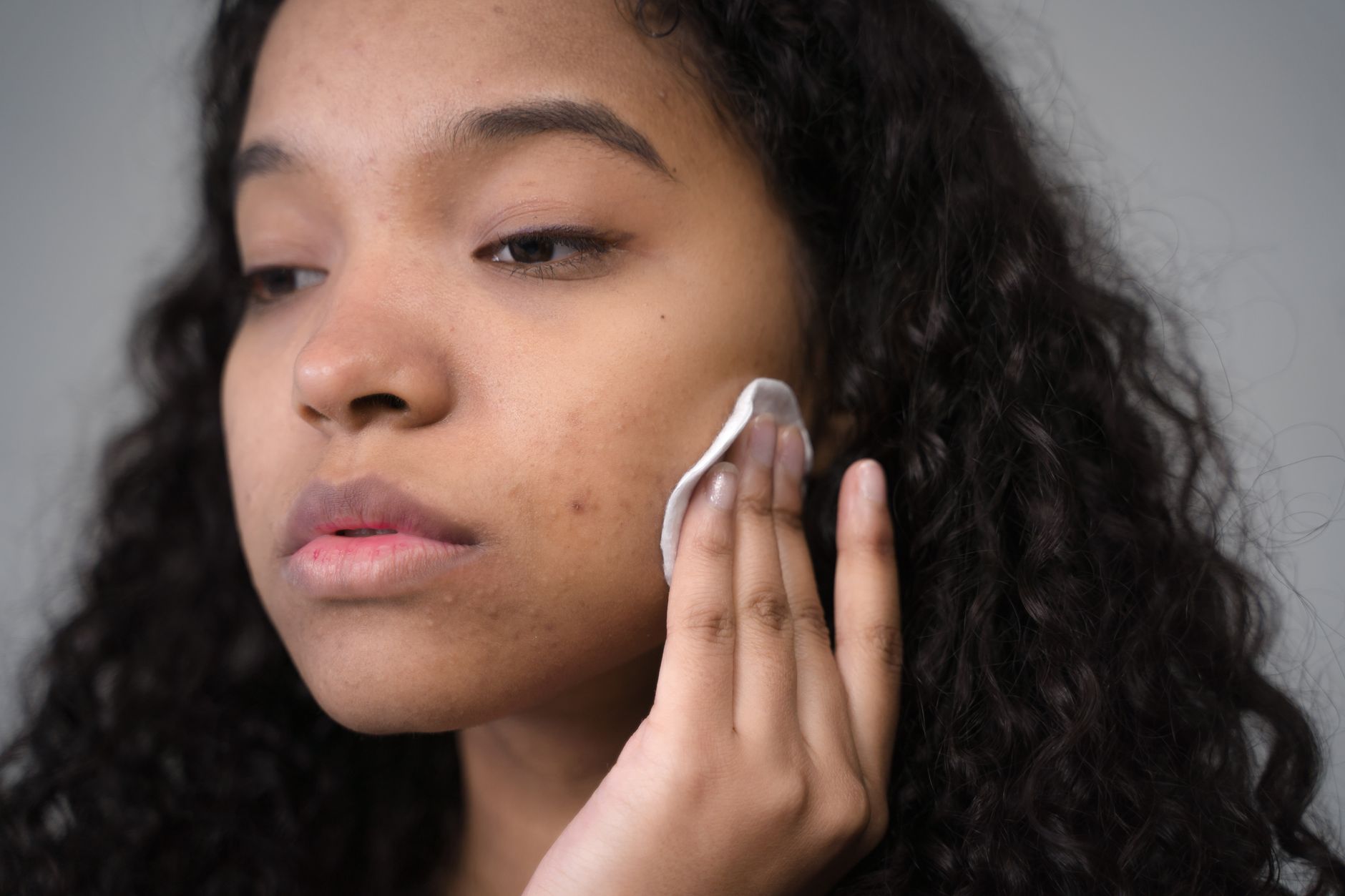
Larger pores tend to collect more oil and dead skin, so they clog more easily and show blackheads more clearly. Once a plug forms, it can stretch the opening and keep that pore looking larger. Pores are tiny skin openings that release oil and sweat. Blackheads are open acne bumps where excess oil plus dead skin fill the follicle, most often on the face, neck, back, and chest.
Medical information disclaimer: This article is for general educational purposes only and does not provide medical advice, diagnosis, or treatment. Always consult a physician or other qualified health professional about symptoms, medications, tests, or treatment decisions.
Table of Contents
- Why oilier pores clog more often
- Do large pores always mean blackheads?
- What makes a blackhead look dark?
- How can you keep large pores clearer?
Why oilier pores clog more often
Excess oil raises the chance that dead cells will stick together inside the follicle. That mixture forms a plug and blocks the pore opening. The Cleveland Clinic notes in its clogged-pore guide that excess oil increases clog risk and the plug can widen the pore. A dermatology study using multiple linear regression found larger facial pore size was linked with higher sebum output, male sex, and older age.
The British Journal of Dermatology published the pore-size and sebum study by Roh and colleagues. In daily life, this means the oiliest zones often show the most blackheads. The nose, forehead, and chin have more active oil glands. Larger openings there make small plugs easier to see.
Do large pores always mean blackheads?
No. Some people naturally have more visible pores without frequent clogs. Baseline pore size also reflects genetics, aging and sun damage, hair-follicle size, and loss of surrounding elasticity. So an enlarged pore is not always a clogged pore.
Skin can look porous because support around the opening has loosened. A wide opening alone does not prove oil and cells are trapped inside. Pore traits also differ across groups. A 2015 imaging study reported in Clinical, Cosmetic and Investigational Dermatology found facial pore traits vary across ethnic and age groups in its multiethnic pore study. Oil level alone poorly predicts who sees large, blackhead-prone pores.
What makes a blackhead look dark?
A blackhead is an open plug, not trapped dirt. Air reaches the sebum-and-cell mixture at the surface. Oxidation and light reflection then make it look dark. That open top is why squeezing rarely helps.
Pressure can injure nearby skin and push material deeper. Scrubbing hard can also inflame the area without removing the plug. Size affects visibility rather than color itself. A plug in a wider or repeatedly clogged pore covers more surface. The same dark material therefore looks like a larger dot.
How can you keep large pores clearer?
Keep oil and dead cells moving out instead of packing in. Dermatologists advise gentle twice-daily cleansing, non-comedogenic products, salicylic acid or retinoids to unclog pores, daily sunscreen, and avoiding squeezing or harsh scrubbing.
A simple routine is easier to maintain: Stay consistent for several weeks before judging change. If plugs are painful, spreading, scarring, or not improving, see a dermatologist for personal care options.
- wash gently morning and night, then rinse well
- choose non-comedogenic moisturizer, makeup, and sunscreen
- use salicylic acid or a retinoid as directed to unclog pores
- wear daily sunscreen and avoid picking or harsh scrubs