

Artificial intelligence is fundamentally changing how acne is diagnosed and assessed, offering objective measurements that match or exceed what dermatologists can achieve manually. Rather than relying solely on a clinician’s visual judgment—which can vary from provider to provider—AI systems trained on thousands of images can now classify acne severity, detect specific lesion types, and provide consistent, reproducible assessments. A recent smartphone-based study of over 1.1 million people in China demonstrated how accessible this technology is becoming, using a ResNet-50 AI model to grade acne into severity categories with mean accuracy of 0.85.
Beyond diagnosis, AI is enabling remote monitoring through smartphone apps that can recommend when to seek professional help, suggest tailored skincare adjustments, or flag cases that need urgent dermatology consultation. This article explores how AI is being applied to acne diagnosis, what these systems can actually do, where they fall short, and what this means for patients and practitioners. We’ll look at the accuracy data from recent studies, examine how AI detects different lesion types, discuss the smartphone applications that are already in use, and address the significant research gaps that still exist before these tools become standard clinical practice.
Table of Contents
- How Accurate Are AI Systems at Diagnosing Acne?
- What Types of Lesions Can AI Detect and Classify?
- Smartphone Apps and Remote Monitoring for Acne
- AI Assessment Versus Traditional Dermatologist Evaluation
- The Reproducibility and Research Quality Problem
- Current Clinical Deployment and Practical Reality
- The Path Forward for AI in Acne Diagnosis
- Conclusion
- Frequently Asked Questions
How Accurate Are AI Systems at Diagnosing Acne?
AI systems for acne diagnosis have demonstrated impressive accuracy in controlled studies. One automated acne assessment scheme achieved 0.9091 accuracy—essentially matching human dermatologist performance—while researchers using facial acne severity grading based on Chinese clinical guidelines achieved an F1 value of 0.8, indicating strong precision and recall across severity categories. These results suggest that AI can reliably identify and grade acne when trained on appropriate datasets.
However, the practical accuracy depends heavily on how the system is trained. Smartphone-based AI that processes images taken by patients themselves achieved a mean accuracy of 0.85 for severity grading, which is excellent considering the variability in lighting, angle, and image quality that comes with user-generated photos. The large-scale Chinese study of 1,156,703 participants using smartphone AI showed that this approach could work at population scale, classifying acne into four severity grades. This is important because it suggests AI doesn’t require professional medical imaging equipment—it can work with tools patients already have.
What Types of Lesions Can AI Detect and Classify?
Advanced AI systems can distinguish between different acne lesion types with specific precision. The AcneDet system, which uses Faster R-CNN deep learning architecture, can detect and differentiate four distinct categories: blackheads and whiteheads, papules and pustules, nodules and cysts, and acne scars. This level of specificity matters because different lesion types indicate different disease severity and may require different treatment approaches—nodules and cysts, for example, typically signal more severe acne that benefits from stronger interventions. The ability to categorize lesions automatically reduces what’s called inter-observer variability—the natural inconsistency that occurs when different clinicians examine the same patient.
A dermatologist examining someone on a bad day might grade their acne as moderate, while the same patient examined by a different clinician could receive a different rating. AI provides standardized, objective assessments that eliminate this human inconsistency. This is particularly valuable in clinical research and long-term monitoring, where tracking genuine changes in severity matters more than a single snapshot assessment. However, one significant limitation emerged from a 2026 systematic review of acne diagnosis research published between 2017 and 2025: 58.6% of studies failed to provide detailed specifications about image resolution or their validation datasets, raising serious concerns about reproducibility. This means many published AI acne systems may not perform as well when applied to different patient populations or different types of images than what they were originally trained on.
Smartphone Apps and Remote Monitoring for Acne
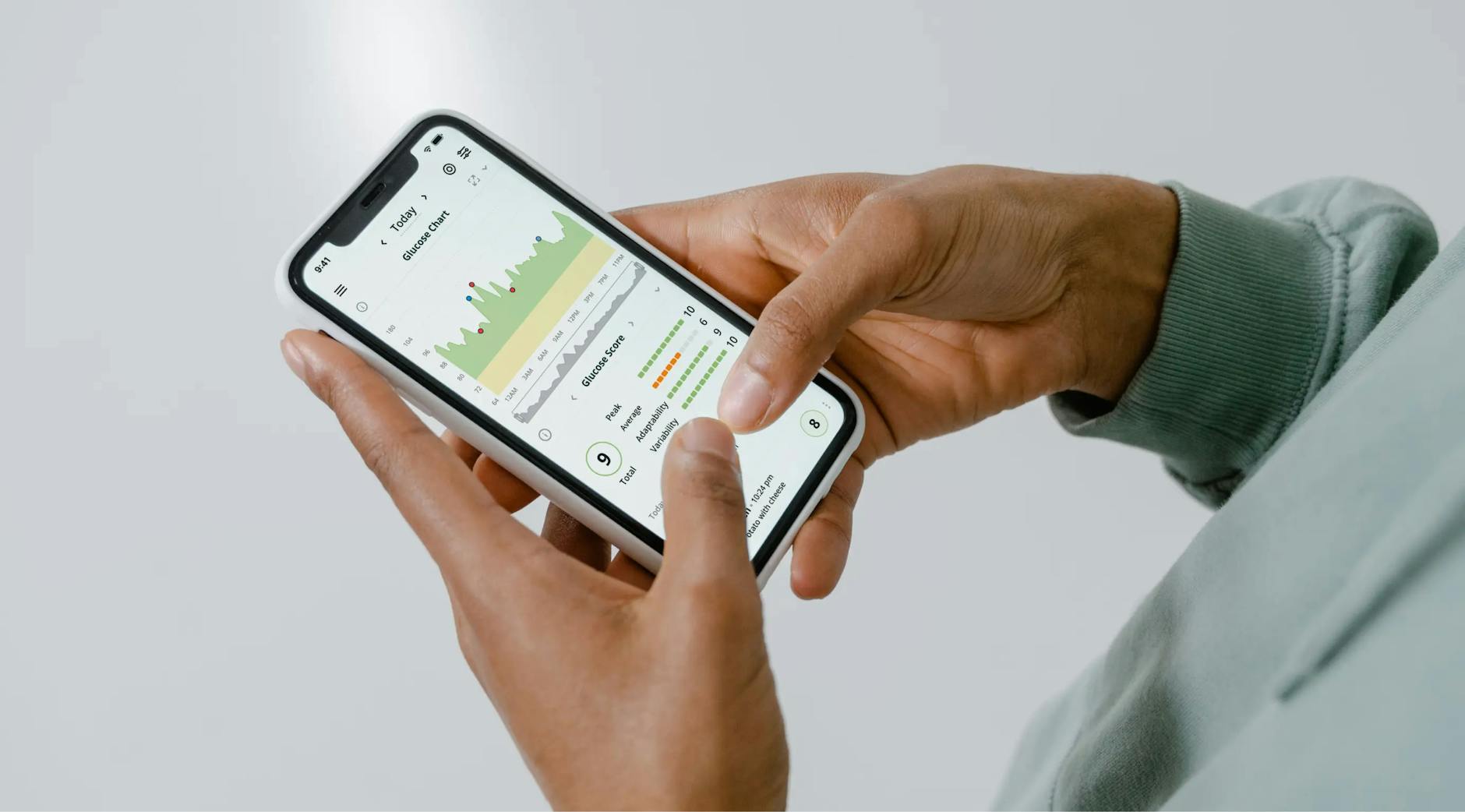
One of the most practical applications of AI in acne is the development of smartphone-based tools that patients can use at home. AI-powered apps can photograph a patient’s acne and immediately classify its severity, then provide recommendations based on that assessment. For mild to moderate acne, these systems might suggest specific skincare products, lifestyle adjustments, or at-home management strategies. For more severe cases, they can recommend scheduling a teledermatology consultation or visiting a dermatologist in person. This remote capability is being enhanced through cloud and Internet of Things integration, allowing continuous monitoring from home.
Instead of requiring office visits every 4-6 weeks, a patient with acne could photograph their skin weekly via an app, and the AI would track whether their treatment is working. This is especially valuable for patients in rural areas or those with limited access to dermatology care. The app can alert patients when they’re improving, which can improve medication adherence, or flag when their acne is worsening and professional intervention is needed. An important limitation: current smartphone AI systems are still predominantly studied in retrospective research rather than in real prospective clinical trials with actual patient outcomes. This means while the technology shows promise, we don’t yet have strong evidence that AI recommendations actually improve treatment outcomes compared to standard dermatology care.
AI Assessment Versus Traditional Dermatologist Evaluation
The traditional approach to acne diagnosis relies on a dermatologist’s clinical judgment and experience. They examine the skin visually, sometimes use a magnifying device, and mentally categorize severity based on their training. This approach has a well-documented weakness: even among experienced dermatologists, there’s significant disagreement on severity grading. One examiner might assess mild acne while another rates the same patient as moderate. AI offers a potential solution by providing objective, quantifiable assessments.
Because the system evaluates the same features every time the same way, it eliminates the subjectivity. Research shows AI can match dermatologist accuracy—that 0.9091 accuracy score was comparable to what human clinicians achieved. But there’s an important tradeoff: AI excels at pattern recognition and consistency, yet it may miss contextual factors that experienced dermatologists consider, such as how the patient’s acne responds to previous treatments, family history, hormone status, or medication side effects. AI assesses what it sees in the image; dermatologists integrate visual assessment with patient history. The most sensible current approach may be a hybrid model where AI provides the objective severity grading and lesion classification, while dermatologists add their clinical judgment and treatment planning. This combines the consistency and objectivity of AI with the contextual understanding and experience that human clinicians provide.
The Reproducibility and Research Quality Problem
A critical finding from the 2026 systematic review of AI acne diagnosis research revealed a substantial methodological gap: studies were inconsistent in reporting essential details about their datasets and validation approaches. Without knowing the resolution of the images used, the demographics of the patient population, or exactly how the validation dataset was constructed, other researchers cannot reproduce the published results or understand whether the AI would work with their own patient populations. This reproducibility gap is a red flag for clinical adoption. If a dermatology clinic implements an AI system that claimed 0.9091 accuracy in published research, but that accuracy was only measured on one specific population with one specific image type, the system might perform much worse when applied to their diverse patient population.
This is why the reproducibility problem matters beyond just academic concerns—it directly impacts whether AI tools will actually work reliably in the real world. Additionally, the field lacks prospective clinical trials as of 2025. Most research is retrospective, meaning researchers examined old images and tested how well AI could classify them after the fact. This is valuable for initial development, but prospective studies—where AI is used to guide actual treatment decisions and then patient outcomes are tracked—are needed to prove that AI diagnosis actually improves how we treat acne.
Current Clinical Deployment and Practical Reality
Despite the promising accuracy numbers, AI acne diagnosis systems have not yet become standard in most dermatology practices. The technology exists and works, but adoption has been limited. Some practices are experimenting with AI-assisted severity assessment as a documentation tool—the system photographs the skin and generates an automated severity grade that goes into the patient’s chart, which can help with consistency over time and with reimbursement documentation.
Cloud-based IoT platforms are enabling more sophisticated deployments where patients can upload photos remotely and AI provides immediate preliminary assessment and triage recommendations. A patient with worsening nodular acne might receive an automated alert to contact their dermatologist urgently, while someone with stable mild acne might get a reminder to continue their current skincare routine. This infrastructure exists now, though it’s not yet widely available through standard dermatology clinics.
The Path Forward for AI in Acne Diagnosis
The next critical step for AI in acne diagnosis is moving from retrospective research to prospective clinical studies that measure actual patient outcomes. We need data showing that AI-guided acne management leads to better treatment responses, faster clearance, or improved quality of life compared to traditional care. We also need standardized validation protocols so that published AI systems can be reliably reproduced and deployed across different clinical settings.
As this technology matures and more diverse datasets train these systems, smartphone-based acne assessment will likely become a routine part of remote care and patient self-monitoring. The most valuable near-term application is probably not replacing dermatologists, but rather extending their capacity—handling triage, tracking treatment progress between appointments, and identifying which patients need urgent evaluation. For patients with acne, this means more frequent objective assessment and more opportunities to catch problems early, even without frequent office visits.
Conclusion
Artificial intelligence is demonstrating real capability in acne diagnosis, with systems achieving accuracy comparable to experienced dermatologists and the ability to detect specific lesion types with precision. The technology is most advanced and accessible through smartphone applications, making objective acne assessment available to millions of people.
However, significant gaps remain: most research is retrospective, reproducibility issues plague the literature, and prospective clinical trials proving improved patient outcomes are lacking. For patients and clinicians, the practical takeaway is that AI acne diagnosis tools are useful today as objective severity graders and remote monitoring aids, but they work best as supplements to dermatology care rather than replacements. As the field matures with better research standards and broader deployment, expect to see AI increasingly integrated into routine acne management—particularly for monitoring between appointments, guiding treatment adjustments, and improving access to assessment in underserved areas.
Frequently Asked Questions
Can I diagnose my own acne with an AI app?
AI apps can accurately classify your acne severity and lesion types from a smartphone photo, providing an objective baseline for tracking. However, a dermatologist should still evaluate your specific case to consider factors like your medical history, previous treatments, and underlying causes. Use AI assessment for monitoring and triage, not as your only diagnostic step.
How accurate is smartphone AI compared to what I’d get in a dermatologist’s office?
Studies show smartphone-based AI achieves about 0.85 mean accuracy for severity grading, and some systems match dermatologist performance at 0.9091 accuracy. The accuracy is good, but it depends on having clear, well-lit photos and the specific AI system being used. Quality varies between different apps.
Will AI replace dermatologists for acne treatment?
No. AI excels at objective pattern recognition and consistency, but dermatologists provide context—understanding how your acne has responded to previous treatments, considering your overall health, and making nuanced decisions. The most effective approach combines AI’s objectivity with dermatologist judgment.
Is AI acne diagnosis available now, or is it just research?
Both. The technology exists in published research and some commercial apps are available, but it hasn’t been widely integrated into standard dermatology practice. Cloud-based platforms for remote monitoring are emerging, but prospective clinical studies proving improved outcomes are still being conducted.
What’s the biggest limitation of current AI acne diagnosis systems?
Reproducibility and inconsistent research standards. About 58.6% of published studies lack crucial details about image resolution and validation methods, making it impossible to know whether published accuracy will transfer to different patient populations or clinical settings.