
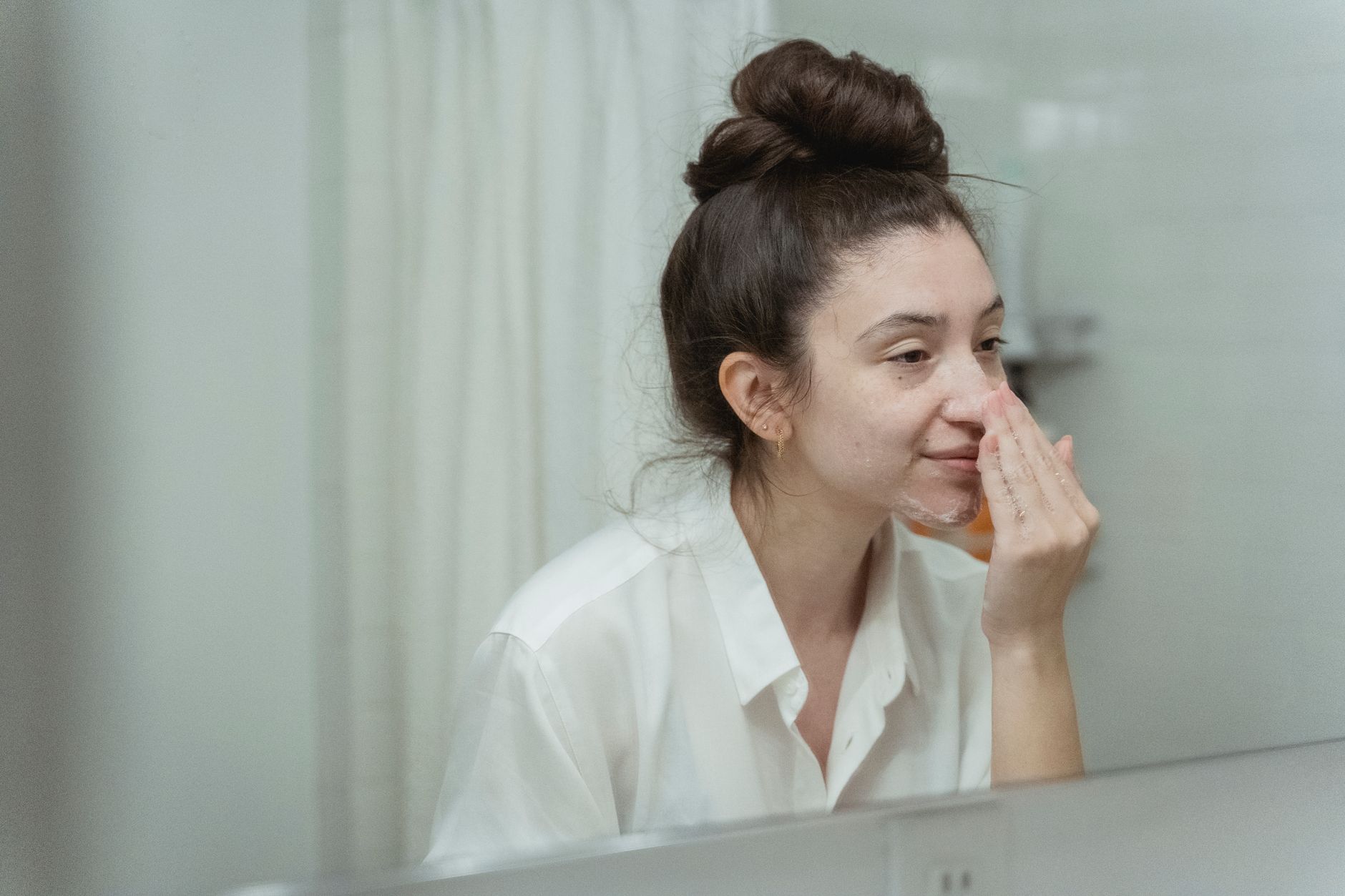
Adults with persistent acne can compare probiotic claims by matching exact strain, dose, lesion type, treatment length, and solo versus add-on use. The skin microbiome — bacteria living on skin — showed mixed changes, and shifts did not always mean fewer breakouts.
Persistent acne means breakouts that begin or continue in adulthood, especially in women. According to Dermatology and Therapy, the 2026 systematic review pooled 33 human studies with 2,112 patients aged 18-33 treated for 4-25 weeks. The American Academy of Dermatology reports acne affects 85% of adolescents and up to 15% of adult women.
Medical information disclaimer: This article is for general educational purposes only and does not provide medical advice, diagnosis, or treatment. Always consult a physician or other qualified health professional about symptoms, medications, tests, or treatment decisions.
Table of Contents
- What the 33-study review covered
- Did Lactobacillus reduce lesion counts?
- Did skin bacteria actually change?
- How can adults compare product claims?
What the 33-study review covered
The large review included 5 prebiotic, 24 probiotic, and 7 postbiotic studies. Most products were tested as adjuncts to standard care, not alone. That matters because add-on results do not prove solo benefit.
According to Dermatology and Therapy, oral and topical prebiotics, probiotics, and postbiotics showed favorable safety with no serious adverse events. Tolerability in short trials does not prove long-term safety in adults. Adults should weigh short study windows of 4-25 weeks against ongoing use.
Did Lactobacillus reduce lesion counts?
According to the Journal of Cosmetic Dermatology, a separate 2026 GRADE meta-analysis pooled 5 randomized trials with 332 patients of Lactobacillus-only probiotics. It found no significant drop in inflammatory, non-inflammatory, or total lesion counts versus placebo or benzoyl peroxide.
That result limits broad clear-skin claims for Lactobacillus-only formulas. Shoppers should check which lesion type a product measured. A claim about total lesions needs total-lesion data, not only red pimples or only comedones.
Did skin bacteria actually change?
In a placebo-controlled adult trial of spore-based probiotics, researchers saw gut taxa shifts and higher circulating acetate and propionate. According to the UC Davis pilot study in Nutrients, supplementation did not significantly change skin or gut Shannon diversity. Shannon diversity means the variety and balance of microbes in a sample.
A topical cream with live lactobacilli acted more directly on skin. According to the University of Antwerp preprint, it reduced inflammatory lesions and comedones while transiently lowering staphylococci on acne-prone skin. Oral capsules and live skin creams therefore offer different evidence and cannot swap claims.
How can adults compare product claims?
According to the National Center for Complementary and Integrative Health, probiotic effects are strain-specific and cannot be extrapolated across products. Adults should match the exact formula tested, not the general species name. Save the label photo, claimed lesion change, weeks tested, and add-on status, then buy only when all five match tested evidence.
- Exact genus, species, and strain on the label
- CFU dose per day or per application
- Lesion type counted: inflammatory, non-inflammatory, or total
- Treatment length in weeks and daily routine
- Solo use versus add-on to standard acne care
You Might Also Like
- Skin Microbiome Outcomes in the 2026 Probiotic Acne Review: How Adults With Persistent Acne Can Avoid Microbiome Hype
- Probiotics for Acne in a 2026 Systematic Review and Meta-Analysis: How Adults With Persistent Acne Can Compare Probiotic Claims
- Why the 2026 Probiotic and Secretome Paper Reports No Trial Results Yet: How Adults With Persistent Acne Can Avoid Microbiome Hype