
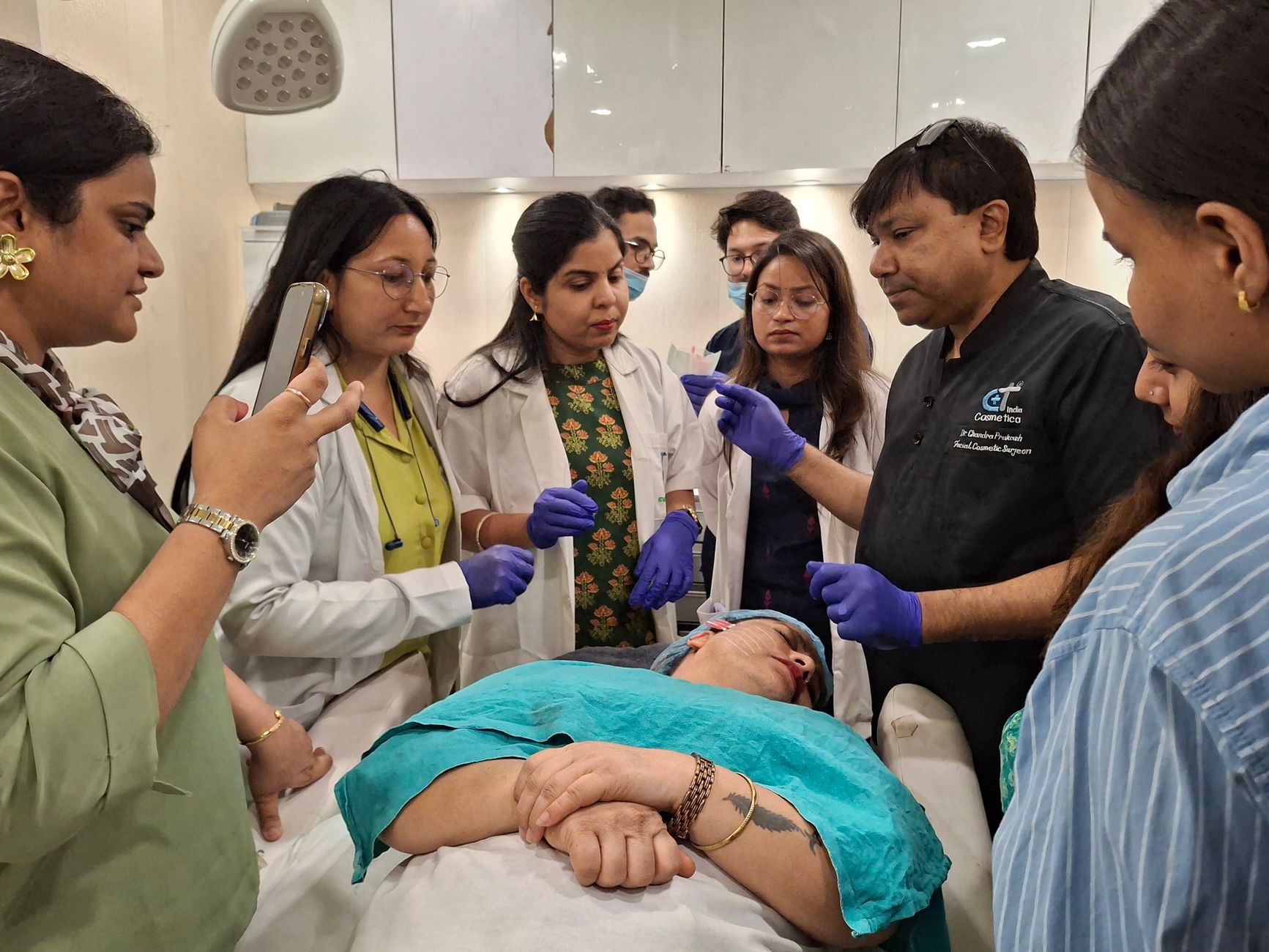
Blinded scar counts showed no difference between subcision alone and subcision with suction, while patients and doctors rated suction higher. The trial enrolled healthy adults ages 18 to 65 with bilateral rolling scars and excluded children, pregnant people, and keloid-prone patients.
The procedure called subcision uses a needle to release tight bands under depressed scars. Rolling scars are broad, shallow dips that give skin a wavy look. This article compares the two types of results and explains who the findings fit.
Medical information disclaimer: This article is for general educational purposes only and does not provide medical advice, diagnosis, or treatment. Always consult a physician or other qualified health professional about symptoms, medications, tests, or treatment decisions.
Table of Contents
- What did objective counts show?
- How did patient ratings differ?
- Who was eligible for the trial?
- Who was left out and what are the limits?
What did objective counts show?
Each person received one subcision treatment on both cheeks, plus 10 suction sessions on one randomly chosen side. Photos were taken at baseline, one month, and four months, according to the Research Square preprint in its protocol details.
Blinded dermatologists scored the photos with ASSS, a scar severity scale, plus improvement grades and scar counts. They found no difference between the two sides at one or four months.
How did patient ratings differ?
Both treatments improved atrophic scars, but improvement scores were higher on the suction side for doctors and patients. Doctors scored the gap at p=.002 and patients at p=.026, according to the U.S. National Library of Medicine PubMed in its trial summary.
In the Research Square preprint report, patients reported 37% mean improvement with suction versus 24% without at one month. The gap faded by four months, but 50% still preferred the combination side versus 21% for subcision alone at one month. Authors read this as a visible benefit that scar counting missed.
Who was eligible for the trial?
The trial enrolled adults 18 to 65 in good health with bilateral rolling acne scars who could consent. About 20 participants were planned at Northwestern University, according to the Veeva Clinical Trials record in its eligibility listing.
You fit the studied group only if all these points match: Split-face design meant each person served as their own comparison, which reduces variation between people. That setup does not show how teens or other scar types respond.
- Adults 18 to 65 in good health
- Bilateral rolling acne scars
- Able to give consent
Who was left out and what are the limits?
The same Veeva Clinical Trials record lists several exclusion groups. They include people under 18, pregnant or lactating people, and people unable to consent.
It also excludes people with mental illness, recent isotretinoin use within 6 months, and keloid or hypertrophic scarring tendency. The pilot was small and single-center, with 28 treatment areas and 154 treatments analyzed. Estimates are therefore imprecise, and results apply best to rolling scars, according to the Research Square preprint in its results analysis.
You Might Also Like
- Objective vs Patient-Rated Results in the 2026 Subcision Trial: How People With Rolling Acne Scars Can Avoid Overreading the Headline
- Subcision With Suction for Acne Scars in a 2026 Split-Face Trial: How People With Rolling Acne Scars Can Avoid Overreading the Headline
- Calcium Hydroxylapatite With CO2 Laser for Acne Scars in 2026: Who Was Studied and Who Was Not for People With Atrophic Acne Scars