
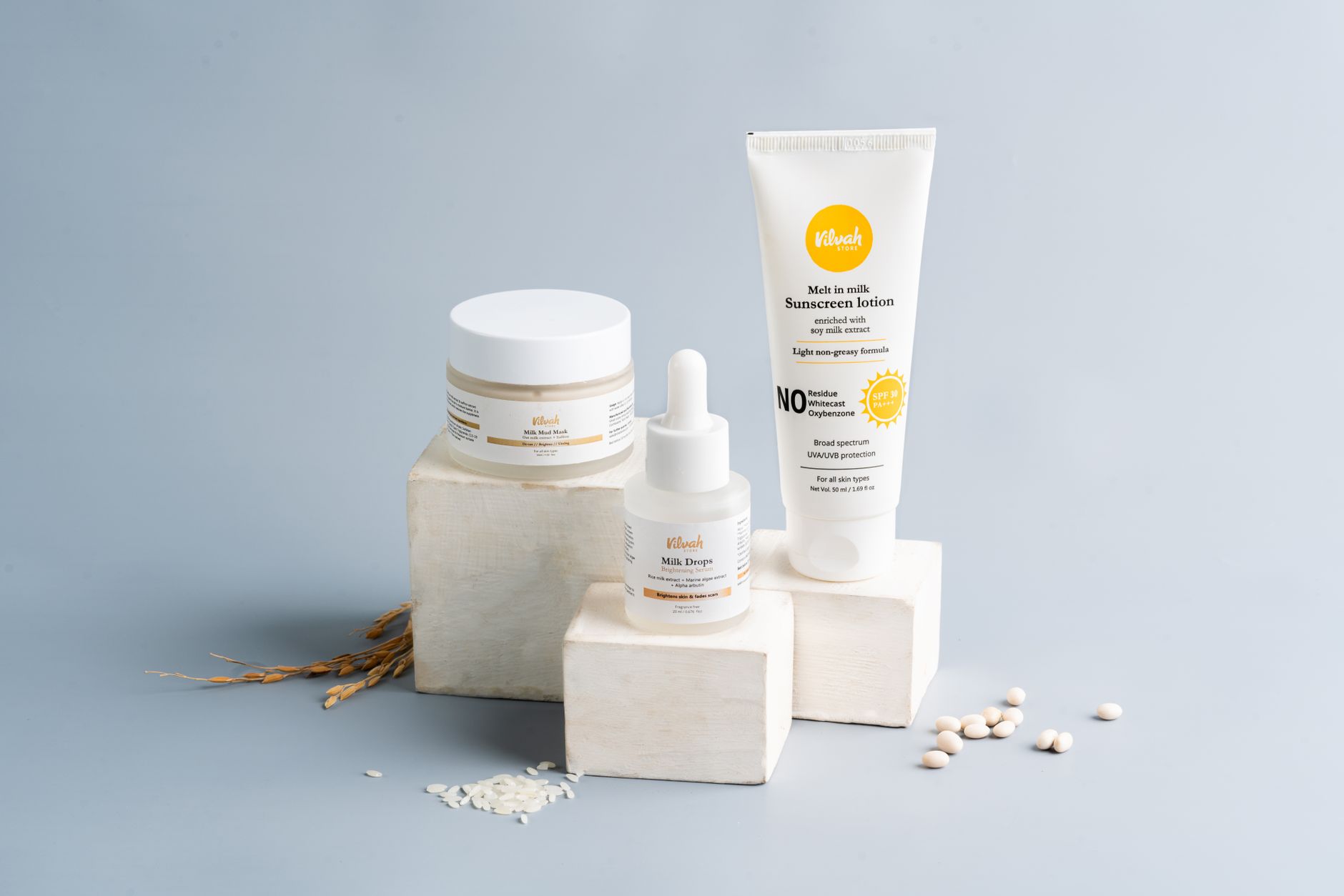
A "non-comedogenic" moisturizer is one the maker says won't clog pores, but the term has no legal definition and no regulator checks it before the product ships. So the label is a starting point, not a guarantee — what you actually check is the formula's barrier ingredients, how your own skin responds over about four to eight weeks, and whether the product keeps you using your acne medication. The American Academy of Dermatology still tells acne patients to look for the phrase, and that advice is sound. It just comes with a caveat the label itself never carries: some products marked non-comedogenic still break some people out, so the first one you buy may not be the one you keep.
Medical information disclaimer: This article is for general educational purposes only and does not provide medical advice, diagnosis, or treatment. Always consult a physician or other qualified health professional about symptoms, medications, tests, or treatment decisions.
Table of Contents
- What the label legally means
- Why the testing behind the claim is weak
- What to check on the ingredient list instead
- Why an acne-prone person needs a moisturizer at all
- How to judge whether one is working
- When to stop troubleshooting and ask a dermatologist
- Frequently Asked Questions
What the label legally means
"Comedogenic" means pore-clogging — a comedo is the plug (a blackhead or whitehead) that forms when oil and dead skin block a follicle. "Non-comedogenic" claims the product won't do that. Nobody has to prove it first. Under the FDA's guidance on cosmetics labeling claims, cosmetic labeling does not require FDA approval before a product goes on the market, and the agency keeps no list of approved or accepted claims.
The only standing requirement is that labeling be truthful and not misleading. There is no defined test a brand must pass and no threshold it must meet. Dermatology research says the same thing. A systematic review in the Journal of Dermatological Treatment, covering PubMed literature from January 1985 to October 2017, concluded that "fragrance-free," "hypoallergenic," "non-comedogenic" and "oil-free" are not regulated by any governing body and offer varied clinical utility. Treat all four as marketing shorthand rather than test results.
Why the testing behind the claim is weak
Most comedogenicity ratings trace back to a rabbit-ear assay, in which ingredients were applied to the inside of a rabbit's ear and the follicles examined for plugging. A 1982 paper in the Journal of the American Academy of Dermatology found an absence of correlation with experience in humans and described "serious limitations to the conclusions that can reasonably be drawn." The model also applied raw ingredients at high or undiluted concentrations — not at the levels found in a finished lotion. There is a second gap. A rating for an ingredient does not transfer to the product containing it. Reviewers in JAAD Reviews note that the rabbit model assumed a finished formula containing a comedogenic raw material would itself be comedogenic — an assumption never validated.
Finished products need their own clinical observation. Human testing is better but still imperfect. As Skin Inc. reports, the majority of comedogenicity testing is done on upper-back skin for products meant for the face, and critics argue back skin does not respond like facial skin and that test durations run too short. That is the practical takeaway: a "0 on the comedogenic scale" ingredient chart tells you very little about the jar in your hand.
What to check on the ingredient list instead
Rather than hunting for an absence of flagged oils, look for the ingredients that repair the barrier your acne treatment is damaging. These show up near the top of the list in moisturizers formulated for treated skin: Also check what is absent: added fragrance, which is a common irritant on skin already sensitised by benzoyl peroxide or a retinoid.
Texture matters too. A gel or lotion sits better on oily skin than a heavy cream, and "oil-free" is a more concrete claim than "non-comedogenic" because you can verify it against the ingredient list yourself.
- Ceramides — lipids that help the skin hold water and stay sealed
- Glycerin — a humectant that pulls water into the outer skin layers
- Hyaluronic acid — another humectant, lightweight and oil-free
- Dimethicone — a silicone that reduces water loss without adding oil
- Niacinamide — well tolerated alongside most acne medications
Why an acne-prone person needs a moisturizer at all
Skipping moisturizer to stay "less greasy" backfires. The AAD explains the mechanism: acne treatments such as benzoyl peroxide and retinoids dry and irritate the skin, and when skin becomes dry the body makes more oil — which can clog pores and lead to more breakouts. Daily moisturizer helps skin tolerate the medication. Trial data supports the pairing.
A double-blind randomized trial published in the Journal of Drugs in Dermatology found that adapalene/benzoyl peroxide gel damaged the skin barrier, measured as elevated transepidermal water loss. Adding a ceramide-containing cleanser and moisturizer significantly reduced the severity and incidence of dryness, redness and scaling — and the treated group had lower inflammatory lesion counts. There is an adherence argument too. A 2014 Delphi panel of 11 dermatologists agreed that dryness and irritation are a very important cause of people abandoning acne treatment, and that ceramide-containing moisturizers may improve adherence. That is expert consensus rather than measured adherence data, but it reframes the decision: the moisturizer's job is to keep you on the medication that clears your skin.
How to judge whether one is working
Give it weeks, not days. The AAD reports that in studies, most patients saw less acne between four and eight weeks after starting an acne-friendly moisturizer. The important limitation: those patients were also using acne medication and a cleanser, so the moisturizer alone was not the treatment. Introduce one new product at a time. If you change your cleanser, your moisturizer and your prescription in the same week, a flare tells you nothing about which one caused it.
Apply the moisturizer to clean skin, and if your medication's instructions specify an order, follow those. Watch for the two different reactions people confuse. Stinging, redness and flaking within days is irritation — usually from fragrance, an active ingredient, or the acne medication underneath. New clogged pores and small bumps appearing in the areas you apply most heavily, over two to four weeks, is closer to a true comedogenic response. The first may settle; the second is a reason to switch.
When to stop troubleshooting and ask a dermatologist
The AAD is explicit that some non-comedogenic products still cause acne in a few people, and that patients may need to try different ones. Two or three failed moisturizers is normal, not a sign that your skin is untreatable. Book an appointment if your acne is deep, painful and nodular, if it is leaving marks or scars, or if over-the-counter treatment has not moved it in three months.
A dermatologist can also tell you whether a product is irritating you or whether the medication dose is simply too aggressive for your current routine — and they can hand you specific product names, which no label reading will do. If the barrier damage is severe enough that you are tempted to stop treatment, say so at the appointment. That is the exact scenario the Delphi panel identified, and it is usually fixable by adjusting frequency rather than abandoning the drug.
Frequently Asked Questions
Is "oil-free" more reliable than "non-comedogenic"?
Neither term is regulated, but "oil-free" is at least checkable against the ingredient list, while "non-comedogenic" describes a clinical outcome nobody verified before sale.
Can a moisturizer clear acne on its own?
No. In the AAD's cited studies, patients who improved over four to eight weeks were also using acne medication and a cleanser.
Do online comedogenic ingredient ratings help?
Very little. Those scales descend from a rabbit-ear model that used raw ingredients at high concentrations, and a rating for one ingredient was never validated as predicting how a finished formula behaves.
My new moisturizer stings. Is it clogging my pores?
Stinging is irritation, not clogging. Check for added fragrance and consider that benzoyl peroxide or a retinoid underneath may be the real source.