
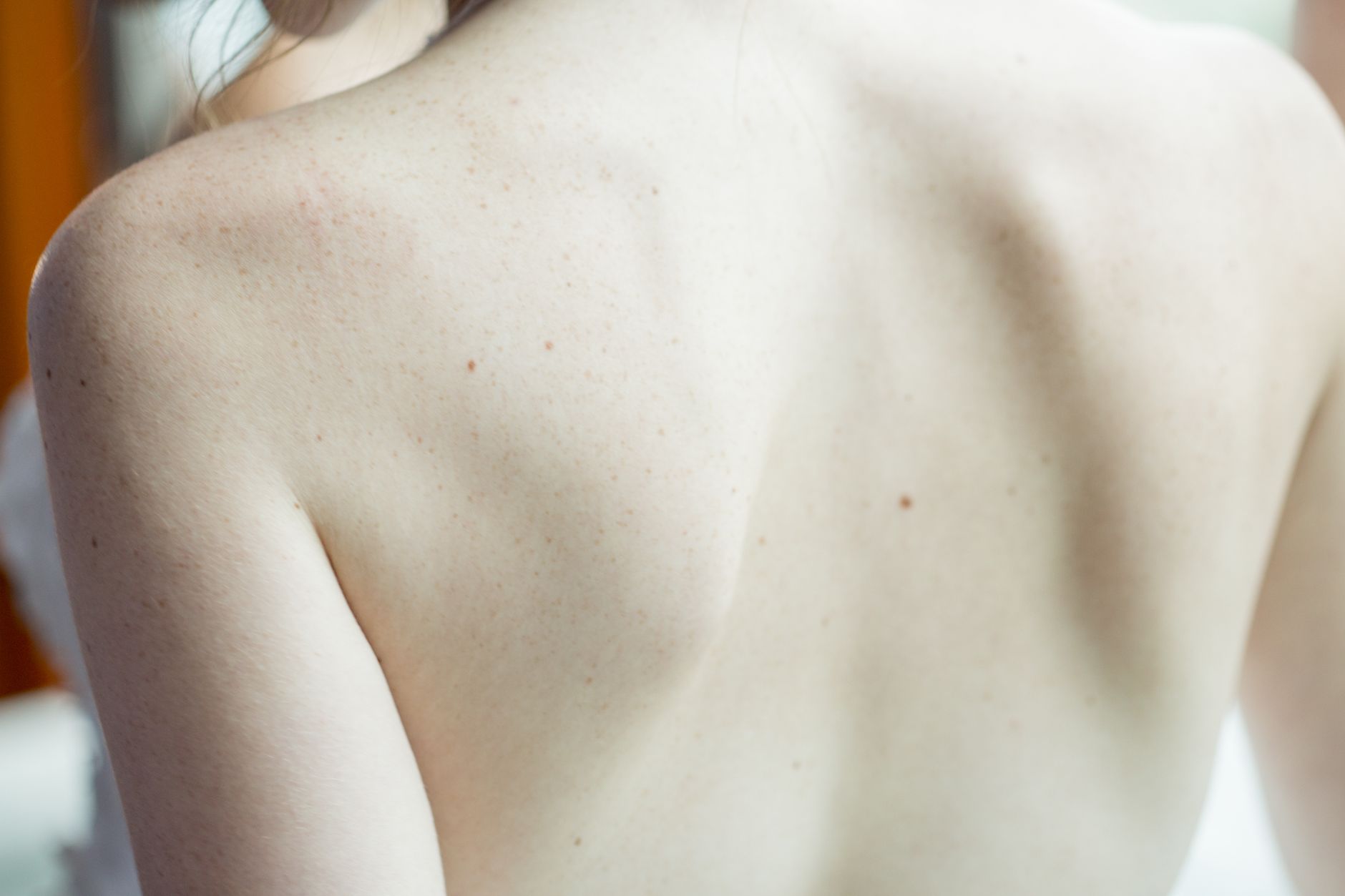
Yes, back acne often hurts when you lean back because the chair presses directly on inflamed pores. Deep, swollen bumps are tender to touch, so pressure quickly enlarges the pain. Back acne means red bumps, whiteheads or blackheads on the back. According to Cleveland Clinic, that clogged mix of oil, sweat, dead skin and bacteria can turn painful, as detailed in Cleveland Clinic's back acne guide.
Medical information disclaimer: This article is for general educational purposes only and does not provide medical advice, diagnosis, or treatment. Always consult a physician or other qualified health professional about symptoms, medications, tests, or treatment decisions.
Table of Contents
- Why Leaning Makes It Hurt
- Could Your Chair Cause Breakouts?
- Why the Back Breaks Out Easily
- What Eases Pressure and Pain
Why Leaning Makes It Hurt
Surface pimples sting when pressed, but deep lesions hurt more. According to MedlinePlus, inflammation deep in the pore creates firm nodules or pus-filled cysts, described in the MedlinePlus acne encyclopedia entry.
A chair back adds steady compression to those swollen spots. The skin cannot give way, so nerve endings around the inflamed pore fire more strongly until you shift forward.
Could Your Chair Cause Breakouts?
Yes, pressure alone can help start breakouts in susceptible skin. According to Dermatology Times, prolonged resting of the back against a seat or bed can trigger acne mechanica, reported in Dermatology Times on friction-related acne.
Acne mechanica means acne caused by friction plus pressure. Sitting with bare or sweaty skin against a rough, hot or tight-backed chair raises that risk, especially with repeated daily contact.
Why the Back Breaks Out Easily
Back skin faces more sweat, oil, pressure, friction and occlusion than facial skin. Tight shirts, backpacks, car seats and office chairs trap heat and rub the same area for hours.
Sweat trapped under shirts or athletic gear during exercise often precipitates back acne. Athletes get it frequently, but anyone with a hot, covered, sweaty back can develop it after work, chores or a long drive.
What Eases Pressure and Pain
Reduce contact and keep the area clean and dry. According to the UK NHS, prompt sweat removal, clean dry shirts, less friction and no picking help, with care for deep or scarring lesions, as advised in the NHS acne guidance.
Deep nodules, cysts, spreading redness or lesions that keep returning need clinical evaluation. Scarring and infection risk cannot be judged by appearance alone.
- Lean forward or add a smooth, breathable cover to reduce rubbing.
- Change out of a sweaty shirt soon after exercise or heat.
- Rinse sweat from the back rather than letting it dry under clothes.
- Do not pick or squeeze bumps.