
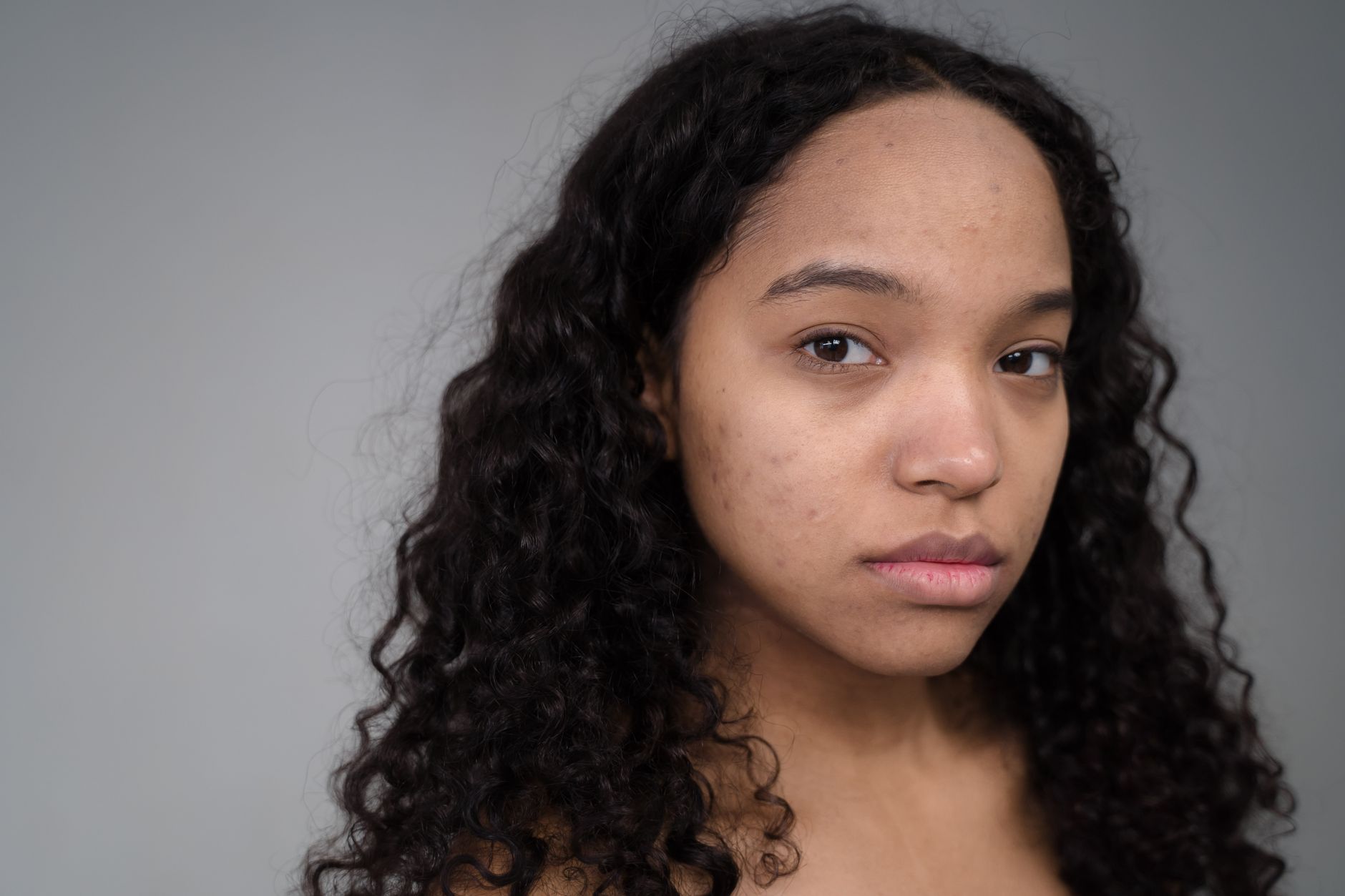
Yes, overhead lighting makes acne scars look deeper without making them deeper. Hard light from above throws tiny shadows into each dip, so texture stands out. Atrophic scars are shallow dips left when inflammation injures the dermis and collagen rebuilds unevenly. According to StatPearls, most acne scars are these atrophic depressions from net loss and faulty remodeling of dermal collagen StatPearls guide to laser revision of scars.
Medical information disclaimer: This article is for general educational purposes only and does not provide medical advice, diagnosis, or treatment. Always consult a physician or other qualified health professional about symptoms, medications, tests, or treatment decisions.
Table of Contents
- Why does overhead light add depth?
- Which scars react most to harsh light?
- How can you check scars in fair light?
- What actually makes scars look smoother?
Why does overhead light add depth?
Overhead bulbs shine straight down across uneven skin. According to the International Artist lighting guide, hard directional overhead light emphasizes texture and casts hard-edged shadows, while broad soft light blurs shadow edges and hides wrinkles Seeing the Light guide.
That shadow edge acts like an outline around each scar. Shiny highlights on raised edges also increase contrast, so the skin reads as rougher and older. According to the London Dermatology Centre, overhead bathroom and mirror lighting creates harsh downward shadows that make pores and old scars look worse without any real change in depth acne-scar recurrence guide.
Which scars react most to harsh light?
Dermatology Times describes three common atrophic types: ice-pick pits, broad boxcar depressions, and wavy rolling scars. All sit below surrounding skin, so each wall can catch a shadow.
Narrow ice-pick pits turn a small overhead shadow into a dark dot. Boxcar scars show a sharp rim because their edges drop straight down. Rolling scars look wavier because shifting shadows follow their broad slopes.
How can you check scars in fair light?
Lighting changes only visibility, not scar depth. Judge texture in daylight or soft frontal light, where illumination fills the dips instead of carving them out. Use the same spot each time for a fair comparison: Bring both views to a consultation: harsh-light photos show your concern, soft-light photos show baseline depth.
- face a window in daytime with no ceiling spot directly above
- use soft frontal light, such as a frosted vanity bar at face level
- keep the same distance, angle, and camera settings for photos
What actually makes scars look smoother?
Makeup, angle, and dimming can hide shadows, but they do not level skin. Lasting change comes from improving evenness, not from changing bulbs.
According to StatPearls, options such as fillers, resurfacing, or subcision improve evenness rather than lighting StatPearls guide to scar revision. A dermatologist can match the method to scar type, depth, skin tone, and downtime. Bring your soft-light photo so you discuss real depth, not shadow depth.
You Might Also Like
- Recovery and Pigment Safety in the 2026 Split-Face Acne Scar Trial: Pigment, Pain, and Recovery Questions for People With Atrophic Acne Scars
- Microneedling for Acne Scars With a History of Keloids: What to Ask First
- Antioxidant Serum After Fractional CO2 Acne Scar Treatment in 2026: How People With Atrophic Acne Scars Can Avoid Overreading the Headline