
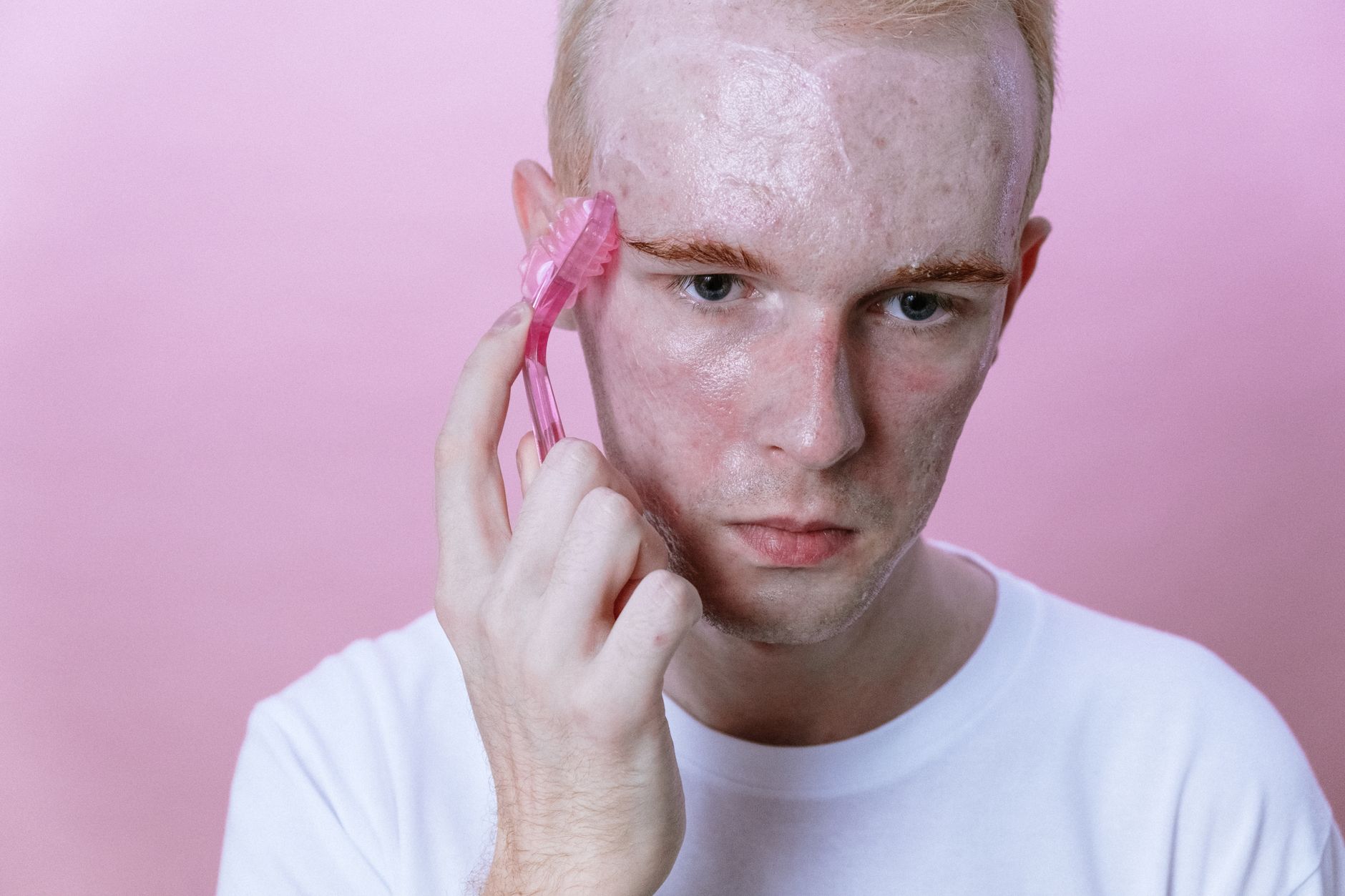
Makeup can contribute to acne, but it is not automatically the cause of every breakout. In 2026, the safest approach is to use lower-risk products, remove them at night, and judge results by your own skin's response. "Acne cosmetica" means acne linked to cosmetic use. It can develop even in people without previous acne, and lesions may appear days to six months after exposure, which makes the trigger hard to spot.
Medical information disclaimer: This article is for general educational purposes only and does not provide medical advice, diagnosis, or treatment. Always consult a physician or other qualified health professional about symptoms, medications, tests, or treatment decisions.
Table of Contents
- Can makeup cause breakouts?
- What labels can help?
- Why ingredient blacklists fall short
- What is the evidence limit?
- When is it irritation rather than acne?
- Keep makeup separate from acne treatment
Can makeup cause breakouts?
Yes. The American Academy of Dermatology says cosmetics can contribute to acne cosmetica, including in people who did not previously have acne.
A delayed breakout can make a recently changed foundation seem innocent while an older product remains the problem. Look for patterns rather than a single pimple. Breakouts concentrated where a product sits—such as the forehead under makeup, cheeks under foundation, or jawline under concealer—give you a practical reason to test that product.
What labels can help?
Choose makeup labeled "oil-free," "won't clog pores," or "non-comedogenic," and remove it before bed. Those are practical recommendations from the American Academy of Dermatology's makeup and acne guidance.
Treat these labels as shopping clues, not guarantees. The FDA explains that cosmetic claims are not approved before products reach the market, so "non-comedogenic" is not an FDA certification.
Why ingredient blacklists fall short
An ingredient with a concerning reputation does not automatically make the finished product breakout-causing. In a small six-person human study, finished cosmetics containing historically "comedogenic" ingredients were not necessarily comedogenic.
That matters because a formula's overall behavior is more useful than a blacklist alone. If a product repeatedly coincides with breakouts, stop using it and simplify your routine long enough to identify whether it was the likely trigger.
What is the evidence limit?
NICE advises people with acne to avoid oil-based and comedogenic makeup and to remove makeup at the end of the day. But its evidence review found no relevant direct evidence for oil-free or non-comedogenic makeup products, an important limit when interpreting front-label claims.
NICE's acne guideline rationale supports the advice while showing why no label can promise clear skin. Use that limit to set realistic expectations. A label may help you narrow choices, but it cannot replace a careful trial of one product at a time.
When is it irritation rather than acne?
An itchy red rash, burning, or marked redness may point to a cosmetic reaction rather than ordinary acne. The FDA identifies fragrances, preservatives, dyes, natural rubber, and metals among common cosmetic allergen classes.
FDA guidance on cosmetic allergens recommends checking the ingredient panel when a reaction develops. Take these steps if a product seems to cause a reaction:.
- Stop using the product.
- Do not keep applying it to "see if skin adjusts."
- Contact a healthcare provider for a reaction such as rash, redness, burning, infection, or a contamination concern.
- Report a cosmetic reaction to the FDA when appropriate.
Keep makeup separate from acne treatment
Makeup can cover blemishes, but it does not treat acne. U.S.
OTC acne-drug rules recognize benzoyl peroxide and salicylic acid as acne active ingredients, and warn that combining topical acne medicines can increase dryness and irritation. If you use acne treatment, introduce new makeup cautiously and watch for added dryness or irritation. Remove the suspected product rather than layering more products over worsening skin.