
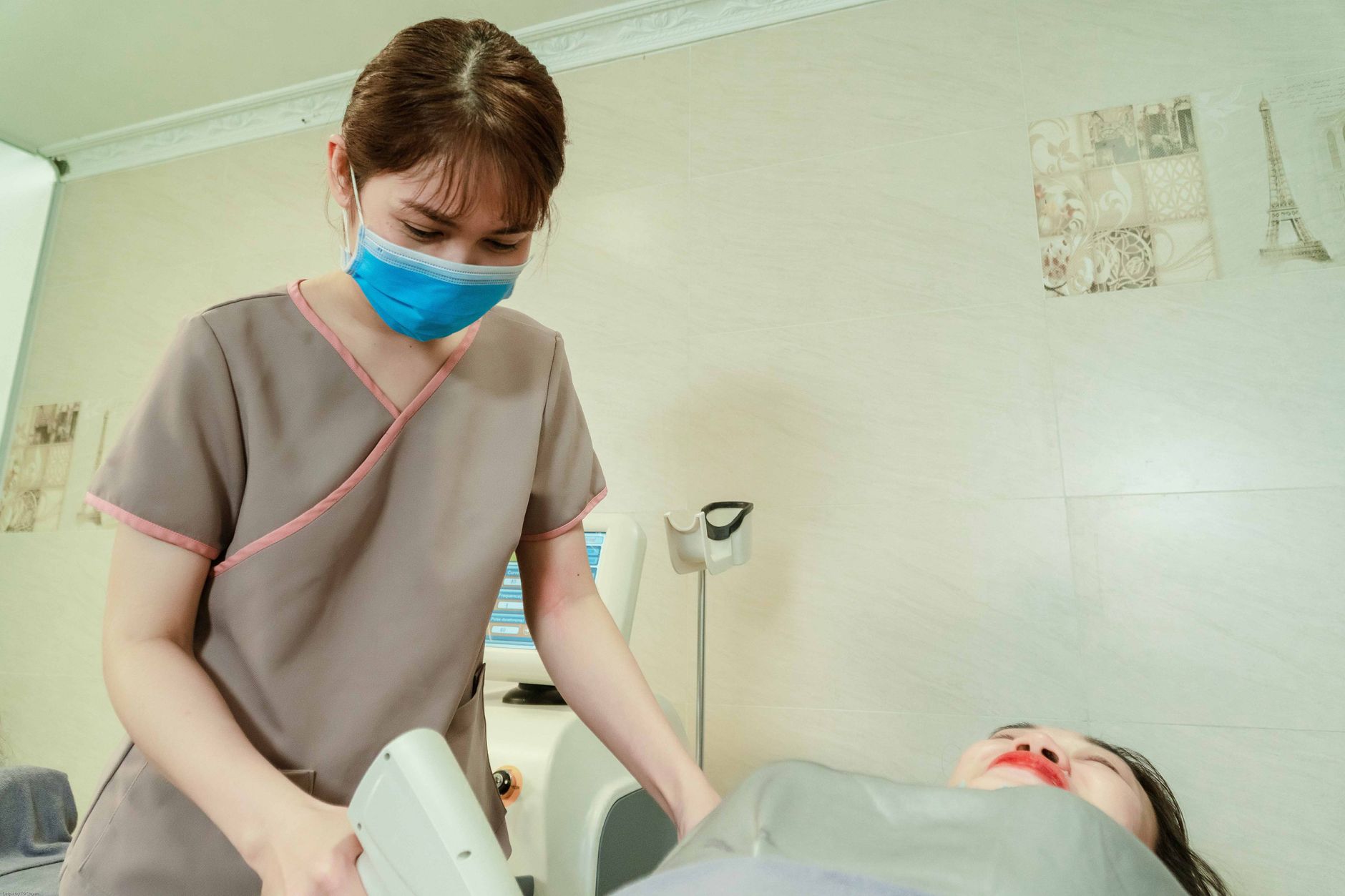
Laser treatment for acne scars uses focused light to remove damaged outer skin and spur new collagen that smooths pitted areas. It works best for shallow, saucer-like atrophic scars, while deep narrow scars often need a combined approach.
Laser skin resurfacing is the medical term for this process. Short beams vaporize the surface layer by layer and heat deeper skin to start repair. Fractional devices treat only narrow columns and leave surrounding skin intact to speed healing.
Medical information disclaimer: This article is for general educational purposes only and does not provide medical advice, diagnosis, or treatment. Always consult a physician or other qualified health professional about symptoms, medications, tests, or treatment decisions.
Table of Contents
- How does laser resurfacing work?
- Which scars improve most?
- Can darker skin be treated safely?
- What are the risks and aftercare?
How does laser resurfacing work?
The Cleveland Clinic explains that resurfacing beams remove the outer epidermis and warm the dermis to promote new collagen growth, as described in how skin resurfacing removes outer layers. Fractional treatment splits the beam into many narrow columns. Collagen between those spots contracts and tightens the skin.
Dermatology reviews divide fractional devices into two main types. Ablative fractional lasers, including carbon-dioxide and erbium:YAG, remove tissue. Nonablative fractional devices heat the dermis without removing it, so recovery is shorter but several sessions are usually needed, according to the Skin Therapy Letter review in clinical review of laser options for scars.
Which scars improve most?
Atrophic, saucer-like scars usually respond well to laser therapy. Ablative fractional carbon-dioxide treatment removes damaged surface tissue and tightens collagen fibers beneath facial atrophic scars, a 2025 clinical review reports.
Narrow, deep ice-pick scars and some boxcar scars respond less well to laser alone. They often improve more with punch excision or filler augmentation, sometimes combined with laser. A dermatologist can map scar types across the cheeks, temples, and jawline before choosing a plan.
- Rolling or shallow saucer-like scars: often good laser candidates
- Narrow deep ice-pick scars: often need excision first
- Sharp-edged boxcar scars: may need filler or excision plus laser
Can darker skin be treated safely?
A prospective single-blind trial in 15 patients with Fitzpatrick types IV to VI tested five monthly 1,550-nm erbium fractional sessions. Scarring and appearance improved significantly, which supports benefit for darker skin when settings and care are careful.
Risk remains higher, though. A 2024 comprehensive review notes more post-inflammatory darkening, prolonged redness, burns, scarring, and infection in darker shades. The same review found fractional microneedling radiofrequency had less downtime and pigmentation risk than fractional carbon-dioxide laser for these skin types.
What are the risks and aftercare?
The FDA notes that laser surgery can cause incomplete treatment, pain, infection, bleeding, scarring, and skin-color changes, as listed in the FDA guide to medical lasers. Lasers use non-ionizing radiation. Careful technique, eye protection, and follow-up lower complications.
Sun protection and post-procedure care are central to healing. Expect redness, swelling, peeling, or crusting for days to weeks, depending on device strength. Wear sunscreen every day and follow your clinic wound-care plan until redness fully clears.
- Use daily broad-spectrum sunscreen and avoid direct sun
- Keep treated skin clean, moist, and hands off crusts
- Pause retinoids, strong acids, and scrubs unless directed otherwise
- Call promptly for spreading pain, pus, fever, blistering, or dark patches