
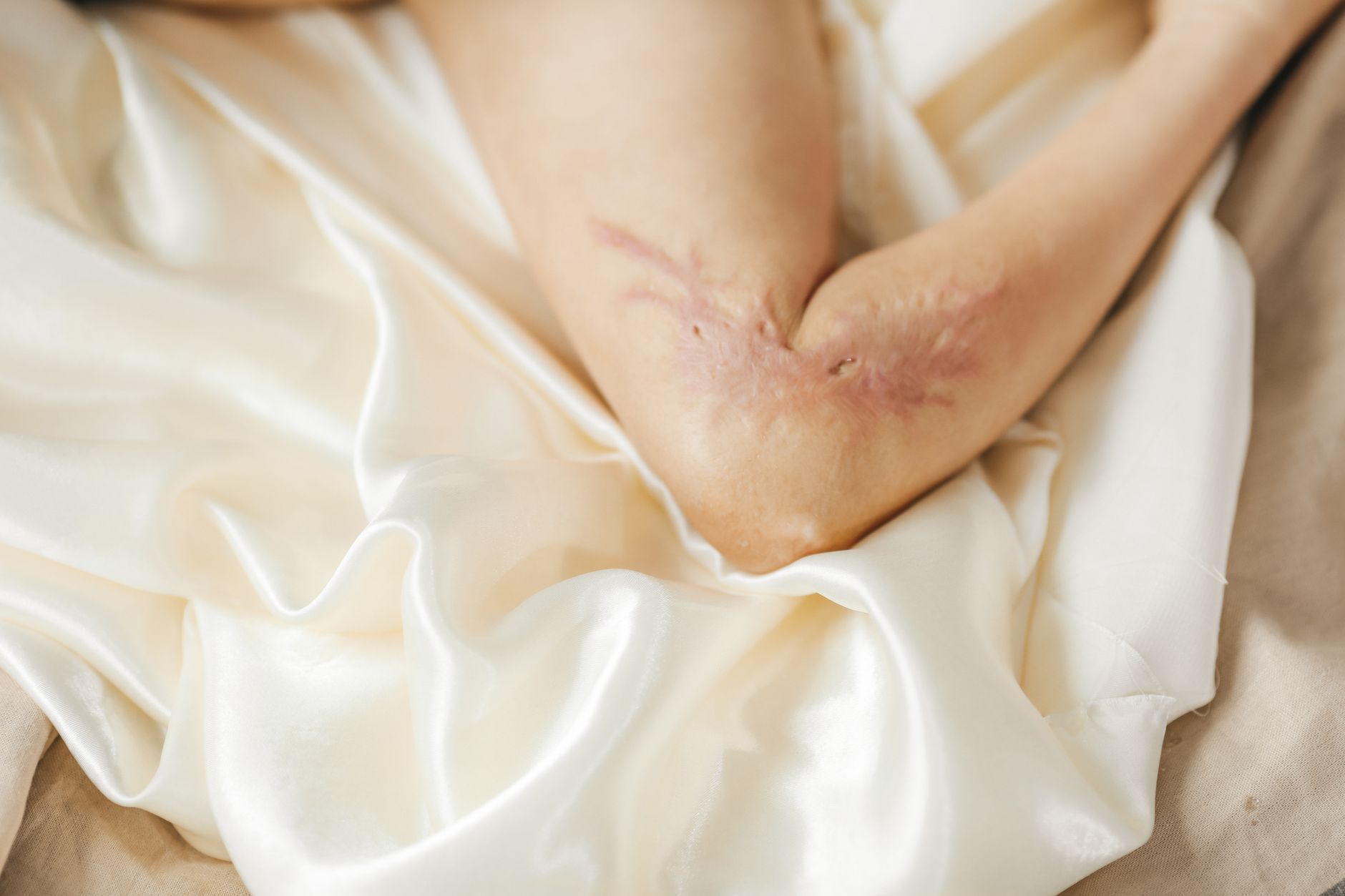
Hypertrophic scars from acne are raised, firm lumps caused by excess collagen during healing of deep inflammatory acne. They most often follow severe or cystic acne and skin picking.
DermNet describes this process in DermNet's acne scarring guide. This FAQ explains how to recognize them, who gets them, and which treatments flatten them. It also covers practical limits so readers can plan next steps with a clinician.
Medical information disclaimer: This article is for general educational purposes only and does not provide medical advice, diagnosis, or treatment. Always consult a physician or other qualified health professional about symptoms, medications, tests, or treatment decisions.
Table of Contents
- How can you tell hypertrophic scars from keloids?
- Who is most likely to get them?
- Which first-line treatments flatten raised scars?
- What can lasers improve?
- Why does recurrence shape treatment choices?
How can you tell hypertrophic scars from keloids?
Hypertrophic scars stay within the borders of the original acne lesion. Keloids grow beyond the injury into healthy skin and keep enlarging. Mayo Clinic explains the difference in Mayo Clinic health information via Monument Health.
Hypertrophic scars can gradually improve or fade without treatment. Keloids rarely regress on their own and return much more often after treatment. Mayo Clinic notes this calmer course for hypertrophic scars.
Who is most likely to get them?
DermNet lists prolonged inflammatory acne, delayed acne treatment, and a family tendency to raised scarring as key risks. Long-lasting inflammation gives the skin more time to deposit excess collagen.
Acne on the chest, back, shoulders, and jawline carries higher risk. Early control of breakouts matters most in these areas. Avoid picking or squeezing deep spots because added injury supports scar growth.
Which first-line treatments flatten raised scars?
DermNet identifies intralesional corticosteroid injection as first-line treatment. A clinician injects triamcinolone directly into the scar, sometimes with potent topical steroids under occlusion or bleomycin. The goal is to soften firm collagen and reduce height.
Silicone gel or sheeting plus pressure therapy softens, flattens, and limits growth of hypertrophic scars. UK hospital guidance in the Kingston and Richmond NHS leaflet on keloid and hypertrophic scars pairs silicone with steroid injections for pain, itching, and size reduction. Consistent daily use matters more than short trials.
What can lasers improve?
Vascular lasers, including pulsed-dye and Vbeam-type devices, and fractional laser resurfacing reduce redness and scar height. They work best on color and surface texture after the scar bulk is under control. Dermatology Times reports this approach in Dermatology Times on addressing acne scarring concerns.
Clinicians recommend flattening texture before treating residual color. That order helps light-based treatment target vessels and surface unevenness more evenly. Ask what sequence fits raised texture, redness, and skin tone together.
Why does recurrence shape treatment choices?
Raised acne scars frequently recur even after apparently successful treatment. Surgery alone is discouraged because excision is commonly followed by recurrence or larger regrowth. DermNet and UK hospital guidance both stress this limit.
A scar that looks flat can still rebuild collagen during healing. Combination treatment lowers that risk better than a single method. Ask a dermatologist about adjunct therapy before agreeing to excision alone.