
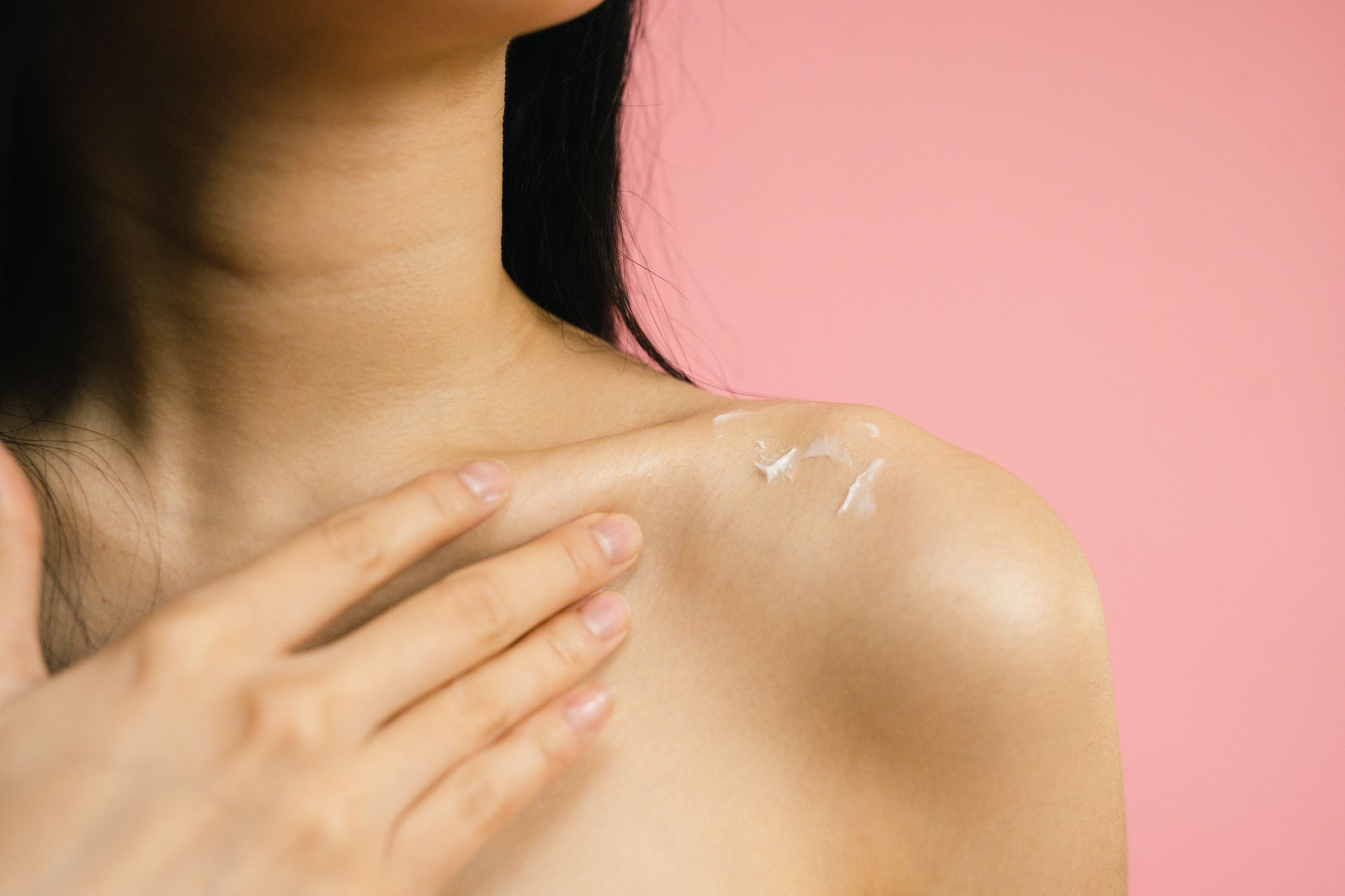
Body acne means pimples, blackheads, and tender red bumps on the back, chest, and shoulders. The strongest 2026 evidence supports topical benzoyl peroxide, topical retinoids, and targeted combinations, with oral options for more severe disease. Truncal acne covers larger, harder-to-reach skin than facial acne. This guide explains first-choice options, how to apply them, and practical safety steps.
Medical information disclaimer: This article is for general educational purposes only and does not provide medical advice, diagnosis, or treatment. Always consult a physician or other qualified health professional about symptoms, medications, tests, or treatment decisions.
Table of Contents
- What do dermatology guidelines recommend?
- What works for back and chest acne?
- How should you apply treatments to large areas?
- Do sweat, clothing, and product quality matter?
What do dermatology guidelines recommend?
The American Academy of Dermatology's 2024 acne guidelines strongly recommend topical benzoyl peroxide, topical retinoids, topical antibiotics and fixed-dose combinations, plus oral doxycycline, with isotretinoin for severe acne, according to the JAAD guideline summary. These options address clogged pores, bacteria, and inflammation through different actions. The same Academy guidance advises combining different topical types for better results.
It also advises always pairing a topical or oral antibiotic with benzoyl peroxide to reduce antibiotic-resistant bacteria. Oral doxycycline fits moderate to severe disease when topicals alone are not enough. Isotretinoin is reserved for severe acne because its benefits require close medical supervision.
What works for back and chest acne?
A SkinTherapyLetter practical guide recommends topicals first for mild-to-moderate back and chest acne. Suggested approaches include a retinoid plus benzoyl peroxide, a retinoid plus a topical antibiotic, plus azelaic acid or dapsone in selected cases. Trifarotene 0.005% cream is the first single-agent topical retinoid robustly studied on both face and trunk in large vehicle-controlled trials.
A Springer Medizin/JEADV summary reports significant reduction in comedones and inflammatory lesions over 12 weeks. The FDA approved Aklief, trifarotene cream 0.005%, on Oct. 4, 2019 for acne vulgaris in patients age 9 and older, according to the FDA approval notice. The approved use is a thin layer to affected face and trunk once daily in the evening on clean dry skin.
How should you apply treatments to large areas?
Treat zones broadly rather than placing small dabs on single pimples. The SkinTherapyLetter guide describes using about a pea-sized amount per two-palm-sized area, which helps cover the back and chest evenly.
Reach, rubbing from clothes, and missed patches limit results on the trunk. A pump, applicator, or help from another person can improve even coverage.
- Wash with a mild cleanser and pat skin fully dry.
- Apply a thin, even layer across the affected zone, not only visible spots.
- Start once daily in the evening for retinoids, as directed on the label.
- Use white towels and sleepwear if using benzoyl peroxide, which can bleach fabric.
Do sweat, clothing, and product quality matter?
Sweat and friction can worsen acne. American Academy of Dermatology workout guidance advises wearing clean moisture-wicking clothes, changing out of sweaty clothes, showering afterward, and washing gym clothes between workouts. Benzoyl peroxide safety also deserves attention.
FDA testing of 95 benzoyl peroxide acne products, reported March 11, 2025, found more than 90% had undetectable or extremely low benzene, with only a limited number recalled at retail, according to the FDA benzene testing statement. Check the package for recall information and store products as directed. Change out of sweaty clothes promptly and wash gym clothes before wearing them again.