
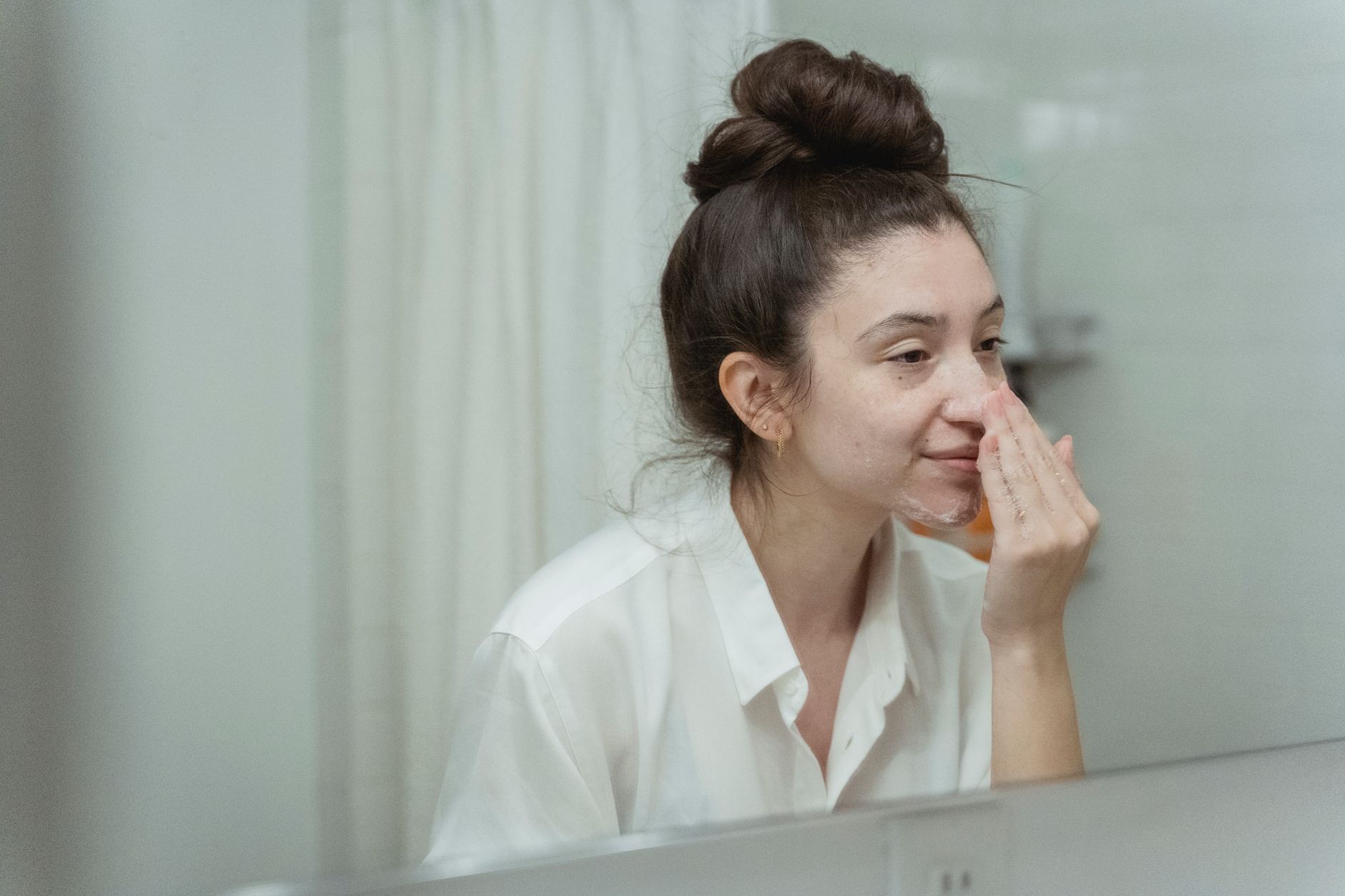
Yes, benzoyl peroxide works on chin acne. Chin breakouts are facial acne vulgaris, so standard acne treatment applies to them. Benzoyl peroxide is a topical treatment that kills acne-causing bacteria on the skin. It is widely used for pimples, whiteheads, and inflamed spots on the chin and elsewhere on the face.
Medical information disclaimer: This article is for general educational purposes only and does not provide medical advice, diagnosis, or treatment. Always consult a physician or other qualified health professional about symptoms, medications, tests, or treatment decisions.
Table of Contents
- Why does it work on the chin?
- What does official guidance say?
- Which strength and routine should you choose?
- Do you need to combine it with another treatment?
- When is chin acne too deep for benzoyl peroxide alone?
Why does it work on the chin?
Chin and jawline breakouts in adult women are often androgen-sensitive inflammatory acne. These spots commonly flare before a period, according to the Acibadem International Medical Review Board hormonal acne review. That pattern does not need a chin-specific drug.
Antibacterial treatment still applies to that zone because the trigger is bacteria plus inflammation inside pores. Benzoyl peroxide releases oxygen free radicals that damage Cutibacterium acnes proteins and membranes. That action kills bacteria and adds mild pore-clearing and anti-inflammatory effects, according to Frontiers in Pediatrics benzoyl peroxide mechanism review.
What does official guidance say?
The American Academy of Dermatology gives benzoyl peroxide a strong recommendation for acne in adolescents and adults. That advice covers chin lesions because they are facial acne, according to the updated acne guidelines. The recommendation puts benzoyl peroxide among first-choice topical options.
Readers can treat persistent chin pimples as ordinary facial acne unless a dermatologist says otherwise. A randomized split-face trial found 2.5% benzoyl peroxide reduced mild-to-moderate facial lesions. Adding 5% niacinamide improved results further.
Which strength and routine should you choose?
The U.S. Food and Drug Administration concluded that 2.5% to 10% benzoyl peroxide is generally recognized as safe and effective for over-the-counter acne use, according to the FDA final rule. Higher strengths are not stronger against pimples.
Concentrations of 2.5%, 5%, and 10% work equally well against inflammatory acne, but higher strengths cause more irritation. Start with 2.5% to 5% once daily. A simple chin routine helps limit dryness and redness:.
- Wash gently, then pat skin dry.
- Apply a thin layer only to breakout-prone areas.
- Use moisturizer and morning sunscreen as needed.
- Increase to twice daily only if skin tolerates it.
Do you need to combine it with another treatment?
Many chin routines work better with combination care. Guidelines advise pairing any topical or oral antibiotic with benzoyl peroxide because bacteria do not develop resistance to it. Combining topical types can also improve clearing.
A retinoid, niacinamide, or another prescribed topical may be added for clogged pores or frequent flares. Ask a clinician or pharmacist before mixing prescription products. Apply products in thin layers and stop any item that burns, swells, or blisters skin.
When is chin acne too deep for benzoyl peroxide alone?
Deep, painful lumps under the chin often respond poorly to topicals alone. Severe, deep, or nodulocystic chin acne may need combination or systemic care.
Options include oral antibiotics, hormonal therapy, or isotretinoin prescribed by a dermatologist. Seek care promptly for large nodules, scarring, dark marks, or breakouts that do not improve after eight to twelve weeks of steady use.