
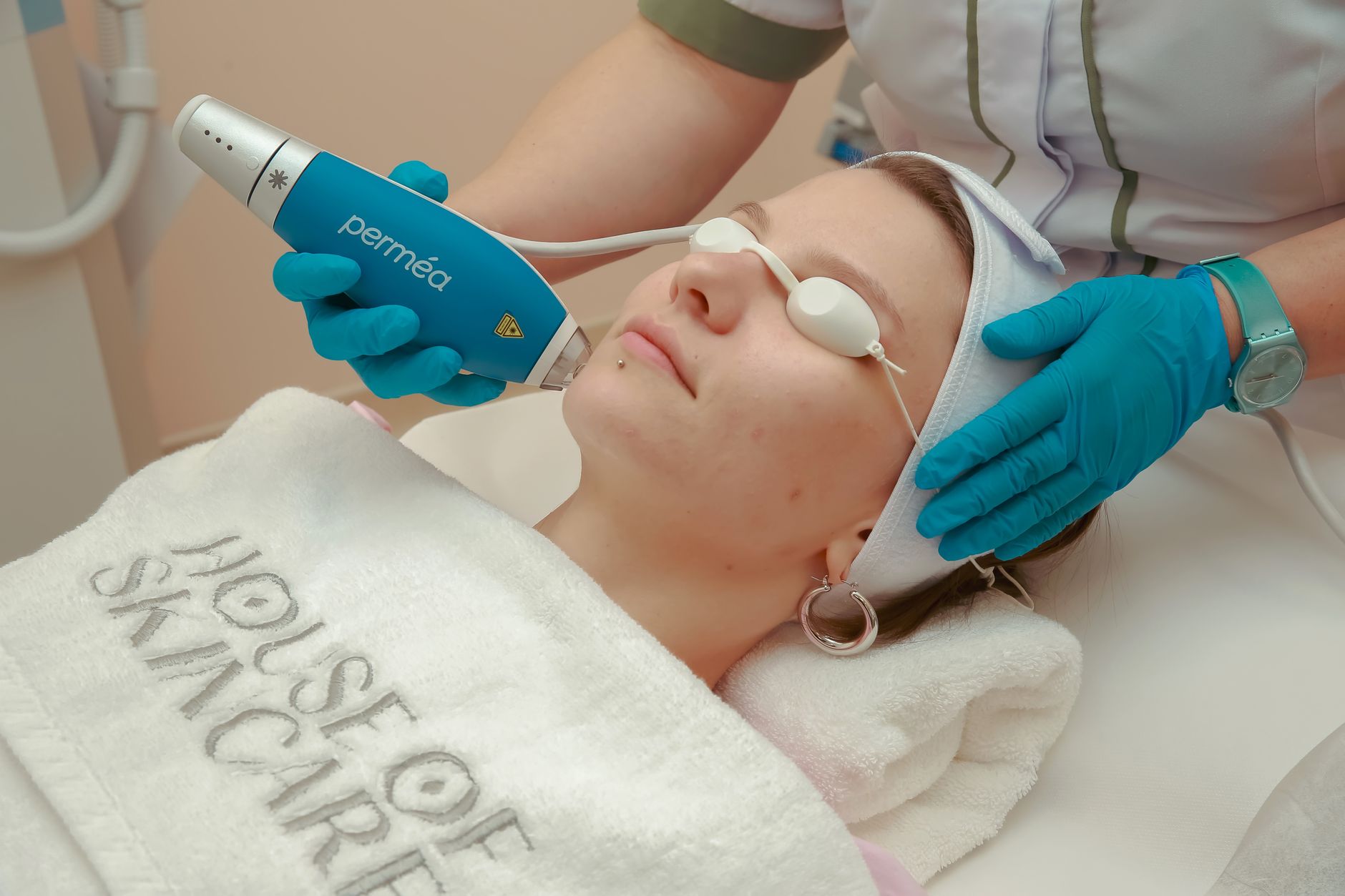
Current evidence supports fractional laser for atrophic acne scars, not for routine treatment of active acne. Fractional laser means a device that treats tiny columns of skin and leaves the surrounding tissue intact to speed healing.
Atrophic scars are depressed scars left after acne damages collagen. According to a 2024 review in Cureus, the laser creates microscopic thermal injury columns that stimulate dermal collagen remodeling review in Cureus. That remodeling can soften the look of scars over weeks to months.
Medical information disclaimer: This article is for general educational purposes only and does not provide medical advice, diagnosis, or treatment. Always consult a physician or other qualified health professional about symptoms, medications, tests, or treatment decisions.
Table of Contents
- How does fractional laser improve scars?
- How much improvement is realistic?
- Can it clear active breakouts?
- CO2 or erbium: what is the tradeoff?
- What does treatment and aftercare involve?
How does fractional laser improve scars?
The beam skips most of the skin surface and heats narrow zones below it. Those zones trigger wound repair and new collagen. The intact skin between them helps the area heal faster.
This approach targets texture, not color alone. It works best for rolling and boxcar-type depressions. Deep icepick scars and active pimples respond less well.
How much improvement is realistic?
A 2025 systematic review in Life pooled seven studies and found scar appearance improved by 30% to 70% in most patients systematic review in Life. The authors concluded the treatment is effective and safe for acne scars.
That range means visible softening, not erasure. Lighting, scar depth, skin tone, and device settings affect the result. Multiple sessions are usually needed to reach that range.
Can it clear active breakouts?
Active acne and acne scars are different problems. For active acne, the American Academy of Dermatology found evidence insufficient to recommend laser and light devices for routine care Academy guideline summary.
A scar laser does not replace acne medicine. Oil, bacteria, clogged pores, and hormones drive breakouts. Those causes usually need medication, not heat columns alone.
CO2 or erbium: what is the tradeoff?
Carbon dioxide lasers penetrate deeper and are often chosen for severe depressed scars. Erbium:YAG lasers remove less heat-damaged tissue and carry lower pigment-change risk.
Darker skin faces higher post-inflammatory hyperpigmentation risk and needs conservative settings. A 12-month comparison in the American Journal of Translational Research favored CO2 for acne scars, with ineffective-response rates of 5.65% versus 16.92% for Er:YAG comparison in the American Journal of Translational Research. Persistent redness was more common after CO2, at 6.45% versus 0.77%.
What does treatment and aftercare involve?
Expect a plan, not a single visit. Practical use requires multiple sessions, sun protection, and usually added care rather than laser alone for active acne.
U.S. regulators have cleared 1550-nm erbium fractional systems such as Fraxel re:store for skin resurfacing including acne scars, as reported by Medscape. Ask your dermatologist about fit, settings, and pause rules for tans or infections:.
- scar type, skin tone, and history of cold sores or keloids
- planned device, depth, number of visits, and sun-protection steps
- how active acne will be treated alongside scars
- warning signs include prolonged redness, swelling, blistering, darkening, infection, and acne flare