
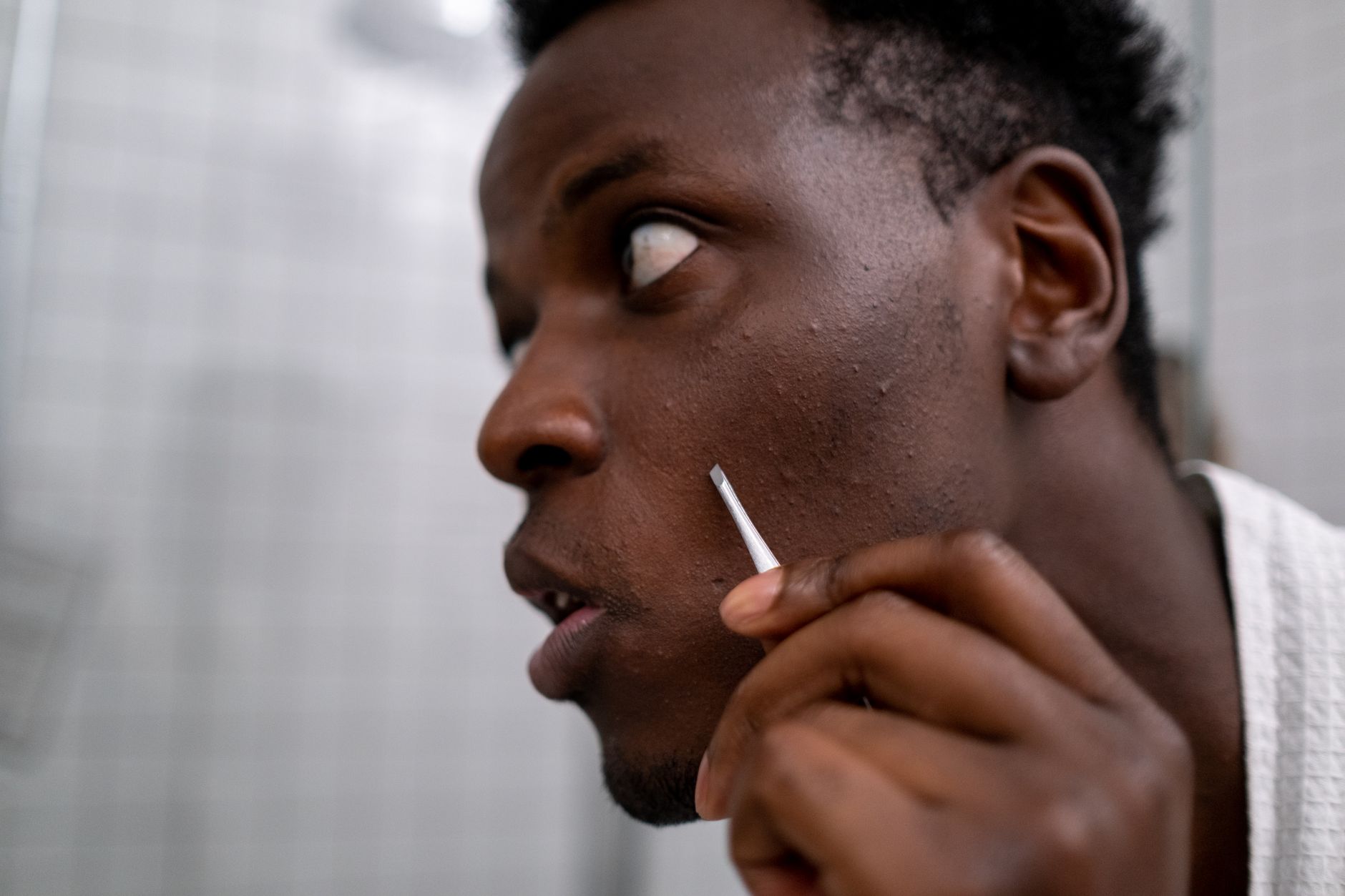
Pomade acne is a comedonal subtype that causes grouped closed comedones and small papules where pomade touches skin. Use this checklist to track exact breakout location, ask about products and routines, and verify the pattern before treating. Breakouts cluster along the frontal hairline, forehead and temples. According to the American Academy of Dermatology, tracking where hair products touch helps link location to cause, as described in the AAD skin-of-color handout.
Medical information disclaimer: This article is for general educational purposes only and does not provide medical advice, diagnosis, or treatment. Always consult a physician or other qualified health professional about symptoms, medications, tests, or treatment decisions.
Table of Contents
- What does pomade acne look like?
- What should you track?
- Which products and routines should you ask about?
- How do you verify the cause?
- How do you prevent and treat persistent bumps?
What does pomade acne look like?
Pomade acne produces uniform whiteheads and blackheads, not large inflamed hormonal cysts. Clinicians look for grouped comedones plus a few small papules along the hairline.
The PMC post-inflammatory hyperpigmentation review and an OnlyMyHealth dermatologist explainer describe this same hairline pattern. Evidence shows it is widespread, not rare. A JAMA Dermatology report described pomade acne or vaselinoderma as so common in Kenya that clinicians saw 41 cases in two years, mostly open comedones with minimal inflammation, according to the JAMA Dermatology historical report.
What should you track?
Track exact breakout location against where hair, hands, scarves and pillowcases touch skin. Note whether lesions are uniform closed comedones and small papules.
Photograph the hairline and temples weekly in the same light. Record onset, frequency of oil use, and changes after routine changes:.
- lesion map: forehead, frontal hairline, temples, sideburns
- lesion type: closed comedones, open comedones, papules, inflammation level
- contact log: product name, application area, hats, scarves, pillowcase changes
Which products and routines should you ask about?
List every hair product, its ingredients and how often it is used. A peer-reviewed PMC/NIH review names common triggers as comedogenic petrolatum, cocoa butter, shea butter and mineral oil in daily oils and thick emollients, as detailed in the PMC review of hair practices and acne.
Long-term daily use of oils and thick emollients disproportionately affects Black patients and people with textured hair practices. Davis and Callender research context notes this pattern, so verify culturally specific hair-oil routines with a dermatologist rather than stopping essential hair care on your own.
How do you verify the cause?
Clinicians ask about daily haircare practices and examine distribution. A diagnosis is supported by grouped comedones plus a few papules at the hairline rather than scattered inflamed cysts. Track whether bumps stay uniform and hairline-centered during a product pause.
Stopping pomade alone does not prove cause. According to StatPearls Acneiform Eruptions, forehead comedones also occur in acne vulgaris, acne cosmetica from makeup, and acneiform eruptions. Biopsy, medication review or a controlled withdrawal trial may be needed.
How do you prevent and treat persistent bumps?
Apply pomade stopping one inch from the hairline. Keep headscarves, hats and pillowcases off the forehead to avoid spreading oils onto skin. The American Academy of Dermatology skin-of-color handout lists this one-inch gap as a practical prevention check.
Cleanse regularly and switch skin and hair products to non-comedogenic, oil-free options that are less likely to block pores, a step advised by Cleveland Clinic in its clogged-pores guidance. For lesions that persist after stopping the product, AAD 2024 acne guidelines strongly recommend topical benzoyl peroxide, retinoids and fixed-dose combinations, with oral doxycycline or isotretinoin for more severe disease. Ask a clinician rather than prolonging antibiotics alone.