
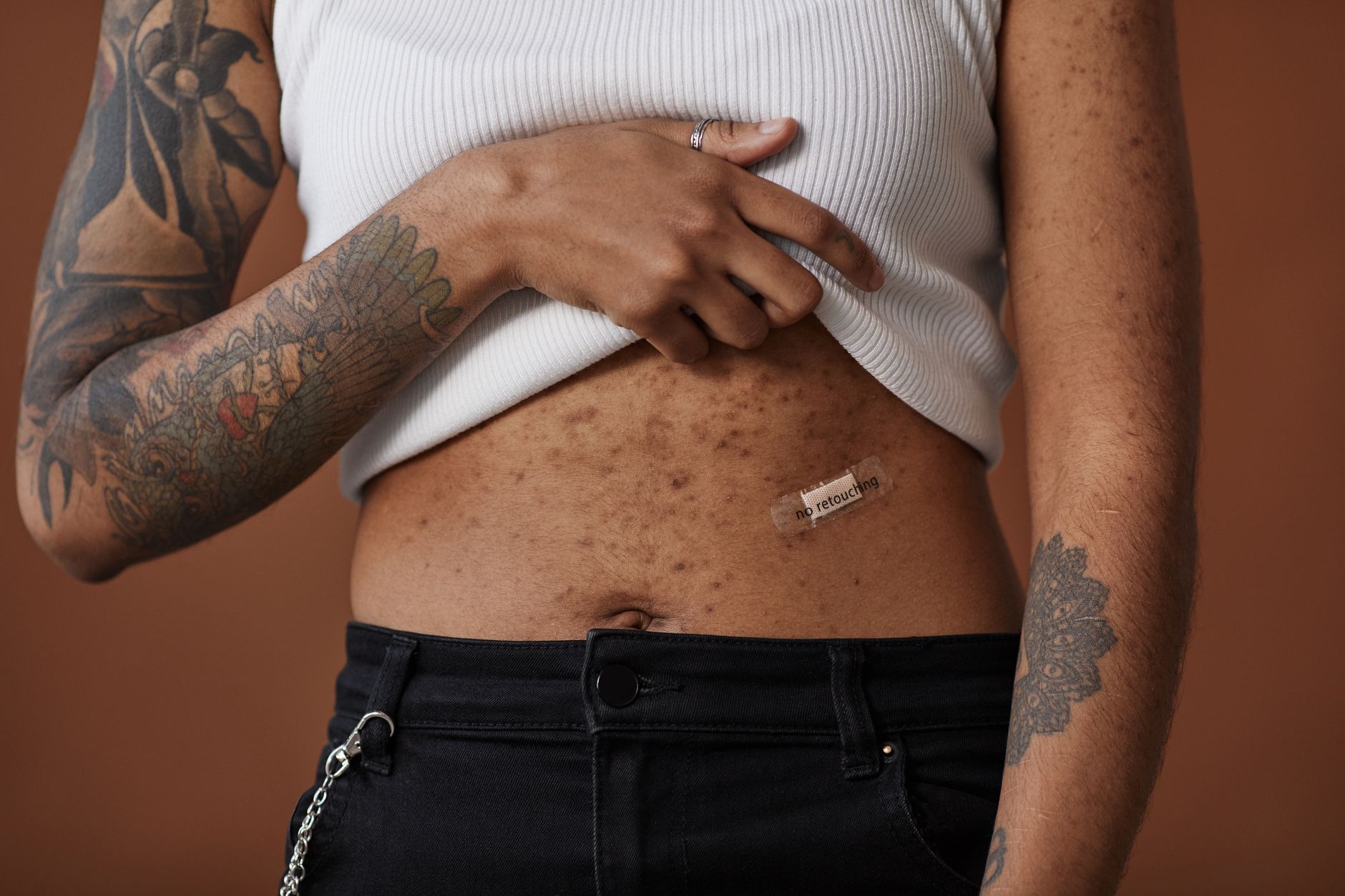
Body Acne Update 2026 is this: treatment evidence for the trunk is stronger, but gaps in detection and measurement remain. Body acne means truncal acne, breakouts on the back, shoulders or chest, often alongside facial acne. About half of people with facial acne also have truncal disease. The pattern favors the upper back and upper chest, which shapes both product choice and application.
Medical information disclaimer: This article is for general educational purposes only and does not provide medical advice, diagnosis, or treatment. Always consult a physician or other qualified health professional about symptoms, medications, tests, or treatment decisions.
Table of Contents
- How common is truncal acne?
- What do current guidelines recommend?
- Which trunk-specific trial results matter?
- What should you do differently for back and chest?
- Frequently Asked Questions
How common is truncal acne?
Skin Therapy Letter reports about half of facial-acne patients also have back, shoulder or chest lesions, with upper back affected in about 52% and upper chest in 30% in its truncal diagnosis and management guide. Over 3% have truncal lesions alone, so the chest or back can be the only site.
That overlap matters for exams. A face-focused visit can miss the trunk. Full disclosure at the visit helps match treatment to extent.
What do current guidelines recommend?
The American Academy of Dermatology 2024 acne guideline strongly recommends topical benzoyl peroxide, retinoids and antibiotics including fixed-dose combinations, oral doxycycline, and oral isotretinoin for severe or scarring disease, as summarized in this AAD guideline summary. Those are backbone options, not trunk-only drugs.
Europe's EuroGuiDerm 2025 update addressed isotretinoin versus systemic antibiotics, antibiotic duration, hormonal therapy, clascoterone and trifarotene. It noted trifarotene was effective versus placebo for truncal acne.
Which trunk-specific trial results matter?
In 12-week phase III PERFECT-1 and PERFECT-2 trials in 2,420 patients with moderate facial and truncal acne, once-daily trifarotene 0.005% cream significantly improved success rates and reduced inflammatory and noninflammatory lesions versus vehicle, according to an International Journal of Molecular Sciences review. The population had both face and trunk disease.
Sarecycline also has trunk data. In pivotal trials, patients with chest and back acne of at least mild severity had significant truncal improvement at week 12 versus placebo, with drops reported from week 3. Sarecycline is a narrow-spectrum tetracycline FDA-approved from age 9.
What should you do differently for back and chest?
Reach and spread change the routine. Guidelines advise treating extensive hard-to-reach back and shoulder disease with shower-friendly benzoyl peroxide washes to ease application and limit bleaching, combining antibiotics with benzoyl peroxide, and limiting oral-antibiotic duration to curb resistance.
Practical steps that follow that advice include: Benzene concern also updated in 2025. After concern about benzene from benzoyl peroxide breakdown, Yale Medicine summarized FDA testing of 95 products in March 2025 finding over 90% had no detectable or very low benzene, while six products were recalled plus one after company testing in its FDA recall summary. Check current lot status before stockpiling washes.
- use a wash for broad back and shoulder areas, then rinse fully to reduce bleaching of towels and shirts
- pair a topical antibiotic with benzoyl peroxide rather than using the antibiotic alone
- ask for a stop date or review date when starting an oral antibiotic
- mention chest and back lesions directly, since doctors often do not check
Frequently Asked Questions
Does body acne need different products than facial acne?
Often the ingredients overlap, but washes help cover large back and shoulder areas and reduce bleaching from leave-on formulas.
Why does truncal acne still feel overlooked?
Generally only about one-quarter of patients mention it, clinicians often overlook it, and quality-of-life tools were validated only for facial acne.
You Might Also Like
- Vitamin C, Vitamin E, and Ferulic Acid After Acne Scar Laser in 2026: Pigment, Pain, and Recovery Questions for People With Atrophic Acne Scars
- Treatments and Acne 2026 Guide: safety and evidence limits; Key Facts and Questions to Ask
- Skincare and Acne 2026 Guide: safety and evidence limits; Key Facts and Questions to Ask