
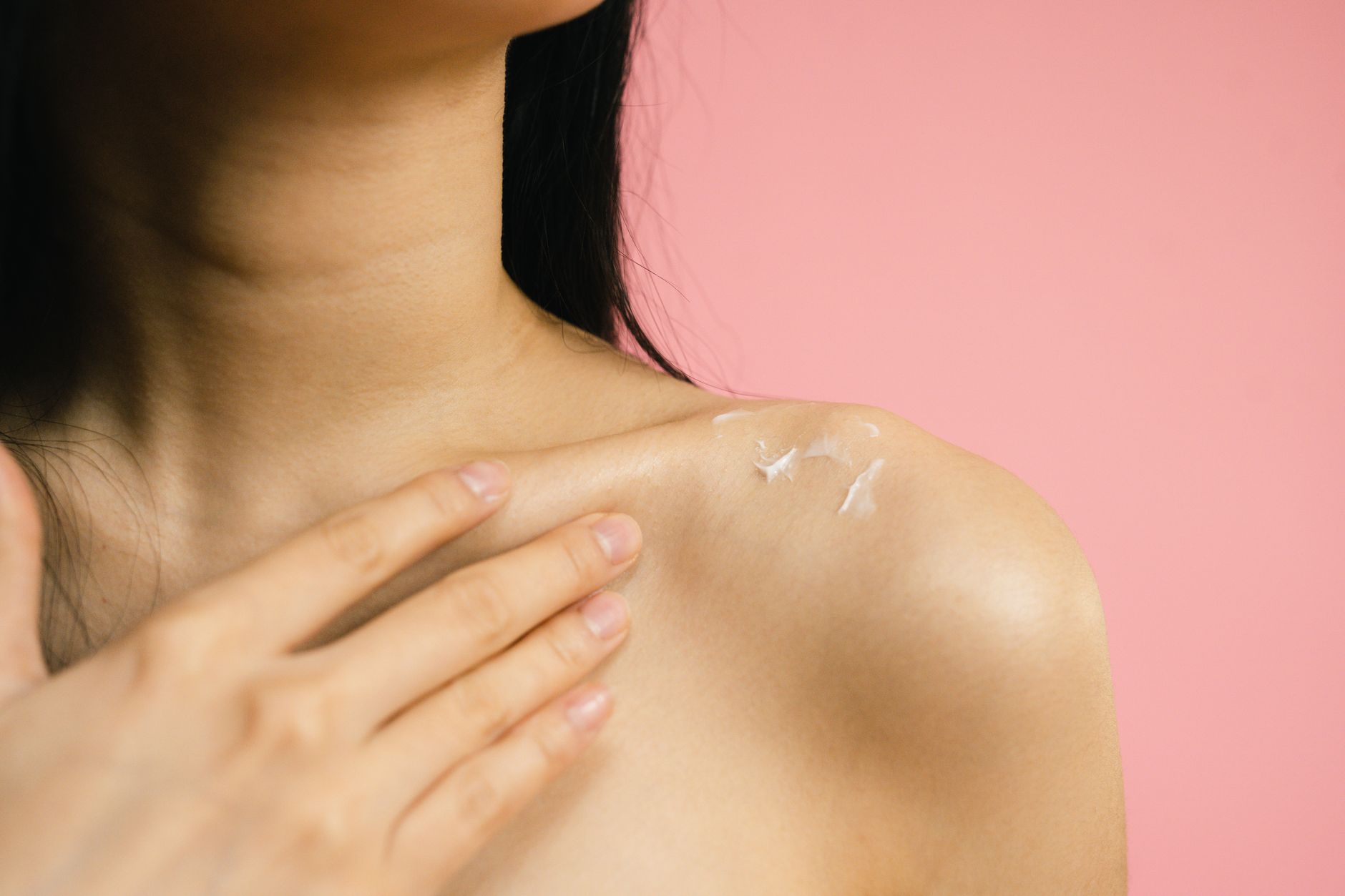
Shoulder acne is truncal acne that affects the shoulder area, and research treats it as part of back-and-chest disease. Current findings map how often shoulders are involved, why lesions form, and which treatments have direct torso evidence. Truncal acne means acne on the torso, including the back, chest, and shoulders. The shoulder-specific evidence base is small, so care often combines torso findings with facial-acne science.
Medical information disclaimer: This article is for general educational purposes only and does not provide medical advice, diagnosis, or treatment. Always consult a physician or other qualified health professional about symptoms, medications, tests, or treatment decisions.
Table of Contents
- How often are shoulders affected?
- Why do shoulder breakouts form?
- Why is shoulder evidence limited?
- What can clear shoulder acne?
How often are shoulders affected?
Practical Dermatology, reporting clinical reviews, notes about 50% of people with facial acne also have truncal acne on the back, shoulders, or chest. Truncal-only disease is uncommon, and adolescents and young adults are affected most. Shoulders are a recognized but less common truncal site.
The June 2022 MDPI/Journal of Clinical Medicine review found upper back involvement in about 52% of truncal cases, upper chest in 30%, lower back in 22%, and shoulders or upper extremities in 16% shoulder distribution in the MDPI/Journal of Clinical Medicine review. A 30-patient survey reported shoulder involvement in 10 patients, or 33%, compared with back in 70% and chest or torso in 43%. The Journal of Clinical and Aesthetic Dermatology report also found truncal acne usually appeared after facial acne. Patients worried more that torso lesions might spread disease.
Why do shoulder breakouts form?
Healthline, in medically reviewed guidance, explains acne forms when excess androgen-driven sebum plus dead skin traps Cutibacterium acnes in follicles. The trapped bacteria then trigger inflammation and visible lesions.
Shoulders face added friction and occlusion. Sweat, tight clothing, backpack straps, and rubbing can worsen lesions. A sweaty shirt, sports pads, or a heavy bag strap can hold heat and pressure against follicles.
Why is shoulder evidence limited?
The Journal of Drugs in Dermatology described truncal acne as a neglected entity because studies focus on the face truncal-acne evidence gap in the Journal of Drugs in Dermatology. Clinicians often assume facial and truncal disease share the same cause.
That assumption leads doctors to extend facial treatments to the back and shoulders. The approach is practical, but direct shoulder data remain thinner than facial data. Readers should look for products and prescriptions tested on the torso, not only the face.
What can clear shoulder acne?
Daily habits reduce friction, sweat, and bacterial buildup. Healthline advises showering after sweating and avoiding tight gear. For persistent disease, prescription care matters.
Galderma announced that trifarotene 0.005% cream received FDA approval on Oct. 4, 2019, for ages 9 and older, as the first topical retinoid proven in phase 3 trials for both facial and truncal acne the Galderma FDA approval notice. Doctors may also use prescription retinoids, antibiotics, or isotretinoin for stubborn or scarring cases. Early treatment best prevents scars, so do not wait for deep or widespread shoulder lesions to fade on their own.
- Change out of sweaty shirts soon after exercise or heat
- Keep straps, pads, and tight collars off irritated skin when possible
- Use a benzoyl peroxide wash to kill bacteria in pores
- Seek care promptly for painful, persistent, or scarring lesions