
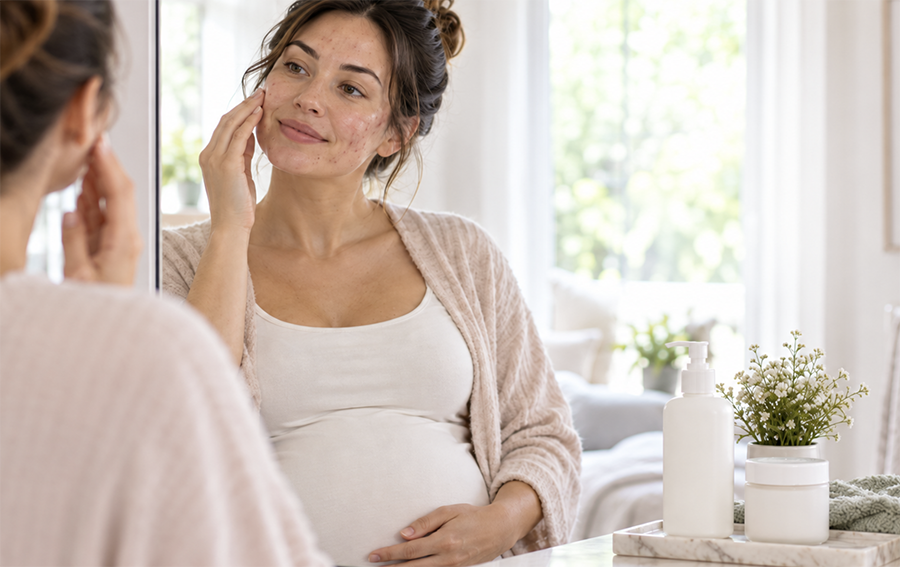
Your skin clears for a few weeks. Then, around week 8 of pregnancy, hormonal shifts accelerate and acne flares exactly when you can’t use the treatments that worked before. Retinoids are contraindicated. Doxycycline is off-limits. The topical arsenal that got you here is suddenly dangerous. And most skincare content assumes you’re not pregnant, offering advice that doesn’t apply to your situation.
Pregnancy acne is driven by real hormonal drivers and responsive to evidence-backed treatments. But the evidence is narrower than for non-pregnant acne, and the safe options are specific. This guide walks through what causes pregnancy acne, which treatments have data behind them, which ones are genuinely unsafe, and what realistic timelines look like for the treatments that work.
Why Pregnancy Triggers Acne: The Hormonal Mechanism
Acne during pregnancy is not random. It’s the direct result of predictable hormonal shifts that peak at specific times and follow a recognizable pattern.
During pregnancy, the corpus luteum produces progesterone at dramatically elevated levels. This progesterone drives three acne-relevant changes: increased sebum (oil) production in the skin, thickening of the keratin that lines pores (making clogging more likely), and reduced barrier function that allows bacteria to proliferate more easily. These three changes happen simultaneously, which is why pregnancy acne often feels resistant compared to hormonal breakouts from a menstrual cycle.
The pattern matters. First trimester acne is usually mild or absent because progesterone is still rising. Second and third trimester acne is where things intensify, because progesterone levels stabilize at their peak and stay there. This is also why many pregnant people experience their worst acne in the second trimester specifically: hormone levels are high but stable, and skin has adapted by increasing oil production to match. Understanding the hormonal shifts happening in your body during pregnancy helps explain not just acne, but many other skin and body changes you may notice.
The location also follows hormonal logic. Pregnancy acne clusters on the jawline, chin, and lower face because these areas have the highest concentration of oil glands with androgen receptors. Pregnancy doesn’t create new androgens, but the interplay between progesterone and existing androgens amplifies oil production in these zones. A person who never had jawline acne before pregnancy may suddenly develop it because the hormonal environment has shifted.
Not everyone experiences pregnancy acne. About 40 to 50 percent of pregnant people report acne either worsening or appearing new during pregnancy. The rest see no change or even improvement, depending on baseline sebum production and individual hormone sensitivity. Genetics play a substantial role: if your parents had acne, you’re more likely to experience it during pregnancy. Prior history matters too. People who had severe acne or cystic acne before pregnancy are more likely to see it flare.
The Core Treatment Dilemma: What’s Safe, What Isn’t, and Why
The central tension in pregnancy acne treatment is this: the most effective acne treatments happen to be teratogens. Retinoids work. Oral antibiotics work. Accutane works. Pregnancy makes all three off-limits.
A teratogen is any substance that can interfere with fetal development, usually by disrupting cell division during critical developmental windows. Most acne medications either accumulate in fetal tissues or cross the placenta and reach the fetus at meaningful concentrations. This alone doesn’t prove harm: dosage, timing, and susceptibility window all matter. But once a medication is confirmed teratogenic, the risk-benefit calculation changes. Acne is treatable and non-life-threatening. A potentially teratogenic treatment isn’t worth that trade.
The FDA classifies medications in pregnancy using categories A through X, though this system is being phased out in favor of narrative summaries that explain risk more clearly.
Category A means controlled studies in pregnant women have shown no risk. No acne medications fall here.
Category B means animal studies showed no fetal risk, and either there are no human studies or human studies have not shown risk. Azelaic acid is the key acne treatment here.
Category C means animal studies showed adverse effects but there are no controlled human studies, or no animal or human studies exist. Some ingredients fall here, but data is limited.
Category X means studies or post-market data show fetal risk that outweighs any possible benefit. Accutane and tretinoin are Category X.
Most effective acne treatments sit in Category X or are simply contraindicated by convention because the data is sparse and risk isn’t worth it.
Treatments You Cannot Use: The Non-Negotiable List
Retinoids (All Types)
Tretinoin, adapalene, tazarotene, and retinol are all vitamin A derivatives. Tretinoin (Retin-A) is Category X. Adapalene’s pregnancy category is technically C, but dermatologists do not recommend it in pregnancy due to lack of adequate safety data and theoretical risk. The mechanism is straightforward: vitamin A (retinol) is teratogenic at high doses, and retinoids are synthetic forms that concentrate in fetal tissues. Most dermatologists advise avoiding retinoids throughout pregnancy to eliminate any theoretical risk.
This includes over-the-counter retinol in serums and moisturizers. Over-the-counter concentrations are lower than prescription retinoids, but evidence in pregnancy is absent. The safest choice is avoidance.
Doxycycline and Other Tetracyclines
Doxycycline, minocycline, and tetracycline are Category D in pregnancy, meaning there is positive evidence of fetal risk. Tetracyclines accumulate in fetal bone and teeth, discoloring them (tetracycline staining) and potentially affecting bone growth. The risk is documented and reproducible. Doxycycline is commonly used for acne because it’s effective, well-tolerated, and cheap, but pregnancy rules it out.
Some oral antibiotics are safer in pregnancy (amoxicillin, for example), but these are not acne treatments and don’t work well for acne specifically.
Accutane (Isotretinoin)
Isotretinoin is Category X. It is the most teratogenic medication in existence outside of chemotherapy agents. Fetal exposure causes isotretinoin embryopathy: cleft palate, heart defects, central nervous system malformations, thymic aplasia (absence of the thymus gland), and intellectual disability or learning problems. Up to 60% of exposed children show neurocognitive impairment even when physical malformations are absent. The risk is not theoretical and does not depend on dose. It’s absolute: pregnancy exposure to isotretinoin causes birth defects in 35% or more of exposed pregnancies.
Because of this, isotretinoin is only prescribed under the iPLEDGE program, which mandates monthly pregnancy tests for people of childbearing potential, dual contraception, and a 30-day wait before starting. It is not an option in pregnancy.
Salicylic Acid (With Caveats)
Salicylic acid is a beta-hydroxy acid used topically in concentrations from 0.5 to 2 percent in acne products. Topical salicylic acid at these low concentrations is systemically absorbed minimally—the amount that reaches your bloodstream is negligible. The concern about birth defects comes from high-dose oral salicylates (like aspirin), not topical skincare use. The American College of Obstetricians and Gynecologists (ACOG) classifies low-concentration topical salicylic acid (0.5 to 2 percent) as acceptable for use during pregnancy with caution, particularly when used in wash-off formulations like cleansers rather than left on overnight.
That said, azelaic acid is often preferred first-line because it addresses both bacteria and the hormonal drivers of pregnancy acne without any uncertainty.
What Works: The Treatments with Actual Pregnancy Safety Data
Azelaic Acid: The First-Line Choice
Azelaic acid is the single best option for pregnancy acne. It is FDA pregnancy Category B, meaning animal studies showed no fetal harm and there is no evidence of risk in humans based on available data. It’s the only acne ingredient with this classification that is actually effective for the hormonal jawline acne that pregnancy triggers.
The mechanism is what makes it unusual. Azelaic acid is simultaneously keratolytic (it normalizes the shedding of dead skin cells), antimicrobial (it reduces acne-causing bacteria), and anti-inflammatory (it calms redness and swelling). No other single acne ingredient does all three at once. Benzoyl peroxide kills bacteria but doesn’t address the other drivers. Salicylic acid unclogs pores but isn’t anti-inflammatory. Retinoids address cell turnover but are contraindicated. Azelaic acid fills a gap.
For pregnancy-specific acne (new-onset jawline and chin breakouts), azelaic acid 15 to 20 percent is often the most effective topical available. Dermatologists frequently recommend it first.
Practical details: Azelaic acid is available as a foam (15 percent), gel (20 percent), and cream (20 percent). The foam formulation is cosmetically elegant and less irritating. Concentrations of 15 and 20 percent are both effective; 20 percent is stronger. Topically applied azelaic acid has only 3 to 8 percent systemic absorption, meaning very little enters the bloodstream. Most of it stays on the skin where it works locally.
Realistic timeline: Azelaic acid usually takes 8 to 12 weeks to show visible improvement. This is longer than some topical treatments, but the tradeoff is safety and the triple-action mechanism. Many dermatologists recommend starting it early in the second trimester to allow time for results before delivery.
Common side effects are mild: dryness, flaking, transient redness, and sometimes mild itching or stinging. These usually settle within a few weeks of use. Sunscreen is non-negotiable because azelaic acid can increase sun sensitivity slightly.
Benzoyl Peroxide: Effective at Low Concentrations
Benzoyl peroxide kills acne-causing bacteria directly. It’s not FDA pregnancy Category A, but the evidence supports its safety. Topical benzoyl peroxide has minimal systemic absorption (less than 5 percent of what’s applied), and studies in pregnant women have not shown fetal harm.
The key is concentration. Benzoyl peroxide 2.5 percent is just as effective as 10 percent for most inflammatory acne, but with significantly less irritation and redness. In pregnancy, starting at 2.5 percent is standard. The higher concentrations add drying and peeling without adding efficacy.
Benzoyl peroxide works best for bacterial acne. It is less effective for purely hormonal, non-inflamed blackheads or whiteheads. Many dermatologists pair it with azelaic acid: azelaic acid addresses the hormonal and inflammatory component, benzoyl peroxide addresses the bacterial component.
Practical details: Benzoyl peroxide comes as washes, creams, gels, and lotions. A lotion formulation is usually gentler than a gel. Using it once daily in the evening is typical; some people need twice daily, others need every other day if sensitivity develops. It can bleach fabric and hair.
Realistic timeline: Benzoyl peroxide typically takes 4 to 6 weeks to show meaningful improvement in inflammatory acne. It’s faster than azelaic acid but less versatile in terms of what it addresses.
Side effects are usually dryness and mild irritation. Using it with a good ceramide-based moisturizer matters. Sunscreen is essential because benzoyl peroxide increases sun sensitivity.
Sulfur Products: Older and Gentler, but Limited Data
Sulfur-based acne treatments have been used for decades. They are mildly antimicrobial and anti-inflammatory. Sulfur is not FDA pregnancy Category A, but it’s been used in pregnancy for years without reports of harm. Data is limited because few modern trials use sulfur (it’s less fashionable than newer ingredients), but the historical record is reassuring.
Sulfur works best for mild acne or for sensitive skin that doesn’t tolerate benzoyl peroxide or azelaic acid. It’s slower and gentler. The trade-off is that it’s less effective for moderate or severe acne.
Practical details: Sulfur comes as spot treatments, masks, and washes. It has a distinctive smell that many people find unpleasant. It’s often formulated with resorcin, which pairs synergistically with sulfur but adds complexity to the formulation.
Realistic timeline: Sulfur takes 6 to 8 weeks to show improvement, and improvement is typically mild. It’s a good second choice if azelaic acid or benzoyl peroxide cause too much irritation, not a first choice.
Niacinamide: Adjunctive, Not Primary
Niacinamide (vitamin B3) is often added to pregnancy-safe skincare because it is non-irritating and has some evidence for reducing sebum production. It’s not a primary acne treatment, but it can support other treatments by slightly reducing oil production and redness. Concentrations of 4 to 5 percent in serums are typical.
It doesn’t replace azelaic acid or benzoyl peroxide but can complement them. Data in pregnancy is sparse because studies haven’t focused on it, but systemic absorption is very low and no harm is documented.
Building a Pregnancy-Safe Skincare Routine for Acne-Prone Skin
Acne treatment is only part of the picture. The rest of the routine matters enormously, especially during pregnancy when skin tolerance is often lower.
Cleanse, Don’t Strip
Twice daily cleansing is standard. Use a gentle, sulfate-free cleanser. Avoid harsh exfoliating cleansers or physical scrubs, which can irritate acne-prone skin and trigger more breakouts. A simple cleanser with a creamy texture that removes oil without leaving a tight feeling is ideal. Micellar water or a hydrating gel cleanser works for most people.
Moisturize After Treatment
This is non-negotiable in pregnancy acne treatment. Azelaic acid and benzoyl peroxide are both drying. A good moisturizer buffers irritation and improves tolerance. Look for ceramides, glycerin, or hyaluronic acid in a formula that doesn’t add comedogenic (pore-clogging) ingredients. Apply moisturizer to damp skin immediately after cleansing, before applying acne treatments.
Sunscreen: Absolute Requirement
Both azelaic acid and benzoyl peroxide increase photosensitivity. Sunscreen SPF 30 or higher, applied daily, is essential. Use a pregnancy-safe sunscreen: mineral (zinc oxide or titanium dioxide) is safest, though chemical sunscreens are not contraindicated in pregnancy. Reapply every 2 hours if you’re outdoors.
Pregnancy already increases the risk of melasma (dark patches on the face), especially in people with darker skin tones. Sun exposure accelerates this. Consistent sunscreen use is one of the best preventive measures.
Skip the Actives
This is a major shift for people used to aggressive skincare. During pregnancy, skip vitamin C serums, retinols, and chemical exfoliants beyond the acne-specific products you’re using (like salicylic acid washes or benzoyl peroxide). Other active ingredients add irritation when skin is already handling pregnancy hormones and acne treatments. Keep the routine simple: cleanse, treat, moisturize, sunscreen.
Managing Pregnancy-Specific Skin Changes
Pregnancy acne doesn’t exist in isolation. Other skin changes happen simultaneously: melasma, increased dryness or oiliness, sensitivity, and rosacea-like flushing are all common. A consistent, minimalist routine that prioritizes barrier support helps manage all of them together. Your job is to treat the acne while supporting skin health more broadly.
Managing stress and anxiety during pregnancy matters. Stress hormones amplify sebum production, which worsens acne. But more importantly, if pregnancy acne is weighing on you emotionally, that’s worth addressing directly. Prenatal anxiety and depression are common, treatable, and real. They’re not character flaws or weakness.
The Emotional Component: Why Appearance Matters in Pregnancy
Acne during pregnancy isn’t just a skin condition. Pregnancy involves major body changes, and new acne adds a layer of frustration precisely when you’re managing fatigue, physical discomfort, hormonal mood shifts, and the psychological adjustment to impending parenthood. It’s normal to feel frustrated or disappointed by breakouts during pregnancy. That’s not vanity; it’s a reasonable response to a real change happening to your body at a vulnerable time.
Talk to your OB if pregnancy acne is affecting your mental health.
When to See a Dermatologist: Severity Thresholds and Timing
Not all pregnancy acne requires specialist care. Mild to moderate acne responds well to over-the-counter azelaic acid or benzoyl peroxide. But certain situations warrant a dermatology appointment.
See a dermatologist if you have cystic acne (large, painful, deep breakouts that don’t come to a head), if you have acne covering more than 30 percent of your face, if previous acne was severe, or if topical treatments alone have failed after 12 weeks. Dermatologists can assess severity, rule out other causes, and prescribe stronger formulations or combination treatments within pregnancy guidelines.
Timing matters. Most dermatologists prefer to defer elective treatments to the second trimester if possible, though topical azelaic acid and benzoyl peroxide are safe to start anytime. Professional treatments like laser or chemical peels are best postponed until postpartum, when fetal vulnerability is no longer a factor.
If you’re considering any dermatology treatment, bring a list of any medications or supplements you’re taking. Some supplements interact with pregnancy medications or cause their own concerns.
The Evidence Hierarchy: What Actually Works in Pregnancy
The challenge with pregnancy acne is that it puts you in a narrower treatment corridor than non-pregnant acne. Most of what works fast is teratogenic. Most of what’s safe takes time. Azelaic acid is the rare exception: it’s Category B (genuine safety), effective in hormonal acne, and addresses both the bacterial and oil-production drivers. That’s why dermatologists reach for it first.
Benzoyl peroxide at low concentration sits second. It kills bacteria effectively, but azelaic acid also addresses the hormonal driver. For many people, azelaic acid alone is sufficient. For others, the combination works synergistically.
The biggest mistake is assuming that weaker treatments are always safer. They’re not. They’re just weaker. Azelaic acid isn’t a compromise. It’s the right tool for this specific problem.
Start with azelaic acid. If irritation develops or results plateau after 12 weeks, add benzoyl peroxide or see a dermatologist for a stronger formulation. If you have cystic acne, severe acne, or prior acne that was severe, dermatology input early prevents months of guessing.
Pregnancy acne almost always improves in the postpartum period as progesterone drops. But some people see persistence, particularly if they have underlying hormonal acne tendencies. Plan for that possibility. If you’re interested in what to expect postpartum, postpartum body recovery and changes after birth can help you understand the timeline. Your dermatologist can advise on whether to continue treatments postpartum or how to adjust them if breastfeeding, which has its own medication limitations.
Frequently Asked Questions
Does pregnancy acne predict the baby’s sex?
No. The old wives’ tale is that acne during pregnancy predicts a female baby, the idea being that girls “steal your glow.” This has no basis in fact. Pregnancy acne is driven by progesterone, which rises regardless of fetal sex. Boys and girls produce the same progesterone levels in utero. Acne severity, location, or worsening tells you nothing about whether you’re carrying a boy or girl.
Can professional acne treatments like laser or extraction facials help during pregnancy?
Gentle manual extractions by a dermatologist are generally safe, though data is limited. Blue light laser therapy is often considered low-risk, but chemical peels are usually avoided because the depth and absorption are harder to control. Always inform any provider you’re pregnant before any procedure so they can adjust their approach or defer elective treatments.
Does diet or certain foods trigger pregnancy acne?
The connection between diet and acne is weaker than popular health media suggests. The strongest evidence links high-glycemic foods (refined carbs, sugary drinks) and dairy to acne, but the effect is modest and individual variation is huge. Most people won’t see acne improve by cutting dairy or carbs during pregnancy. If you suspect a food trigger, keep a simple log and see if a pattern emerges, but don’t overhaul your diet based on theory alone. Pregnancy nutrition is complex. Radical dietary changes should be discussed with your OB.
What if I have cystic acne in pregnancy? Do I have any options beyond topicals?
Cystic acne sometimes doesn’t respond adequately to topicals alone. Intralesional steroid injections are safe in pregnancy. A dermatologist injects a small amount of corticosteroid directly into a cyst, which reduces inflammation and speeds healing. This is not systemic: the steroid doesn’t enter your bloodstream meaningfully. It’s often recommended for pregnancy-related cystic acne. Oral antibiotics like amoxicillin are pregnancy-safe but don’t work well for cystic acne specifically. Accutane is off-limits. If you have severe cystic acne, see a dermatologist. Injections can be life-changing.