
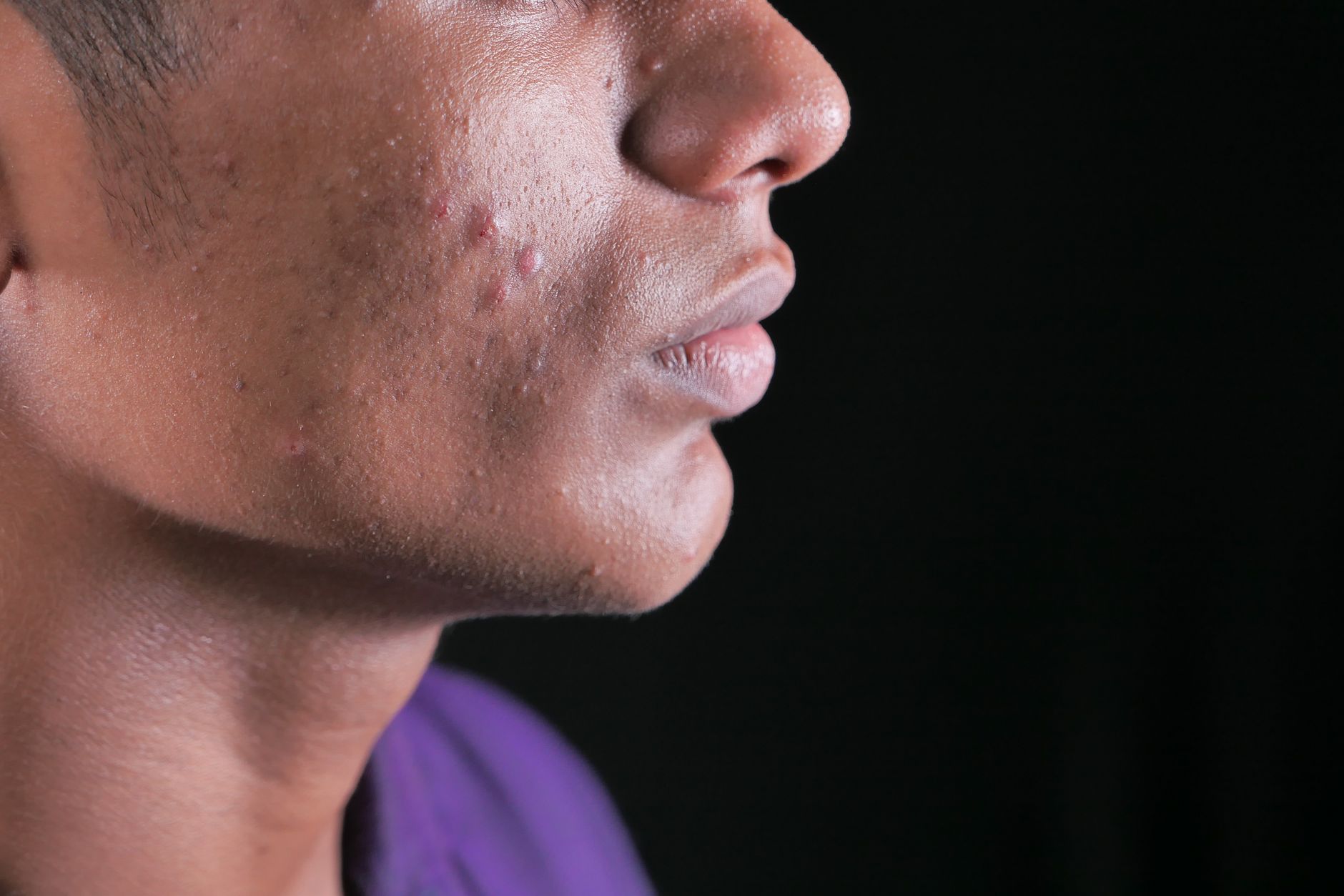
There was no discrete "Chin Acne August 2026 Update" documented by an official source as of August 27, 2026. The relevant change remains the American Academy of Dermatology's 2024 acne-guideline update, which replaced its 2016 guidance. Acne is a condition in which oil and dead skin cells clog hair follicles, allowing bacterial growth and inflammation. According to the National Institutes of Health, this same process applies when acne appears on the chin.
Medical information disclaimer: This article is for general educational purposes only and does not provide medical advice, diagnosis, or treatment. Always consult a physician or other qualified health professional about symptoms, medications, tests, or treatment decisions.
Table of Contents
- What changed in the acne guidance?
- Who is affected?
- Which treatments have the strongest support?
- Which popular approaches remain uncertain?
- What should benzoyl peroxide users watch?
What changed in the acne guidance?
The AAD issued 18 evidence-based recommendations covering adults, adolescents, and children older than nine. The update addresses acne by treatment type and patient needs, not through separate rules for the chin.
That matters because a breakout's location alone does not determine the right treatment. The type and severity of the lesions, current medications, and possible medical causes provide more useful guidance. The AAD's 2024 announcement therefore does not establish a new diagnosis or treatment category called "chin acne." It strengthens the broader framework clinicians use for acne wherever it appears.
Who is affected?
Acne affects people of every age and race. It occurs most often in teenagers and young adults, but it can continue into adulthood, when it is more common among women.
A clinician may consider menstrual history or another possible medical cause when relevant. That assessment does not mean every chin breakout is hormonally driven; it means location should be considered alongside the full clinical picture. Before repeatedly changing products, identify what is actually present:.
- Note whether the lesions are persistent, severe, or leaving scars.
- Review current medications with a clinician.
- Mention menstrual patterns or other health changes when relevant.
- Seek an assessment when over-the-counter switching is not resolving the problem.
Which treatments have the strongest support?
The AAD's current guideline strongly supports benzoyl peroxide, topical retinoids, antibiotics, and combination topical treatment. "Topical" means applied directly to the skin. The guideline conditionally supports clascoterone, salicylic acid, azelaic acid, certain oral antibiotics, combined oral contraceptives, and spironolactone.
A conditional recommendation reflects a less certain or more situation-dependent choice, not a guarantee that the treatment will suit every patient. Persistent, severe, or scarring chin lesions may require prescription treatment. A clinician can match therapy to lesion type, medication history, and relevant medical factors instead of relying on chin location alone.
Which popular approaches remain uncertain?
The 2024 update found insufficient evidence to recommend dietary changes, vitamins, plant-based alternatives, chemical peels, lasers or light devices, and microneedling for acne. Insufficient evidence does not prove that an approach never helps; it means the available evidence did not support a guideline recommendation.
These options should not be presented as established chin-acne fixes. Readers considering them should weigh that uncertainty against treatments with stronger evidence, particularly when acne is persistent or causing scars.
What should benzoyl peroxide users watch?
Benzoyl peroxide remains strongly recommended, but product safety requires attention. In 2025, FDA testing found elevated benzene in six of 95 tested products; more than 90% had undetectable or extremely low levels.
The FDA advised consumers to consult current recall information and discard expired benzoyl-peroxide products. Check the exact product and expiration date rather than assuming every benzoyl-peroxide treatment is affected.