
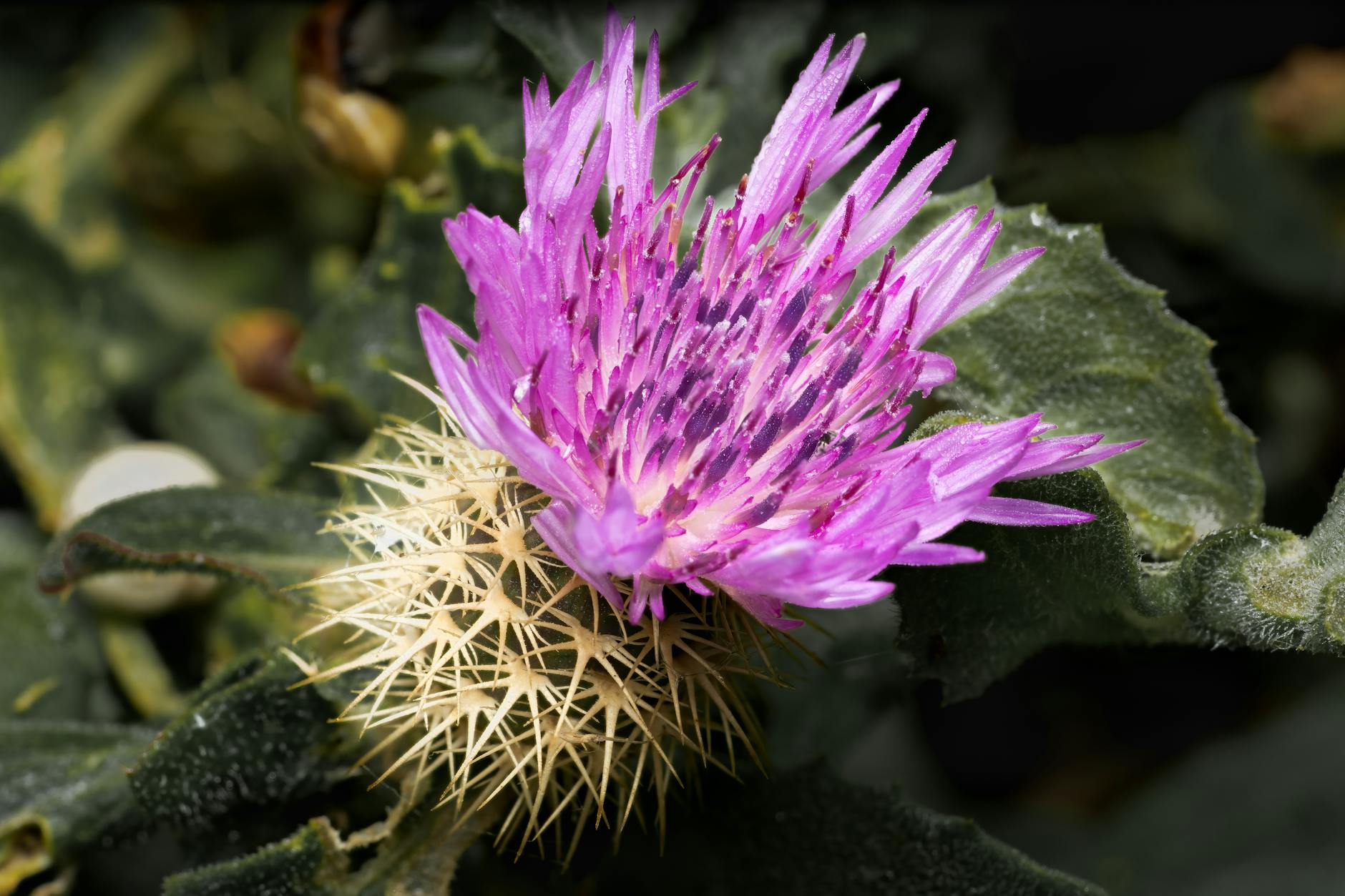
Milk thistle’s effects on liver-related acne are modest at best. While one clinical study found a 53% reduction in acne lesions when participants took 210 mg of silymarin (milk thistle’s active component) daily for 8 weeks, this promising result hasn’t been replicated widely enough to establish milk thistle as an evidence-based acne treatment.
The broader research landscape shows that while milk thistle appears safe for most people, there is no firm clinical evidence supporting its use for acne or most other conditions according to NIH reviews. For someone dealing with persistent breakouts potentially linked to liver health—such as the acne that worsens after consuming processed foods—milk thistle might be worth exploring as a complementary approach, but it shouldn’t replace proven dermatological treatments. This article examines what the actual research says about milk thistle and acne, explains the liver-acne connection, and clarifies realistic expectations.
Table of Contents
- What Does the Clinical Research Actually Show About Milk Thistle and Acne?
- Understanding How Liver Function Connects to Acne Development
- What Silymarin Does: The Active Component in Milk Thistle
- Safety Profile and Why Milk Thistle Rarely Causes Harm
- The Important Caveat: Milk Thistle’s Minimal Impact on Liver Disease Itself
- The Class Action Landscape and Milk Thistle Claims
- Setting Realistic Expectations and Moving Forward
- Conclusion
What Does the Clinical Research Actually Show About Milk Thistle and Acne?
The most compelling evidence comes from that single 2012 study where participants taking 210 mg of silymarin daily saw their acne lesions decrease by 53% over 8 weeks. That’s a substantial improvement on paper. However, a critical issue emerges when you look at the broader research landscape: this one study stands largely alone. Major medical reviews from the NIH and other medical institutions have concluded there is “no firm clinical evidence” to recommend milk thistle in clinical practice for most conditions, including acne. This gap between one promising study and the lack of replication matters tremendously.
When a treatment shows promise in a single study but subsequent research fails to confirm those results consistently, it raises questions about whether the initial results were robust or influenced by variables that didn’t carry over to other populations. The distinction between a preliminary finding and established clinical evidence is crucial here. One study with a 53% improvement rate might reflect genuine efficacy, but it could also reflect the placebo effect, researcher bias, study design differences, or population-specific factors. Without multiple independent studies confirming similar results across different groups, the medical community cannot confidently recommend milk thistle as a primary acne treatment. For acne sufferers considering milk thistle, this means approaching it with cautious optimism rather than the certainty you’d have with a medication that’s been tested dozens of times.
Understanding How Liver Function Connects to Acne Development
The liver-acne connection is real, though often oversimplified in wellness marketing. A healthy liver regulates hormones, processes fats, and helps eliminate toxins—all functions directly related to skin health. When liver function declines, several acne-promoting changes can occur. Poor liver function reduces the organ’s ability to regulate hormones like androgens, which stimulate sebum production in skin glands. Additionally, when the liver struggles to metabolize fats efficiently, levels of circulating fats in the bloodstream rise, which can trigger increased sebum production at the skin surface.
Beyond hormones and sebum, impaired toxin elimination means the body may expel inflammatory compounds through the skin instead of through normal detoxification pathways, leading to inflammation and breakouts. However, this connection doesn’t mean liver support alone will clear acne. Many people with compromised liver function never develop acne, while others with perfectly healthy livers struggle with persistent breakouts driven by genetics, hormonal changes, or bacterial colonization of pores. The liver-acne link is one factor among many, and addressing it requires supporting liver health through multiple mechanisms—not just taking a supplement and expecting acne to vanish. If you suspect your breakouts are linked to liver stress (perhaps you notice acne flares after heavy meals or drinking alcohol), addressing liver health becomes relevant. But if your acne is driven primarily by genetics, your skincare routine, or bacterial factors, the liver’s role is marginal.
What Silymarin Does: The Active Component in Milk Thistle
Silymarin is the umbrella term for the active compounds extracted from milk thistle seeds. These compounds are flavonolignans—a specific class of plant molecules known for their antioxidant and anti-inflammatory properties. In the context of liver health, silymarin theoretically works by protecting liver cells from oxidative stress and supporting cellular repair. This mechanism made researchers hopeful that it might also benefit skin health by improving the liver’s capacity to regulate hormones and eliminate toxins. The 2012 acne study relied on this theory: better liver function from silymarin supplementation would cascade into fewer breakouts.
The gap between theoretical mechanism and actual clinical results is worth noting. Just because silymarin protects liver cells in a laboratory setting doesn’t guarantee it will meaningfully improve liver function in living humans at typical supplement doses. The 2012 study used 210 mg daily—a specific dose that showed results in that particular group. Different doses, different formulations (milk thistle tea versus extract versus tincture), and different individuals may all produce different outcomes. Some milk thistle supplements contain standardized silymarin levels, while others are simply ground seed powder with highly variable concentrations. This inconsistency matters when you’re trying to replicate research results.
Safety Profile and Why Milk Thistle Rarely Causes Harm
One area where milk thistle research is consistent: it has an excellent safety profile. Clinical studies describe milk thistle extracts as “safe and well tolerated” with minimal adverse effects across diverse populations. Serious side effects are rare, and most people tolerate the supplement without noticeable problems. This is a significant advantage over some acne treatments—for instance, the oral medication isotretinoin (Accutane) requires intense monitoring and carries real risks, while milk thistle exists on the far safer end of the intervention spectrum.
The safety advantage becomes important when you’re choosing between options. If you’re considering milk thistle alongside other treatments—say, while working with a dermatologist on a comprehensive acne plan—the low risk of adverse effects means it won’t interfere with other therapies or create additional health concerns. The standard dosage in studies has been 210 mg of silymarin daily, though some supplements use higher or lower amounts. If you choose to try milk thistle, ensuring you’re using a standardized extract clearly labeled with silymarin content is wise, as it increases the chances you’re actually getting the dose tested in that promising 2012 research.
The Important Caveat: Milk Thistle’s Minimal Impact on Liver Disease Itself
Here’s a finding that surprises many people: even for liver disease—the condition milk thistle is most commonly promoted for—clinical benefit is negligible. Studies show milk thistle causes only minimal reductions in liver enzymes that have no clinical significance for patients with liver disease. In other words, the supplement might slightly lower certain liver function markers in lab tests, but these changes don’t translate to meaningful clinical improvement or better health outcomes for people with actual liver conditions like hepatitis or cirrhosis. If milk thistle can’t significantly improve liver disease itself, its capacity to indirectly improve acne through liver support becomes even more questionable.
This limitation deserves serious consideration. You’re relying on a theoretical cascade: milk thistle improves liver function (uncertain), improved liver function reduces hormonal acne (requires liver dysfunction in the first place), and the improvement is meaningful enough to notice in your skin (unproven for acne specifically). Each step in this chain has weaknesses in the evidence. The practical takeaway is that milk thistle might offer modest benefits for some people with specific presentations—perhaps those with subclinical liver dysfunction and acne triggered by hormonal dysregulation—but it’s not a targeted acne solution and shouldn’t be expected to work like proven acne treatments.
The Class Action Landscape and Milk Thistle Claims
A notable finding: there are no class action settlements or lawsuits related to milk thistle acne claims. The acne benefits claimed in marketing materials apparently haven’t prompted legal action from consumers who didn’t experience results, nor have they triggered FDA enforcement actions. The only significant milk thistle lawsuit on record is a 2017 Costco case involving Trunature milk thistle supplements—but that case was about false labeling of silymarin content (the supplement contained less active ingredient than labeled), not about unproven acne effectiveness. The absence of litigation around acne claims is notable.
It could mean the expectations are modest enough that consumers don’t feel deceived, or simply that direct acne claims aren’t being made aggressively in marketing materials. This legal quietness is different from the settlement landscape around some other health supplement categories. Contrast this with omega-3 supplements, which have been targets of class actions for unsubstantiated cardiovascular claims, or certain weight-loss supplements that faced lawsuits over false efficacy claims. Milk thistle appears to exist in a gray zone where the acne claims are tentative enough—”may support liver health” rather than “cures acne”—to avoid legal consequences. For consumers, this means you won’t find legal precedent or settlement information clarifying whether milk thistle actually delivers on acne benefits, leaving you to rely on the clinical evidence (limited) and personal experience.
Setting Realistic Expectations and Moving Forward
If you’re considering milk thistle for acne, the honest assessment is this: one study shows promise, but the broader evidence base is too thin to confidently recommend it as a primary acne treatment. However, its safety profile and the plausible liver-acne mechanism mean it’s not an unreasonable thing to try as part of a broader approach—especially if you suspect your acne is linked to liver stress. The realistic expectation would be to use milk thistle for 8-12 weeks (matching the study duration) while maintaining your proven acne management strategies, and honestly assess whether you notice improvement. If you see results, you’re in the minority of study participants.
If you don’t, you’re in the majority of the population for which clinical evidence is lacking. Looking ahead, more targeted research on milk thistle and acne would need to include multiple well-designed studies with larger sample sizes, standardized silymarin doses, and clear definitions of acne severity. The field would also benefit from research identifying which subpopulations—if any—actually benefit most (those with liver dysfunction markers, hormonal acne, specific age groups, etc.). Until that evidence materializes, milk thistle remains a supplement with a plausible theoretical benefit, a decent safety profile, and insufficient clinical proof for acne specifically.
Conclusion
Milk thistle offers limited clinical evidence for treating acne, despite a promising single study showing 53% improvement in acne lesions. The supplement is safe and well-tolerated, and it works through plausible mechanisms that connect liver health to skin health, but the broader research landscape shows no firm clinical support for its use. The theoretical chain linking liver support to acne reduction is reasonable, but each link in that chain has weaknesses—milk thistle shows minimal clinical benefit even for actual liver disease, making its indirect impact on acne hard to establish.
If you’re dealing with acne and suspect a liver health component, exploring milk thistle is a low-risk option worth trying for 8-12 weeks while continuing your proven skincare and dermatological treatments. However, it should be viewed as a complement to established acne therapies, not a replacement. The honest truth is that one promising study and a lack of replication means milk thistle remains in the “interesting but unproven” category for acne—and being clear-eyed about that uncertainty is more helpful than overstating the benefits.