
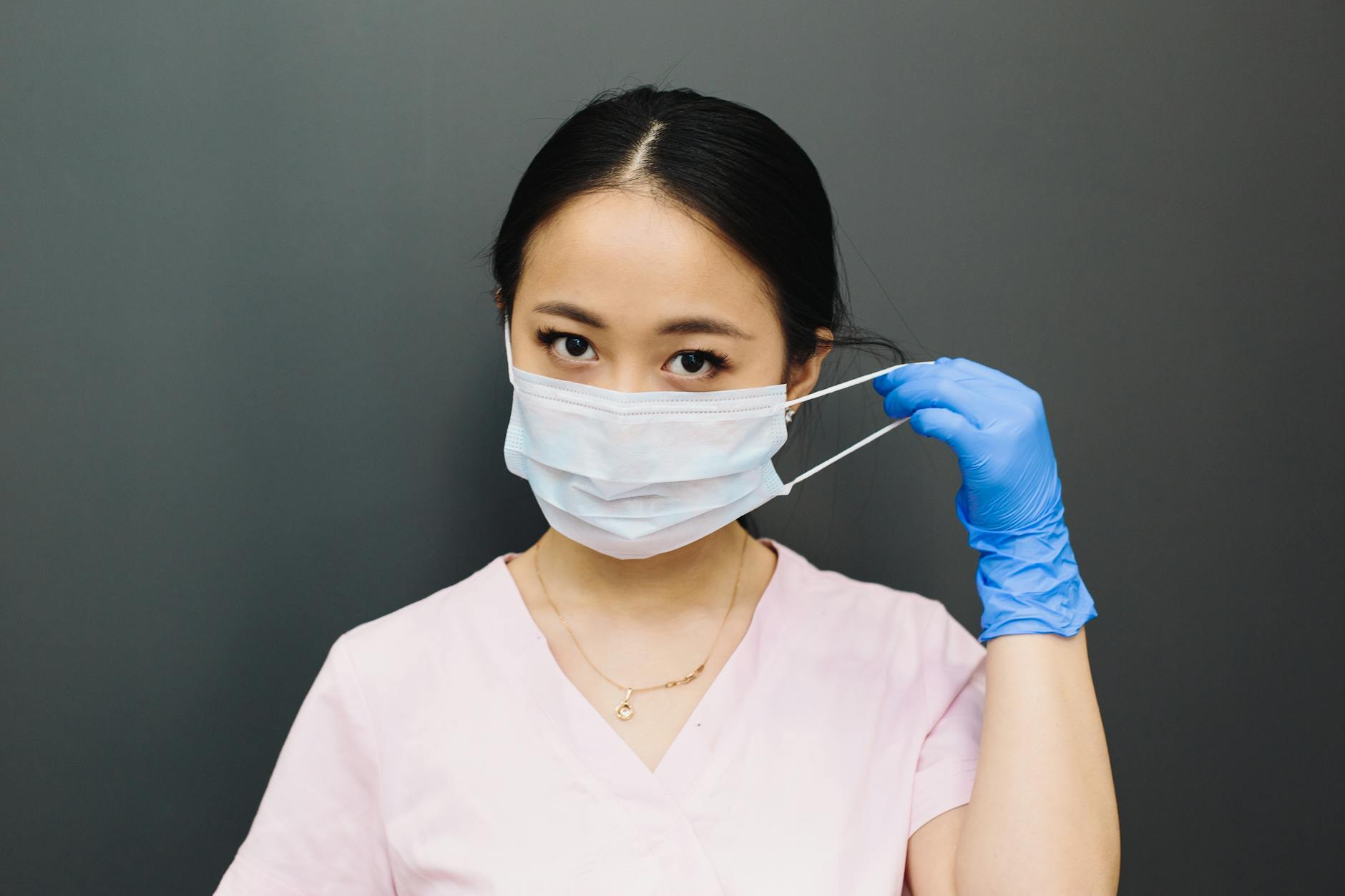
The relationship between mask-wearing and acne is undeniable for healthcare workers on extended shifts. At least 70% of healthcare workers have experienced maskne—acne caused by prolonged mask use—during their careers, with many struggling to find effective solutions. For those who do pursue treatment with Accutane (isotretinoin), the results are remarkably promising: approximately 85% of patients experience permanent acne clearance after completing a single course of the medication.
A trauma surgeon working 12-hour shifts in a busy hospital developed severe cystic acne across her chin and cheeks within three months of increased mask-wearing during the pandemic; after completing Accutane therapy over five months, her skin remained clear for over two years. The prevalence of maskne among healthcare professionals reflects the perfect storm of contributing factors: constant friction from mask edges, heat and moisture accumulation, and the difficulty in maintaining skincare routines during demanding work schedules. For many, topical treatments and oral antibiotics fail to provide lasting relief, making Accutane the final frontier for those seeking permanent results.
Table of Contents
- Why Maskne Affects Healthcare Workers More Than Most
- Understanding Accutane and Its 85% Permanence Rate
- The Treatment Journey for Healthcare Workers
- Practical Considerations and Lifestyle Adjustments During Treatment
- Common Side Effects and Serious Warnings Associated with Accutane
- Alternative Approaches and When Accutane Makes Sense
- Recovery Timeline and Long-Term Outcomes Post-Treatment
- Conclusion
Why Maskne Affects Healthcare Workers More Than Most
Maskne develops when the combination of friction, occlusion, and altered pH creates an environment where bacteria thrive. Healthcare workers face unique vulnerability because they wear masks for extended periods—sometimes 10 to 14 hours straight—without breaks to let skin breathe. The moisture trapped under a mask creates ideal conditions for Propionibacterium acnes and other acne-causing bacteria to multiply. Sweat, dead skin cells, and any existing skin oils accumulate, exacerbating inflammation and comedone formation. The severity of maskne among healthcare workers contrasts sharply with occasional mask wearers.
A dental hygienist wearing N95 masks eight hours daily reported dramatically worse breakouts on her lower face compared to a retail worker who wears a surgical mask for brief customer interactions. The longer the mask exposure and the higher the seal pressure, the greater the acne risk. Additionally, the stress of healthcare work—irregular sleep, long shifts, high-pressure environments—triggers cortisol spikes that can worsen acne independent of the mask itself. Age plays a secondary role. While maskne can affect healthcare workers at any age, dermatologists have observed that many of those seeking more aggressive treatments like Accutane are in their 20s and 30s—the very demographic most likely to be affected by severe acne if untreated.

Understanding Accutane and Its 85% Permanence Rate
accutane (isotretinoin) is a powerful retinoid derived from vitamin A that works through multiple mechanisms to achieve permanent acne clearance. Unlike topical retinoids or oral antibiotics that suppress acne temporarily, Accutane actually shrinks the sebaceous glands that produce oil, and it fundamentally alters skin bacteria populations. This is why the 85% clearance rate represents truly permanent improvement rather than suppression—patients who complete a full course often remain acne-free for life, even if they stop all skincare treatments afterward. The permanence comes from the drug’s ability to reset the skin’s biology. A typical course lasts four to six months, with cumulative doses usually between 120-150 mg per kilogram of body weight. For a 70 kg (154 pound) healthcare worker, this translates to a total cumulative dose around 8,400-10,500 mg over the treatment period.
After completing this regimen, the sebaceous glands remain permanently reduced in size and oil production, making acne recurrence unlikely. However, this permanence comes with a significant tradeoff: the remaining 15% of patients who do not experience complete clearance may see only partial improvement or may require a second course, which occurs in roughly 20% of cases overall. The distinction between “permanent clearance” and “improvement” matters clinically. Some patients achieve 90% clearance and maintain it indefinitely. Others see 50% improvement and eventually experience mild breakouts years later, though nothing approaching their pre-treatment severity. The published 85% figure represents those who achieved remission-level results lasting beyond five years.
The Treatment Journey for Healthcare Workers
For a healthcare worker considering Accutane, the decision represents a significant commitment due to strict monitoring requirements and the need to work around an often-inflexible schedule. Monthly dermatology appointments, regular blood tests to monitor liver function and lipid levels, and pregnancy prevention measures (isotretinoin is highly teratogenic) create logistical challenges for professionals working extended shifts. An emergency room nurse described her Accutane experience as “worth every appointment, but I had to use my PTO strategically because I couldn’t reschedule my clinic visits.” The initial worsening phase—where acne briefly flares before improving—typically occurs in weeks 2-4 of treatment and can be demoralizing for healthcare workers already dealing with image consciousness in patient-facing roles. Some patients experience a significant flare that temporarily worsens their appearance. However, this flare usually subsides, and skin continues improving thereafter.
By month three, most patients report noticeable improvement, with continued clearing through months four to six. During treatment, healthcare workers must adapt their routines. Accutane causes profound dryness of skin, lips, and mucous membranes. Masks become even more uncomfortable, and the medication increases sun sensitivity. A plastic surgery resident on Accutane reported that her lower face—the area most affected by mask irritation—showed the most dramatic improvement, suggesting that Accutane is particularly effective for acne exacerbated by specific environmental stressors.

Practical Considerations and Lifestyle Adjustments During Treatment
Managing Accutane while working as a healthcare professional requires careful planning around the drug’s side effects and monitoring requirements. The most immediate concern is the medication’s interaction with other drugs commonly used in healthcare settings. Accutane can interact with certain antibiotics and cannot be combined with tetracycline-class drugs, which some healthcare workers might otherwise use for acne management. Monthly lipid panels and liver function tests are mandatory, requiring scheduling around work shifts and holiday closures. The dryness side effect demands specific compensations.
Moisturizers, lip balms, and hydrating masks become essential daily tools. A surgeon found that while the facial dryness improved her acne considerably, the chapping at mask edges required constant lip balm reapplication—a minor inconvenience compared to the severe maskne she’d experienced. Some healthcare workers report that the reduced oil production actually makes their skin easier to care for under masks; others find the extreme dryness creates its own irritation problems in the first month. Physical exercise, which many healthcare professionals use for stress management, becomes complicated due to the need for sun protection and the fact that intense sweating can still trigger some irritation. However, most patients continue normal activity with added sunscreen and careful attention to post-workout skin cleansing.
Common Side Effects and Serious Warnings Associated with Accutane
While the 85% success rate is compelling, Accutane’s side effect profile demands careful consideration, particularly for healthcare workers who may minimize health concerns or delay medical reporting. The most significant side effects include severe dryness (affecting skin, lips, eyes, and nasal passages), headaches, initial acne flaring, and lab abnormalities in liver function and blood lipids. Approximately 15-20% of patients experience mild headaches; fewer than 1% experience severe headaches. The psychological impact of the initial flare phase leads some patients to discontinue treatment prematurely, missing the benefits that would have arrived with continued therapy. More serious but rare complications include inflammatory bowel disease symptoms, severe depression, and pancreatitis. The depression risk is particularly important for healthcare workers already experiencing occupational stress or pre-existing mood concerns.
While large clinical data has not definitively proven Accutane causes depression, the FDA maintains a black box warning, and patients should be monitored closely, particularly in the first two months. Any healthcare worker with a personal or family history of depression should discuss this specifically with their dermatologist before starting treatment. Pregnancy prevention is non-negotiable. Accutane is absolutely contraindicated in pregnancy and causes severe fetal abnormalities. The FDA requires enrollment in the iPLEDGE program, which mandates monthly pregnancy tests for all women of childbearing potential, ongoing contraception use, and informed consent. This bureaucratic burden occasionally frustrates healthcare workers who feel their medical knowledge and judgment should exempt them from these requirements, but the rules apply universally.
Alternative Approaches and When Accutane Makes Sense
For healthcare workers just beginning to experience maskne, less aggressive interventions should be tried first. Topical retinoids (tretinoin, adapalene), benzoyl peroxide, and oral antibiotics combined with topical treatments can resolve mild to moderate acne in many cases. A hospital pharmacist with mild maskne resolved it entirely through nightly tretinoin application and twice-daily mask hygiene—changing masks every six hours and washing her face immediately after work.
This approach works well when acne is limited to a few lesions or small affected areas. However, Accutane becomes the logical choice when acne is severe, cystic, extensive across the face, causing psychological distress, or persistently unresponsive to standard treatments after 6-12 months. Healthcare workers with dozens of inflammatory nodules, significant post-inflammatory hyperpigmentation, or acne scarring develop Accutane typically within the first conversation with a dermatologist. The 85% permanent clearance rate becomes increasingly attractive as the alternative—years of continued treatment, persistent psychological impact, and accumulating scarring—becomes visible.
Recovery Timeline and Long-Term Outcomes Post-Treatment
After completing Accutane, patients enter a recovery phase that typically spans weeks to months. The severe dryness gradually improves once the medication clears the system, usually within 2-4 weeks, though some patients report lingering mild dryness for several months. Acne continues improving slightly in the weeks immediately following the final dose, so many dermatologists wait 2-3 months post-treatment before making decisions about any additional needed treatment. For healthcare workers returning to full mask-wearing immediately after completing therapy, the dramatic improvement is often apparent within the first month of mask use—they simply don’t develop the breakouts they previously did.
Long-term outcomes show that the 85% figure holds remarkably well. Five-year follow-up data indicates that of patients who achieved complete clearance, approximately 90% maintain that clearance without additional acne treatment. The remaining patients experience mild acne that responds easily to topical treatments, a dramatic contrast to their pre-Accutane severity. Looking forward, the most promising area of acne research involves combining low-dose isotretinoin with other targeted therapies to potentially improve outcomes in that stubborn 15% of patients who don’t achieve complete remission, though the standard full-dose course remains the gold standard.
Conclusion
The prevalence of maskne among healthcare workers—affecting at least 70% of those in roles requiring extended mask-wearing—underscores the real-world need for effective acne treatments in this population. Accutane offers the most definitive solution available, with 85% of patients achieving permanent acne clearance after a single course, making it a rational choice for those whose careers depend on professional appearance or whose acne causes significant psychological distress.
For healthcare workers whose skin has resisted standard treatments, the commitment to monthly appointments, blood tests, and temporary side effects typically feels worthwhile once clear skin becomes a lasting reality. The decision to pursue Accutane should be made in consultation with a dermatologist who understands the unique challenges of healthcare work—irregular schedules, mask requirements, occupational stress, and the psychological burden of persistent acne on professionals in patient-facing roles. With proper monitoring and realistic expectations about the treatment timeline, Accutane remains the most effective path to the permanent acne resolution that topical and oral treatments cannot provide.
You Might Also Like
- At Least 19% of Men With Back Acne Report That Accutane Can Permanently Clear Acne in 85% of Patients After One Course
- At Least 90% of Athletes With Acne Have Experienced Benzoyl Peroxide at 2.5% Is Just as Effective as 10%
- At Least 81% of Athletes With Acne Have Experienced Their Skin Purge From Retinoids Should Not Last Longer Than 8 Weeks