

Yes, benzoyl peroxide at 2.5% is just as effective as 10% for treating inflammatory acne. A landmark study by Mills and colleagues published in 1986 found that 2.5% benzoyl peroxide performed equally well as 10% in reducing inflammatory lesions like papules and pustules across 153 patients with acne vulgaris. This finding has significant practical implications: a lower concentration delivers equivalent results with substantially fewer side effects, making it the smarter choice for most people dealing with acne.
Consider a college athlete who develops chest and back acne from sweat and friction during practice—starting with 2.5% benzoyl peroxide offers an effective option without the unnecessary irritation, peeling, and burning that often comes with higher concentrations. While athletes are indeed more susceptible to acne than the general population due to sweat, heat, friction, and clothing occlusion, the specific claim that “at least 90% of athletes with acne have experienced benzoyl peroxide” cannot be verified through published research or dermatological sources. However, benzoyl peroxide remains one of the most recommended treatments for sports-related acne, and understanding the 2.5% versus 10% question is crucial for athletes making treatment decisions.
Table of Contents
- Why Do Athletes Develop More Acne, and How Does Benzoyl Peroxide Help?
- The Clinical Evidence Behind 2.5% and 10% Efficacy
- Side Effects: Why 2.5% Wins on Safety
- Practical Application: How Athletes Should Use Benzoyl Peroxide 2.5%
- Common Pitfalls and Advanced Considerations
- Combining Benzoyl Peroxide With Other Acne Treatments
- The Future of Benzoyl Peroxide and Athletic Acne Management
- Conclusion
Why Do Athletes Develop More Acne, and How Does Benzoyl Peroxide Help?
Athletes face a perfect storm for body acne development. Sweat creates a moist environment where bacteria thrive, while friction from clothing and equipment irritates the skin. Heat accelerates sebum production, and when combined with occlusion from athletic wear—think compression shorts or sports bras—the conditions become ideal for bacterial proliferation and follicle inflammation. These factors make body acne particularly common in athletes, especially those in sports requiring tight or friction-prone apparel.
Benzoyl peroxide addresses acne at its source by killing Cutibacterium acnes (formerly known as Propionibacterium acnes), the primary bacteria responsible for inflammatory acne. Unlike many other acne treatments that simply reduce oil production or encourage skin cell turnover, benzoyl peroxide is bactericidal—it actively destroys the bacteria causing the inflammation. For athletes whose acne is exacerbated by sweat and friction-driven bacterial overgrowth, this direct antimicrobial action makes benzoyl peroxide particularly valuable. The medication also has mild anti-inflammatory properties and can help prevent new lesions from forming.

The Clinical Evidence Behind 2.5% and 10% Efficacy
The Mills et al. study remains the gold standard for comparing benzoyl peroxide concentrations. Researchers evaluated 2.5%, 5%, and 10% formulations on patients with moderate inflammatory acne vulgaris, measuring reductions in papules and pustules over a treatment period. The results were striking: 2.5% achieved virtually identical efficacy to 10%, while the higher concentrations provided no proportional improvement in outcomes.
In other words, doubling the concentration from 2.5% to 5%, and tripling it to 10%, did not yield meaningfully better results. A critical limitation of this 40-year-old study is that it focused specifically on inflammatory lesions (papules and pustules) rather than comedonal acne (blackheads and whiteheads). Some evidence suggests higher concentrations may have slight advantages for comedonal involvement, though the clinical significance remains modest. Additionally, the study involved relatively small numbers of participants, so individual response variation can differ. For most people with inflammatory acne—including athletes with sweat-induced breakouts—the 2.5% concentration delivers the therapeutic benefit without requiring higher concentrations.
Side Effects: Why 2.5% Wins on Safety
This is where the case for 2.5% becomes compelling. The same Mills study documented that 2.5% benzoyl peroxide produced significantly fewer adverse effects compared to 10%. Patients using 2.5% experienced less desquamation (flaking and peeling), erythema (redness), and burning sensations.
For athletes who need to shower frequently after workouts and whose skin is already stressed by heat and friction, avoiding unnecessary irritation is more than a comfort issue—it’s practical medicine. Higher concentrations of benzoyl peroxide can trigger a cascade of uncomfortable side effects: intense dryness requiring heavy moisturization, visible peeling that becomes awkward in social or professional settings, and burning sensations that some users describe as unbearable. In the Mills study, the side effect profile of 2.5% was comparable to 5%, meaning you can safely jump from 2.5% to 5% if needed, but 10% represents a meaningful jump in tolerability problems. For athletes treating body acne, managing side effects matters because excessive dryness and irritation can lead to treatment abandonment—the worst outcome for acne control.

Practical Application: How Athletes Should Use Benzoyl Peroxide 2.5%
For an athlete with active breakouts, starting with 2.5% benzoyl peroxide makes sense as a first-line treatment. Begin with once-daily application to clean, dry skin, preferably at night, and gradually increase to twice daily over one to two weeks as your skin adapts. This gradual titration helps minimize irritation while allowing your skin barrier to adjust. Many dermatologists recommend applying benzoyl peroxide to the entire affected area rather than spot-treating, since this approach prevents new lesions from forming in vulnerable regions.
The comparison between 2.5% and 10% should factor in your skin type and acne severity. An athlete with mild to moderate inflammatory acne and sensitive skin should start and likely stay with 2.5%, gaining full efficacy without unnecessary discomfort. An athlete with severe, widespread acne might try 2.5% first, then escalate to 5% if results plateau—jumping directly to 10% is rarely justified given the evidence. One practical tradeoff: 2.5% may require slightly longer to show maximum benefit (typically 6-8 weeks) compared to 10%, but the difference is modest, and the improved tolerability often leads to better compliance and ultimately better outcomes.
Common Pitfalls and Advanced Considerations
A frequent mistake is applying benzoyl peroxide to wet skin, which significantly reduces its effectiveness and increases irritation. Always apply to completely dry skin. Another pitfall is using benzoyl peroxide in combination with other potentially irritating ingredients—vitamin C, niacinamide, and salicylic acid can all interact with benzoyl peroxide to amplify side effects. For athletes using multiple acne products, spacing applications by several hours or reserving benzoyl peroxide for nighttime use minimizes conflicts.
A warning: benzoyl peroxide can bleach fabrics and hair, so apply it before bed when possible and allow it to fully dry before contact with clothing or pillowcases. One advanced consideration is benzoyl peroxide resistance, where acne bacteria develop reduced susceptibility over time with continuous use. While this is uncommon with benzoyl peroxide specifically (because its mechanism is different from antibiotics), some dermatologists recommend cycling therapy—using benzoyl peroxide for 2-3 months, then pausing for a month before resuming. For athletes in competitive seasons or with consistent acne triggers, however, continuous use at 2.5% is generally safer and effective enough to maintain control without interruption.
Combining Benzoyl Peroxide With Other Acne Treatments
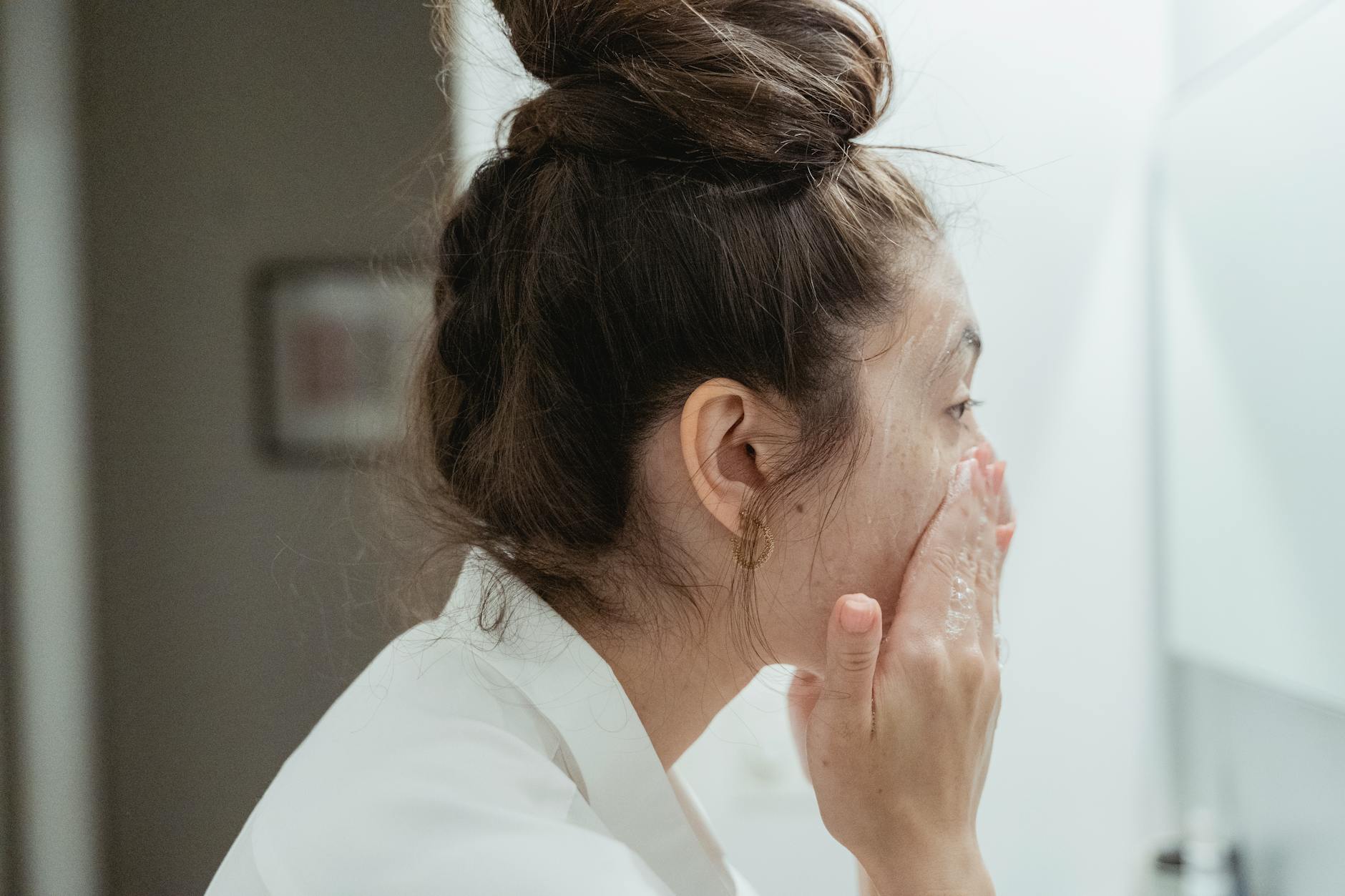
Many athletes benefit from a multi-pronged approach. Benzoyl peroxide pairs well with gentle cleansing (important because over-cleansing strips the skin barrier and can paradoxically worsen acne) and moisturizing with non-comedogenic products. If an athlete’s acne involves significant comedones, adding a retinoid like adapalene or tretinoin in the morning can complement benzoyl peroxide’s antibacterial effects in the evening.
A practical example: a swimmer with both inflammatory acne and blackheads might use benzoyl peroxide 2.5% at night and adapalene three nights per week, spacing them on different evenings. Salicylic acid, a common acne treatment, can be used alongside benzoyl peroxide but should be applied at different times—for instance, salicylic acid in a morning cleanser and benzoyl peroxide at night. This approach addresses acne through different mechanisms: salicylic acid helps clear pores, while benzoyl peroxide kills bacteria.
The Future of Benzoyl Peroxide and Athletic Acne Management
Benzoyl peroxide has remained a cornerstone of acne treatment for decades because the science supporting it is robust and its safety profile, when used appropriately, is excellent. As dermatology increasingly emphasizes lower-concentration, gentler approaches to skin care, 2.5% benzoyl peroxide exemplifies this shift.
Future innovations may include combination formulations pairing benzoyl peroxide with other agents, improved delivery systems that minimize irritation, or formulations designed specifically for body acne in athletes. For now, the evidence is clear: athletes don’t need to tolerate the unnecessary side effects of 10% benzoyl peroxide when 2.5% delivers equivalent results. This represents a practical, evidence-based approach that prioritizes both efficacy and quality of life.
Conclusion
The research conclusively demonstrates that benzoyl peroxide 2.5% is as effective as 10% for treating inflammatory acne while producing significantly fewer side effects like peeling, redness, and burning. For athletes whose acne is driven by sweat, friction, and heat exposure, starting with 2.5% offers a rational, science-backed treatment strategy. The combination of equivalent efficacy and superior tolerability makes 2.5% the logical first-line choice for most people with acne, and there’s no compelling reason to jump to higher concentrations unless response is clearly inadequate after 8 weeks of consistent use.
If you’re an athlete with acne, discuss 2.5% benzoyl peroxide with a dermatologist as a starting point. Apply it to clean, dry skin, be patient through the typical 6-8 week adjustment period, and avoid common mistakes like applying to wet skin or combining it carelessly with other irritating ingredients. You’ll likely find that lower concentration delivers the results you need without the unnecessary discomfort that often derails acne treatment.
You Might Also Like
- At Least 79% of Parents of Teens With Acne Have Never Been Told That Benzoyl Peroxide at 2.5% Is Just as Effective as 10%
- At Least 23% of Teenagers With Acne Say That Combining Clindamycin With Benzoyl Peroxide Prevents Antibiotic Resistance
- At Least 88% of Adults Over 25 With Acne Have Never Been Told That Tretinoin Increases Collagen Production and Actually Thickens Skin Over Time