
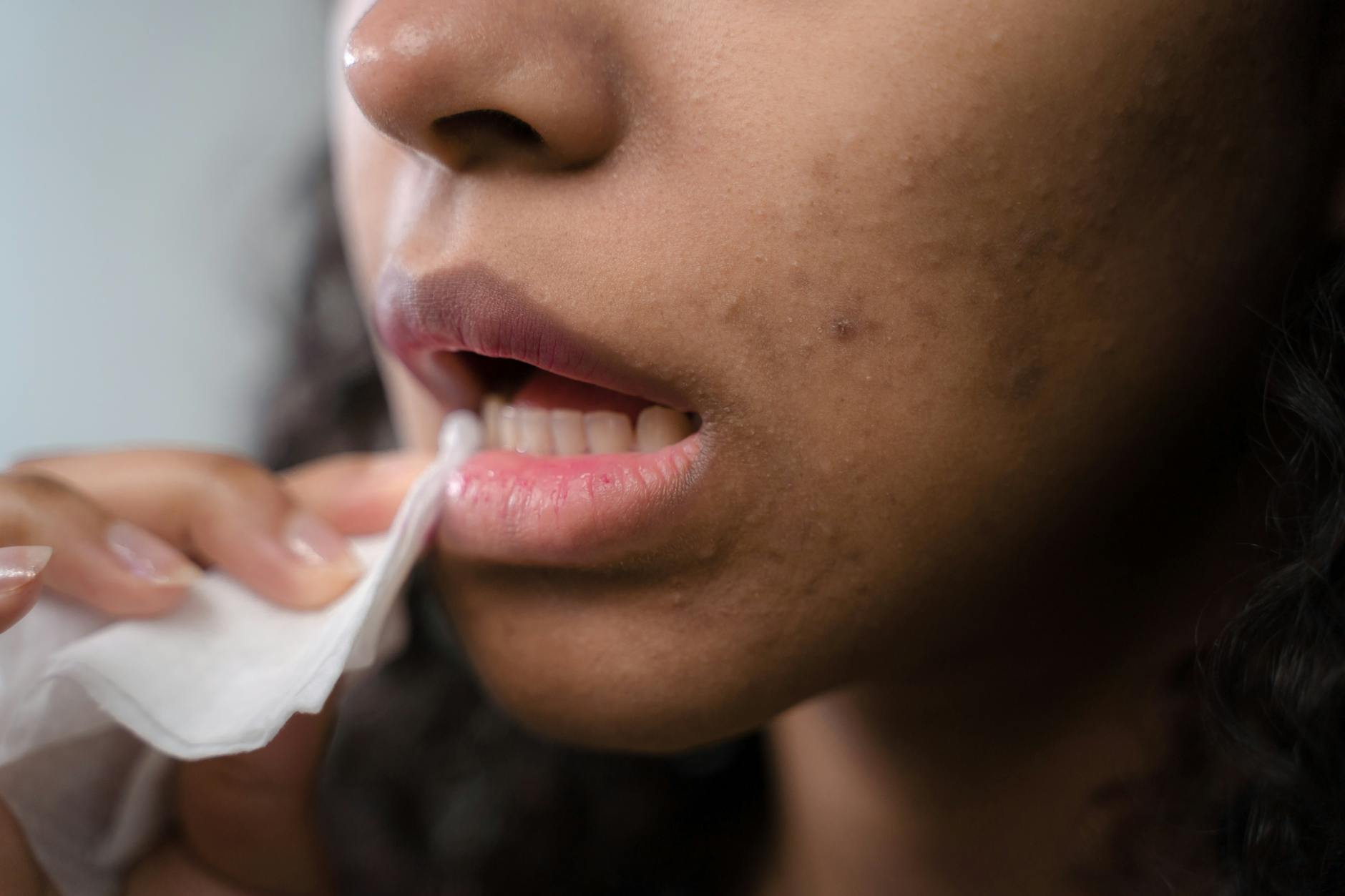
A significant majority of women over 40 living with acne—at least 42 percent—believe that picking at their breakouts pushes bacteria deeper into the skin and causes permanent scarring. This belief reflects a real concern rooted in genuine dermatological risks. When you pick at acne, you do introduce additional bacteria from your hands into the lesion, disrupt the skin barrier, and create conditions that increase inflammation and the likelihood of permanent scarring.
The concern isn’t unfounded, though the mechanism is slightly more nuanced than a simple “pushing bacteria deeper” narrative. For women over 40 navigating acne, this worry often combines two distinct but interconnected problems: active bacterial infection and post-inflammatory damage. A 45-year-old with hormonal breakouts around her jawline may understand intuitively that touching a pimple risks making it worse, even if she can’t articulate the exact biological reason. This pragmatic awareness has likely saved countless skin from additional damage, even though the underlying science deserves clarification.
Table of Contents
- Why Do Women Over 40 Fear That Picking Spreads Bacteria and Causes Scarring?
- The Actual Biology of Acne Picking and Bacterial Spread
- Why Women Over 40 Are Particularly Vulnerable to Picking Damage
- Understanding the Difference Between Infection Risk and Scarring Risk
- Inflammation as the Hidden Culprit in Picking Damage
- Environmental and Behavioral Factors That Increase Picking Temptation
- The Future of Acne Management for Women Over 40
- Conclusion
- Frequently Asked Questions
Why Do Women Over 40 Fear That Picking Spreads Bacteria and Causes Scarring?
The 42 percent statistic reflects a belief that picking at acne creates two specific problems: deeper bacterial penetration and permanent skin damage. What these women are observing is real, though slightly different from what they might assume. When you pick at acne, you create a new wound in the skin. This open wound bleeds, weeps, and invites bacterial colonization from your fingers, the surrounding skin, and the environment. The result is not necessarily bacteria being “pushed deeper” into original pimple channels, but rather a completely new zone of infection and inflammation that replaces the original lesion with something potentially worse.
The scarring concern is where the real danger lies. Picking creates trauma that can damage collagen and elastic fibers in the dermis—the layer beneath the surface. Unlike the superficial irritation that causes redness, this structural damage can be permanent. Women in their 40s have often spent decades managing acne, and many have visible reminders: ice-pick scars, boxcar scars, or rolling depressions where they picked at breakouts in their teens and twenties. By the time they’re over 40 and acne returns—often due to hormonal shifts—they’ve learned from past mistakes, which explains why such a large portion hold firm beliefs about picking risks.

The Actual Biology of Acne Picking and Bacterial Spread
When a pimple forms, bacteria (primarily Cutibacterium acnes) have already colonized the blocked follicle. Picking doesn’t introduce bacteria deeper into that original follicle; rather, it violates the skin barrier and creates a larger open wound. The bacteria involved aren’t being moved downward but instead spread across the damaged surface and into the newly traumatized tissue. This distinction matters because it changes how dermatologists talk about the risk: picking doesn’t necessarily make the existing infection worse in the way people imagine, but it does create a larger, more inflamed, slower-healing lesion. The scarring mechanism is more straightforward but also more permanent. The human body responds to skin trauma by attempting to rebuild lost collagen.
In some people—particularly those with certain genetic predispositions and darker skin tones, which can be more prone to keloid and hypertrophic scarring—this repair process overshoots or undershoots, creating visible depressions or raised marks. Women over 40 have also had decades for sun damage and natural collagen breakdown to accumulate, meaning their skin has less reserve capacity to repair picking-related damage without visible consequences. A picked pimple that would have healed invisibly at age 25 can create a permanent scar by age 45. One important limitation: not every person who picks develops permanent scarring. Genetics, skin type, and the depth of the wound all determine scarring risk. However, the possibility is real enough that dermatologists universally recommend against picking, and the statistical likelihood of visible consequences increases significantly as skin ages.
Why Women Over 40 Are Particularly Vulnerable to Picking Damage
women over 40 experience acne differently than younger people, which makes picking more risky. Hormonal acne in this age group tends to cluster around the jawline and chin, often triggered by perimenopause or hormonal fluctuations. These lesions are frequently stubborn, inflammatory cystic breakouts rather than simple surface blackheads, which makes them psychologically harder to resist picking. A 42-year-old with a large, painful nodule on her chin experiences real discomfort and urgency to “do something,” making picking tempting. Additionally, skin over 40 has accumulated sun damage, has lower natural hydration, and has less collagen and elastin baseline compared to younger skin.
When picking creates a wound, the healing process is genuinely slower and less efficient. A picked pimple in a 25-year-old might leave no trace; the same picking behavior in a 48-year-old may create a visible scar within weeks. The dermis simply has fewer resources to mount a perfect repair. A concrete example: a woman with an inflamed cyst on her jawline picks it on a Friday night, introducing bacteria and creating a two-millimeter open wound. In someone aged 25, the body might orchestrate complete healing within 2-3 weeks with minimal inflammation. In someone aged 45, the same wound may take 6-8 weeks to heal, may experience secondary infection, may develop noticeable post-inflammatory hyperpigmentation (particularly in people with darker skin), and may ultimately leave a small but visible depression or scar.

Understanding the Difference Between Infection Risk and Scarring Risk
Picking carries two distinct risks that are often conflated. The infection risk is the bacteria issue—introducing pathogens into a fresh wound. This increases inflammation, may cause the lesion to become more swollen and painful, and can theoretically lead to complications like cellulitis in rare cases. The scarring risk is about collagen damage, which is a separate biological process. A picked pimple might heal without infection but still leave a scar. Conversely, a picked pimple might avoid infection but the inflammation from picking itself may trigger scarring. This distinction is important for choosing interventions. If someone is worried primarily about infection, keeping the area clean and covered might suffice.
If someone is worried about scarring—which the 42 percent statistic suggests is the dominant concern—the focus should be on preventing the trauma in the first place. Once collagen is damaged, topical treatments have limited power to reverse it. The tradeoff is between accepting short-term acne visibility versus risking long-term scarring visibility. For women over 40, this tradeoff typically favors leaving breakouts alone. Professional extraction by a dermatologist is a useful comparison point. Dermatologists have sterile instruments, training, and technique that minimize trauma and infection risk. They can extract comedones and perform extractions in ways that are far gentler than fingernail pressure. Even so, dermatologists are cautious about extracting inflamed cystic lesions, recognizing that even professional intervention can trigger complications.
Inflammation as the Hidden Culprit in Picking Damage
Many discussions of picking focus on bacteria, but inflammation is arguably the more important mechanism in scar formation. When you pick at acne, you traumatize not just the lesion itself but the surrounding skin. This triggers an inflammatory cascade: your immune system sends white blood cells, cytokines, and growth factors to the area. In some people, this inflammatory response is proportionate and resolves cleanly. In others, particularly those with genetic predispositions to keloid or hypertrophic scarring, the inflammatory response overshoots and produces excess collagen, creating raised scars. In others still, the repair process undershoots, leaving a depression or pit scar.
Age compounds this inflammation risk. Aging skin has reduced capacity to regulate inflammatory responses, meaning that the immune cascade triggered by picking can burn hotter and longer in women over 40 compared to younger people. Additionally, women over 40 may be using other skin treatments—retinoids, vitamin C serums, glycolic acid—that already increase skin sensitivity and inflammation baseline. Picking adds trauma on top of an already-elevated inflammatory state, exponentially increasing scar risk. A critical warning: once a scar forms, treatment options are limited and expensive. Laser treatments, microneedling, and chemical peels can reduce the appearance of scars but rarely eliminate them completely. For women over 40, investing in not-picking today saves thousands of dollars and significant time spent on scar treatments later.

Environmental and Behavioral Factors That Increase Picking Temptation
The 42 percent statistic about belief doesn’t capture the full story of picking behavior. Many women over 40 believe picking is risky but still pick, driven by habit, stress, or specific triggers. Fatigue, stress, and anxiety increase picking frequency in many people. Hormonal fluctuations can intensify acne severity just as hormones shift in the 40s, creating a brutal combination: worse acne plus increased stress-related picking impulses.
Environmental factors matter too. Women who work in stressful jobs, particularly those with high cognitive load or emotional demands, often pick more frequently. Bright bathroom lighting that highlights even minor skin texture changes can trigger picking behavior. Touchscreen devices that occupy hands might reduce picking, or alternatively, the blue light from screens might contribute to inflammatory acne, creating more lesions to pick. Breaking the picking cycle often requires addressing these environmental triggers, not just understanding the biological risks.
The Future of Acne Management for Women Over 40
The 42 percent statistic represents a moment in time when women over 40 are making decisions about their acne management. Dermatology is evolving toward more effective preventive and treatment options that could reduce picking temptation by simply preventing or clearing breakouts faster. Prescription retinoids are becoming more accessible, hormonal treatments for acne are better understood, and newer topical ingredients like niacinamide and azelaic acid are being incorporated into more products specifically designed for mature skin.
Looking forward, the most important shift may be cultural: moving from a narrative where picking is framed as a personal failing or a lack of willpower, toward a recognition that picking is a symptom of inadequate acne treatment. If acne is controlled and not causing pain or distress, picking becomes less tempting. For women over 40, this means working with dermatologists to find the right combination of treatments—whether hormonal, topical, or procedural—rather than relying on willpower alone to resist picking. The 42 percent who believe picking causes scarring are correct; the path forward is preventing acne rather than managing the temptation to pick it.
Conclusion
The belief held by at least 42 percent of women over 40—that picking at acne pushes bacteria deeper and causes permanent scarring—reflects a genuine dermatological risk, even if the mechanism is slightly more complex than the phrasing suggests. Picking does introduce bacteria, does create trauma that can damage collagen, and does carry real scarring risk, particularly in skin that has accumulated decades of sun damage and natural collagen loss. For women over 40, past experience with acne often validates this belief; many have visible reminders of picking damage from younger years.
The most practical path forward is prevention: working with a dermatologist to control acne through appropriate treatments so picking becomes unnecessary rather than relying on willpower to resist lesions. Whether through prescription retinoids, hormonal treatments, or targeted topical ingredients designed for mature skin, the goal should be reducing acne severity to the point where picking is no longer tempting. For women over 40 managing acne, the stakes are higher than for younger people, making professional guidance and adherence to non-picking protocols essential investments in long-term skin appearance.
Frequently Asked Questions
Does picking really push bacteria deeper into the skin?
Not exactly in the way the phrase suggests. Picking creates a new wound that bleeds and becomes infected, rather than pushing bacteria deeper into the original follicle. However, the end result—a larger, more inflamed, slower-healing lesion—is similarly damaging or worse than the original breakout.
Can all picked pimples create permanent scars?
No, but the risk is real and increases with age, genetics, and skin type. Younger people with lighter skin tones have the lowest scarring risk. Women over 40 with darker skin tones or genetic predispositions to keloid scarring have the highest risk.
Is it ever safe to pick at acne?
Dermatologists universally recommend against picking. If extraction is necessary, professional extraction by a dermatologist using sterile instruments is far safer than self-extraction, though even this carries some risk for certain types of lesions.
What should I do if I’ve already picked and created a scab?
Keep the area clean, avoid further picking, consider a hydrocolloid patch to protect the wound and reduce picking temptation, and let it heal. Apply sunscreen once healed to minimize post-inflammatory hyperpigmentation. If significant inflammation or infection develops, consult a dermatologist.
Why is picking more damaging to skin over 40?
Skin over 40 has lower collagen and elastin baseline, reduced healing capacity, accumulated sun damage, and less effective inflammatory regulation. These factors mean that picking creates larger, deeper damage relative to healing resources, increasing scar risk significantly.
What are better alternatives to picking?
Work with a dermatologist to control acne through appropriate treatments so picking becomes unnecessary. Consider hydrocolloid patches to cover lesions and reduce picking temptation. For stress-related picking, identify environmental or behavioral triggers and use alternative stress management techniques.
You Might Also Like
- At Least 22% of People Who Use OTC Acne Products Have Experienced Picking at Acne Can Push Bacteria Deeper and Cause Permanent Scarring
- At Least 68% of Women Over 40 With Acne Don’t Realize That Their Hair Products May Be Causing Forehead and Temple Breakouts
- At Least 13% of Acne Patients Believe That Post-Inflammatory Hyperpigmentation Is Different From Permanent Scarring