
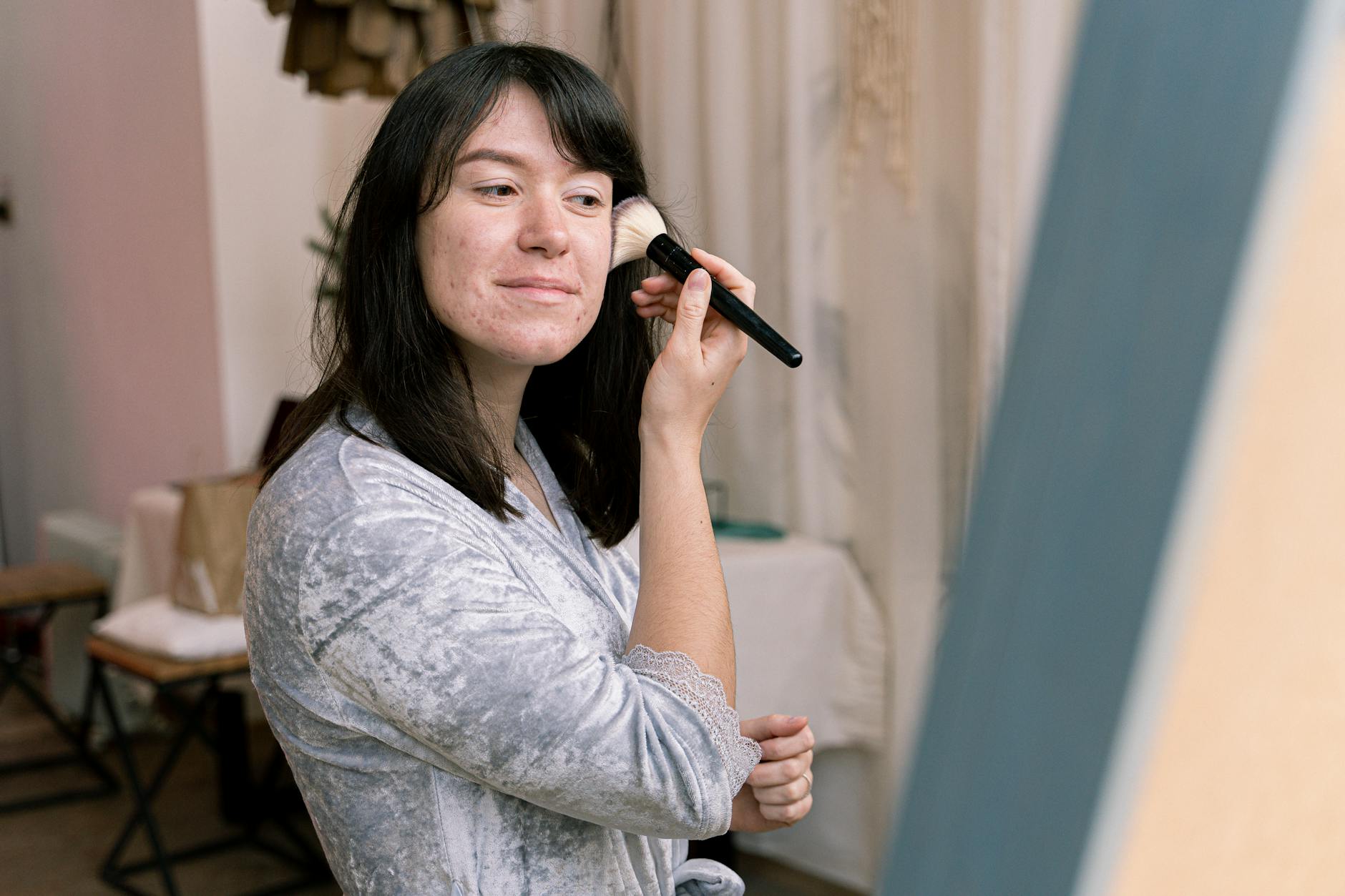
Hair products may very well be causing your forehead and temple breakouts, even if you’ve never considered them a culprit. The connection between hair care products and facial acne is well-documented in dermatological literature—a phenomenon known as “acne cosmetica” or “pomade acne”—yet it remains one of the most overlooked triggers for adult women. Consider a woman in her mid-40s who uses a volumizing mousse on her roots, a smoothing serum on her ends, and dry shampoo between washes. Each product travels from her scalp down past her hairline, depositing silicones, oils, and waxes directly onto the forehead and temples throughout the day. Within weeks, she develops persistent breakouts in precisely those areas, never realizing that her hair routine—not her skincare or hormones—is the problem.
Recent dermatological data shows that approximately 26% of women in their 40s experience acne, and while not all cases stem from hair products, a significant portion of those breakouts occur specifically on the hairline and temples, where product contact is inevitable. The reason hair products trigger breakouts in these zones is straightforward: the ingredients designed to nourish, smooth, and style hair are often pore-clogging when they contact facial skin. Silicones, heavy oils, petroleum derivatives, cocoa butter, lanolin, sulfates, and mineral oil all serve legitimate purposes in hair care, but they accumulate on skin and block sebaceous glands. This blockage, combined with the warm, moist environment created by hair itself, creates ideal conditions for bacterial growth and inflammation. Women over 40 are particularly susceptible because they often use more intensive, product-heavy hair treatments to address age-related concerns like thinning, dryness, and frizz—precisely the formulations most likely to cause facial acne.
Table of Contents
- How Hair Products Trigger Forehead and Temple Acne
- Common Hair Product Ingredients That Cause Acne
- Why Women Over 40 Are More Vulnerable
- Identifying Whether Your Hair Products Are the Problem
- The Risks of Prolonged Hair-Product-Induced Acne
- Practical Steps to Acne-Free Hair Care
- Moving Forward With Clear Skin
- Conclusion
- Frequently Asked Questions
How Hair Products Trigger Forehead and Temple Acne
The mechanism behind hair-product-induced acne is well-established in dermatology. When you apply products to your hair, whether at the roots, lengths, or ends, those products don’t disappear—they migrate. Gravity, humidity, friction from pillows, and simple contact with your face throughout the day transfer product residue from your scalp to your forehead, temples, and upper cheeks. Unlike acne caused by hormones or internal factors, this is purely mechanical and chemical blockage. The forehead and temples are particularly vulnerable zones because they sit at the intersection of the scalp and face, meaning they receive constant product transfer with every hair movement.
A woman who applies a leave-in conditioner to her hair in the morning will have that product on her forehead by afternoon, and again on her pillowcase that night—amplifying exposure. The distinction between hairline acne and other types is important because it affects treatment. If breakouts appear exclusively along the hairline, in a clear band across the forehead, or clustered on the temples where hair naturally contacts skin, the cause is very likely external contact, not internal. In contrast, acne that appears across the entire forehead, on the chin, or scattered across the face typically has hormonal, dietary, or stress-related roots. This localization is your diagnostic clue. Dermatologists recognize this pattern so clearly that they actively ask patients about hair products when treating forehead and temple acne.
Common Hair Product Ingredients That Cause Acne
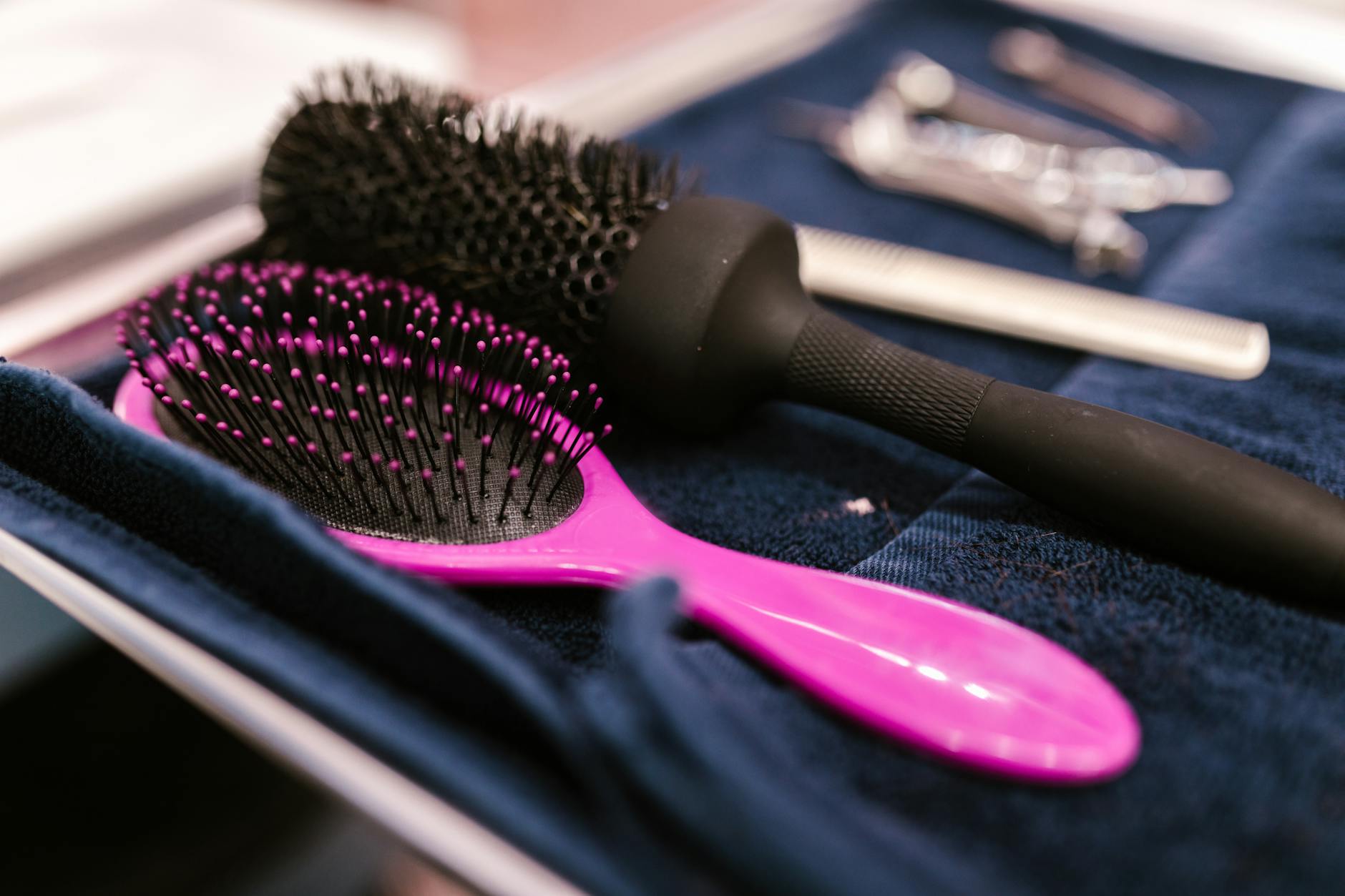
The culprits in hair care are often the same ingredients that make products effective. Silicones create shine and smoothness, but they’re occlusive—they seal the skin and trap bacteria and sebum underneath. Petroleum-derived oils and waxes condition hair beautifully but are comedogenic, meaning they clog pores. Sulfates strip oils from hair effectively but leave residue on skin. Heavier oils like coconut oil, jojoba oil, and argan oil are marketed as natural and nourishing, but they’re particularly problematic for acne-prone skin when applied to the scalp or hair roots. Even products labeled “lightweight” often contain silicones or dimethicone, which feel light on hair but are still occlusive on skin.
A critical limitation to understand: you cannot simply switch to natural or organic products and expect acne to clear. Many natural hair oils—coconut oil, sesame oil, and even some plant-based waxes—are actually highly comedogenic. The “natural” label means nothing for acne prevention. Additionally, volumizing powders, dry shampoos, and texturizing sprays, which many women over 40 rely on, are particularly problematic because they sit on the scalp and hairline for extended periods. A woman who uses volumizing powder at her roots every morning has that product pressed against her forehead and temples all day, providing constant irritation and blockage. The product doesn’t fully wash out with a single shampoo, either—it builds up over days and weeks, intensifying the acne.
Why Women Over 40 Are More Vulnerable
Women in their 40s and beyond tend to use more aggressive hair products than younger women, simply because aging hair requires different care. Thinning hair demands volumizers and thickening products. Dryness requires moisturizing oils and conditioning treatments. Frizz and texture changes call for smoothing serums and anti-frizz creams. Each of these categories tends to be heavy and occlusive.
A 25-year-old with thick, oily hair might use a simple shampoo and conditioner, while a 45-year-old with fine, dry hair might layer a root volumizer, a mid-length smoothing cream, a conditioning mask, a leave-in conditioner, and a dry shampoo. The cumulative effect of five products is far more likely to cause acne than a simple two-product routine. Hormonal changes also play a role. While the 26% of women in their 40s who experience acne face a mix of causes—menopause-related hormonal fluctuations, slower cell turnover, and changes in sebum production—the addition of heavy hair products on top of these internal changes can tip the scales toward breakouts. A woman whose skin is already reactive due to perimenopausal hormones becomes even more acne-prone when exposed to pore-clogging hair products. The products alone might not cause severe acne, but combined with other age-related factors, they can turn occasional breakouts into persistent ones.

Identifying Whether Your Hair Products Are the Problem
The most reliable way to determine if hair products are causing your acne is to change your routine strategically. Stop using all leave-in products, styling creams, and heavy conditioners for two weeks, relying instead on a gentle, sulfate-free shampoo and a lightweight rinse-out conditioner applied only to the ends of your hair, never the scalp or roots. Keep everything else in your routine identical—same face wash, same moisturizer, same diet, same stress levels. If forehead and temple acne improves significantly within four to six weeks, you’ve found your culprit. This timeline matches what dermatologists expect: the skin barrier needs time to shed clogged cells and normalize sebum production.
The tradeoff to this diagnostic approach is that your hair may feel less styled and less polished during the testing phase. But this temporary sacrifice is worth it for clarity. Once you’ve confirmed that hair products are the problem, you can selectively reintroduce products in a controlled way—perhaps using a volumizer only at your crown, away from your hairline, or using a leave-in conditioner only on the ends. Some women find they can use styling products as long as they apply them before the product has dried, shampoo immediately afterward, and never allow product residue to sit on the hairline overnight. Others find they need to eliminate entire product categories entirely to keep acne under control.
The Risks of Prolonged Hair-Product-Induced Acne
Leaving this type of acne untreated carries consequences beyond just having breakouts. Repeated inflammation in the same areas—forehead and temples—can lead to post-inflammatory hyperpigmentation, especially in women with deeper skin tones. The scarring risk is lower with acne cosmetica than with cystic acne, but it’s not zero, particularly if breakouts become infected from picking or scratching. Additionally, the psychological toll of persistent breakouts is often underestimated.
A woman who experiences clear skin within weeks of eliminating a hair product reports an enormous boost in confidence and quality of life—suggesting that many women have been living with acne they didn’t need to accept. Another warning: if you switch to a “cleaner” hair product thinking that will solve the problem, but the new product still contains occlusive silicones or oils, your acne won’t improve. Many brands market themselves as “clean” or “natural” while still using the same problematic ingredients in different forms. You must read labels carefully, looking specifically for silicones (listed as dimethicone, cyclomethicone, amodimethicone, or any ingredient ending in “-cone”), heavy oils, waxes, and petroleum derivatives. This requires more diligence than simply buying a pricier product.
Practical Steps to Acne-Free Hair Care
The most effective solution for women experiencing forehead and temple acne is to switch to a minimalist hair routine: a gentle sulfate-free shampoo, a lightweight rinse-out conditioner (applied only to ends, never roots or scalp), and optionally a dry shampoo if absolutely necessary. Skip leave-in conditioners, root volumizers, smoothing serums, and styling creams entirely, or apply them strategically to mid-lengths and ends only, keeping at least two inches of distance from the hairline. If you use dry shampoo, apply it at least one hour before bedtime so it has time to settle and doesn’t transfer onto your pillowcase, or use a silk pillowcase that reduces friction and product transfer while you sleep. For women who feel they cannot give up styling products, there are some lower-risk alternatives.
Hair oils and serums marketed as “silicone-free” can work if they’re applied sparingly to damp ends immediately after showering, not to the hairline. Some dermatologists recommend using clarifying shampoos once weekly to remove product buildup. Others suggest protecting your hairline with a strip of gauze or a headband while applying root products, then removing it before the product dries. These workarounds require discipline but can allow for more flexible styling while still protecting your skin.
Moving Forward With Clear Skin
The good news is that acne caused by hair products is entirely reversible once you eliminate the offending products. Unlike acne caused by hormones, genetics, or underlying skin conditions, this type responds quickly and predictably to change. Most women see significant improvement within four to six weeks of modifying their hair routine. This means that if you’re a woman over 40 struggling with forehead and temple breakouts, the solution may be simpler than you think—and far cheaper than dermatological treatments or prescription medications.
As you navigate this shift, remember that healthy, beautiful hair doesn’t require heavy products. Fine, thinning hair can look full and styled with proper technique, the right haircut, and minimal product use. The beauty industry has convinced women that more products equal better results, but for acne-prone skin, the opposite is often true. By simplifying and being intentional about what touches your face, you reclaim control over your skin’s health.
Conclusion
Hair products are a significant and frequently overlooked cause of forehead and temple acne in women, particularly those over 40 who use multiple styling products. The well-documented connection between pore-clogging ingredients—silicones, oils, waxes, and petroleum derivatives—and acne in the hairline and temple zones means that changing your hair routine is often a more effective first step than dermatological treatments. While the specific statistic about women over 40 and hair-product-induced acne varies by individual, dermatologists consistently recognize this pattern and actively screen for it when treating foreheadacne in adult women. If you’ve been struggling with forehead or temple acne, start by evaluating your hair care routine.
Stop using leave-in conditioners, volumizers, and styling creams for two weeks and document any changes in your skin. You may find that the breakouts that have frustrated you for months resolve simply by switching to a minimalist, product-light approach. This diagnosis-by-elimination is free, safe, and reveals the true cause of your acne faster than any other method. Clear skin may be waiting on the other side of a simpler hair routine.
Frequently Asked Questions
How long does it take for acne to clear after stopping hair products?
Most women see significant improvement within four to six weeks. The timeline allows your skin cells to shed clogged debris and your sebaceous glands to normalize. Some see improvement within two weeks, while others may need the full six-week window.
Can I use any hair products if I apply them carefully away from my hairline?
Potentially, yes. Some women successfully use styling products if they apply them to mid-lengths and ends only, keeping at least two inches of distance from the hairline and scalp. However, if your acne is severe, complete elimination is the safest approach during the diagnostic phase.
Is “natural” or “organic” hair product safer for acne-prone skin?
Not necessarily. Natural oils like coconut oil and jojoba oil can be highly comedogenic. The “natural” label means nothing for acne prevention. You must read ingredient lists regardless of whether the product is natural, organic, or synthetic.
What should I do if I stop using hair products but my acne doesn’t improve?
If acne persists after six weeks of a minimal hair routine, the cause is likely internal (hormonal, dietary, or stress-related) rather than product-induced. Consult a dermatologist to explore other triggers and treatment options.
Are there hair products specifically designed to not cause acne?
Some brands formulate products without silicones and with lighter oils, but dermatologists generally recommend minimizing all products on the scalp and hairline rather than seeking “acne-safe” alternatives. Avoiding the problem entirely is more reliable than finding supposedly safer versions.
Should I change my face wash or skincare if I think hair products are causing my acne?
Not initially. Keep your skincare routine identical while modifying only your hair routine. This allows you to isolate the hair products as the variable. If acne clears, you’ve confirmed the culprit. If it doesn’t, then investigate skincare or other factors.
You Might Also Like
- At Least 14% of Adults Over 25 With Acne Don’t Realize That Their Hair Products May Be Causing Forehead and Temple Breakouts
- At Least 42% of Women With Hormonal Acne Have Experienced Their Protein Powder May Contain Ingredients That Trigger Breakouts
- At Least 89% of People Who Pick at Their Skin Don’t Realize That Spironolactone Is Only Effective for Hormonal Acne in Women Not Men