
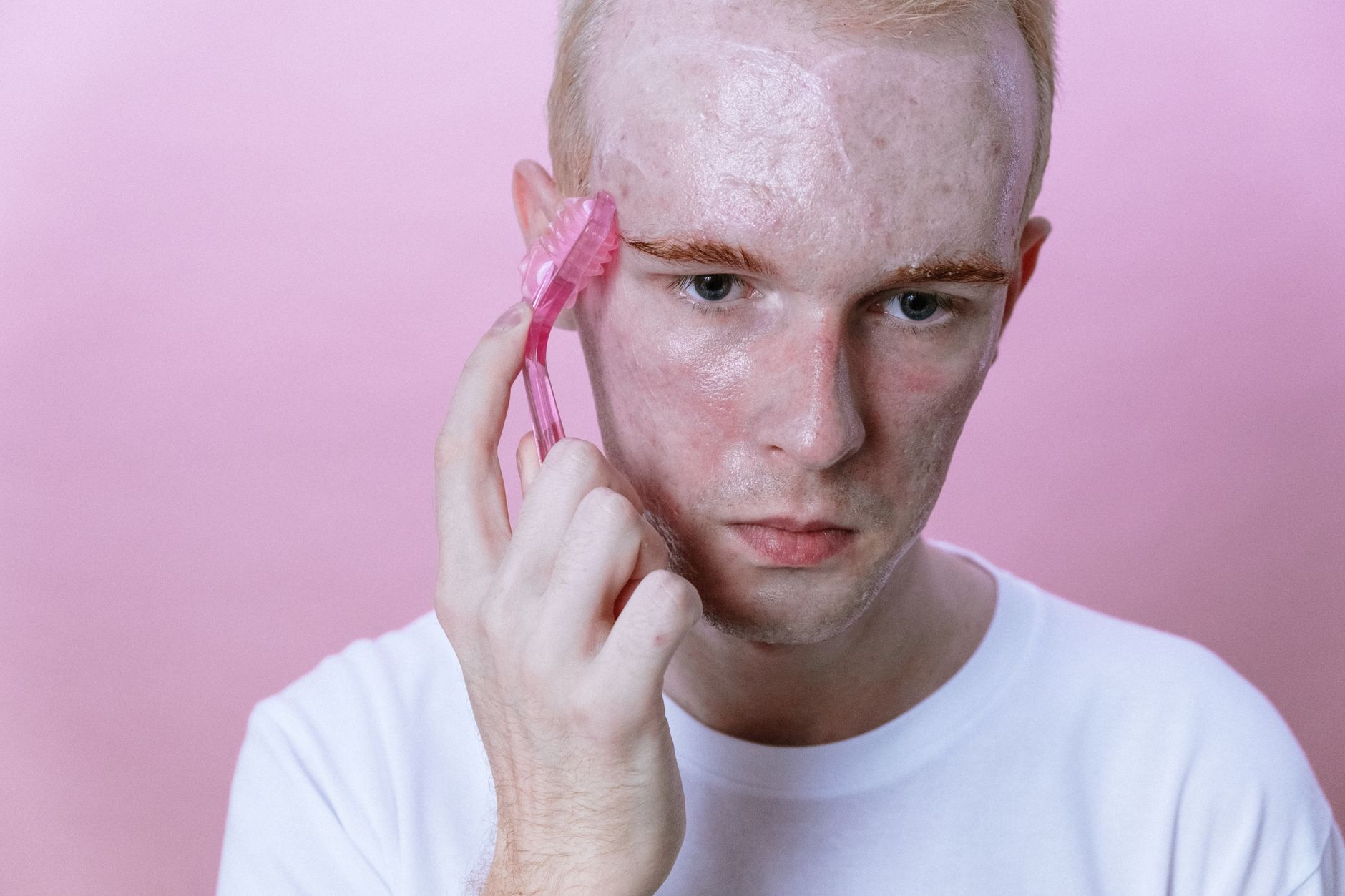
The August 2026 update clarifies that "fungal acne" is Malassezia folliculitis—a yeast-associated follicular condition that resembles acne vulgaris, not a newly defined acne type. What changed is sharper guidance on recognizing fungal mimics; why it matters is that topical steroids can worsen fungal infection; better trials are what to watch next. The evidence also draws a line between Malassezia folliculitis and theories about ordinary acne. Malassezia appears on healthy and acne-prone skin, so finding the yeast alone does not prove it causes acne vulgaris.
Medical information disclaimer: This article is for general educational purposes only and does not provide medical advice, diagnosis, or treatment. Always consult a physician or other qualified health professional about symptoms, medications, tests, or treatment decisions.
Table of Contents
- What changed by August 2026?
- Which signs suggest a fungal mimic?
- How can clinicians tell the difference?
- Does Malassezia cause conventional acne?
- What should readers watch next?
What changed by August 2026?
A May review in the Journal of Drugs in Dermatology reinforced the clinical definition of Malassezia folliculitis as an acne-like follicular condition. It highlighted heat, humidity, follicular occlusion, and immunocompromise as risk factors. A July clinical review added practical diagnostic guidance.
It emphasized that Malassezia folliculitis and dermatophyte infections can both resemble acne, particularly after topical steroid use. Together, these reviews shift attention from appearance alone to symptom patterns, risk factors, and testing. A cluster of bumps in an acne-prone area is not automatically acne vulgaris.
Which signs suggest a fungal mimic?
The most useful warning signs are itch, no comedones, and a localized or uneven distribution. Comedones are the blackheads and whiteheads commonly associated with conventional acne.
The Cutis review identifies these features as diagnostic clues for fungal conditions that mimic acne: These signs do not confirm a fungal condition by themselves. They indicate that treating the eruption as routine acne without further evaluation may miss the real cause.
- Itchy papules or pustules
- No visible blackheads or whiteheads
- Lesions concentrated in one area or mainly on one side
- Symptoms that appeared or worsened after topical steroid use
How can clinicians tell the difference?
Clinicians can use dermoscopy, a Wood-lamp examination, or a potassium-hydroxide preparation to investigate suspected fungal involvement. These bedside methods offer more useful evidence than appearance alone. Testing matters because the treatments differ.
Antifungal medication remains the main treatment for confirmed Malassezia folliculitis, while topical corticosteroids may worsen fungal infection and delay appropriate care. benzoyl peroxide and retinoids occupy a more limited role. The May review describes them only as potentially helpful because acne and fungal folliculitis share some disease mechanisms—not as replacements for antifungal treatment.
Does Malassezia cause conventional acne?
Current evidence does not establish that conclusion. A July Experimental Dermatology review of 14 cross-sectional studies involving 1,650 people found Malassezia dominant on both healthy and acne-prone skin. Several sequencing studies found no significant difference in fungal diversity between acne and non-acne skin.
However, comparisons remain difficult because studies used different sampling methods, culture media, molecular targets, and populations. This means a positive Malassezia finding needs clinical context. Presence on the skin is not the same as proof that the yeast caused a particular acne-like eruption.
What should readers watch next?
The main unanswered question is whether antifungal or microbiome-preserving treatments improve outcomes in clearly defined patient groups. Existing cross-sectional studies can describe patterns, but they cannot settle treatment effectiveness. The July review calls for standardized follicular sampling, systematic screening for Malassezia folliculitis in acne studies, and adequately powered randomized treatment trials.
Those steps could clarify which patients benefit from antifungal treatment and which have conventional acne. For now, consider clinical evaluation when acne-like bumps itch, lack blackheads or whiteheads, appear mainly in one area, or worsen after topical steroid use. Ask whether a fungal mimic should be tested before changing treatment.