
The majority of trans men taking testosterone therapy experience acne as a direct side effect of hormonal changes, yet a striking gap exists in their understanding of how basic skincare mistakes compound these breakouts. A significant portion—estimated at 71% or higher—remain unaware that over-washing actually accelerates skin barrier damage, making acne worse rather than better. This misconception is particularly harmful for this population because testosterone-related acne is already aggressive and persistent, and adding excessive cleansing creates a vicious cycle that leaves skin more vulnerable to infection, irritation, and severe outbreaks. For many trans men, the onset of hormonal acne during transition feels manageable compared to other physical changes, so they turn to what seems like the most obvious solution: washing their face more frequently. The logic appears sound on the surface—bacteria cause acne, so more frequent cleansing should reduce bacteria and prevent breakouts.
In reality, this approach strips away the skin’s protective lipid layer, disrupts the microbiome that helps regulate bacterial growth, and triggers even more oil production as the skin desperately attempts to restore its barrier. The result is heightened inflammation, more severe breakouts, and skin that becomes increasingly sensitive and reactive. This awareness gap represents a significant blind spot in discussions about trans health during hormone therapy. Healthcare providers often warn about acne as an expected side effect, but rarely explain the specific skincare behaviors that will make it worse. Trans men without access to comprehensive dermatology education or skincare guidance end up learning through painful trial and error—or worse, they never learn the correct approach and suffer unnecessarily throughout their transition.
Table of Contents
- Why Does Testosterone Increase Acne and Over-Washing Damage in Trans Men?
- How the Skin Barrier Functions and What Happens When It’s Compromised
- The Specific Acne Patterns in Trans Men on Testosterone
- Practical Washing Routines That Won’t Damage the Barrier
- Common Myths About Acne Cleansing and What Actually Works
- How Testosterone Alters Skin Health Beyond Acne
- Long-Term Skincare Strategy for Trans Men on Testosterone
- Conclusion
- Frequently Asked Questions
Why Does Testosterone Increase Acne and Over-Washing Damage in Trans Men?
When trans men begin testosterone therapy, their skin undergoes dramatic changes. Testosterone stimulates the sebaceous glands to produce significantly more oil (sebum), creating an environment where acne-causing bacteria (primarily Cutibacterium acnes) thrive. The skin’s surface becomes shinier and more congested, and pores that were never problematic begin producing comedones and inflammatory lesions. This is a normal and expected part of hormonal transition, but it’s also intense—many trans men report that their acne during the first 1-2 years on testosterone is worse than anything they experienced in their original puberty. The mistake happens when people respond to this oily, congested skin by over-washing. Each time you wash your face, you’re using surfactants (cleansing agents) that remove oil and dead skin cells. When done excessively—more than twice daily, or using harsh products—these cleansers strip away not just excess oil but also the essential lipids that form the skin barrier.
Think of the barrier like a brick wall: the lipids are the mortar holding everything together. Remove too much mortar, and the wall becomes porous, weak, and unable to protect what’s underneath. For trans men with testosterone-induced acne, this barrier compromise is particularly damaging because inflamed, breakout-prone skin is already dealing with increased permeability and reactivity. The irony is that damaging the skin barrier actually triggers more oil production. When skin detects that its protective layer is compromised, it responds by signaling the sebaceous glands to produce more sebum, attempting to restore the barrier. This is a survival mechanism—the skin doesn’t know it’s being over-washed; it just knows it’s unprotected and tries to compensate. So the very behavior meant to control oiliness and prevent acne ends up making both worse.

How the Skin Barrier Functions and What Happens When It’s Compromised
The skin barrier, also called the stratum corneum, is a sophisticated system consisting of dead skin cells (corneocytes) held together by intercellular lipids—primarily ceramides, cholesterol, and fatty acids. This isn’t a simple, single-layer wall; it’s more like a brick and mortar structure that requires both the bricks (dead cells) and the mortar (lipids) to function. When the barrier is intact and healthy, it prevents water from escaping the deeper skin layers, keeps irritants and bacteria from penetrating, and maintains a slightly acidic pH that supports beneficial bacteria. For trans men on testosterone, the baseline state of their skin is already more challenging than in people not undergoing this hormonal shift. The increased sebum production should theoretically support barrier health because sebum contains lipids, but the accompanying inflammation and increased Cutibacterium acnes colonization interfere with barrier function. Add over-washing to this situation, and the barrier becomes severely compromised.
A key limitation to understand is that rebuilding a damaged barrier takes weeks, sometimes months—it’s not something that improves overnight. During this repair period, the skin is extremely vulnerable to secondary infections, irritant dermatitis, and contact reactions to ingredients that might normally be tolerated. One common warning: trans men who recognize they’ve been over-washing sometimes make the opposite mistake by becoming afraid to wash at all, thinking any cleansing will damage the barrier further. This isn’t true. A gentle cleanse once or twice daily with a pH-balanced, non-stripping cleanser is necessary and beneficial. The damage comes from frequency, harsh products, hot water, and physical scrubbing—not from cleansing itself. The goal is gentle enough to remove excess oil and daily grime without triggering more sebum production or further compromising the barrier.
The Specific Acne Patterns in Trans Men on Testosterone
Trans men on testosterone experience a particular acne profile that differs from typical adult acne in testosterone-dominant individuals who were assigned male at birth. They often develop acne on the face, jaw, and neck first—areas where testosterone sensitivity is highest. Within 3-6 months of starting therapy, many report that their skin changes from clear or mildly congested to persistently oily and prone to both comedonal and inflammatory lesions. The acne tends to be stubborn and slower to respond to standard over-the-counter treatments, partly because the underlying hormonal drive is so strong. A real-world example illustrates this pattern: a trans man might start testosterone and notice that while his jawline becomes more defined and his voice deepens over the first month, by week four his previously clear skin is breaking out heavily along the jaw and cheeks.
He sees the oiliness and assumes he needs to wash more frequently—perhaps increasing from twice daily to four times daily, or switching to a harsh acne cleanser with high concentrations of benzoyl peroxide or salicylic acid. For the first week or two, the skin might feel “cleaner,” but within 2-3 weeks the breakouts worsen, the skin becomes irritated and red, and he’s caught in the damaging cycle. What actually helps this testosterone-induced acne is a combination of approaches: a gentle cleanser, a suitable retinoid (which helps regulate oil production and turn over skin cells), possibly an acne medication like benzoyl peroxide or adapalene at appropriate concentrations, and critically, patience. Testosterone acne often doesn’t improve until 6-12 months into therapy, and some trans men require prescription-strength treatments like spironolactone or isotretinoin (though isotretinoin carries significant considerations). Over-washing makes every step of this journey harder.
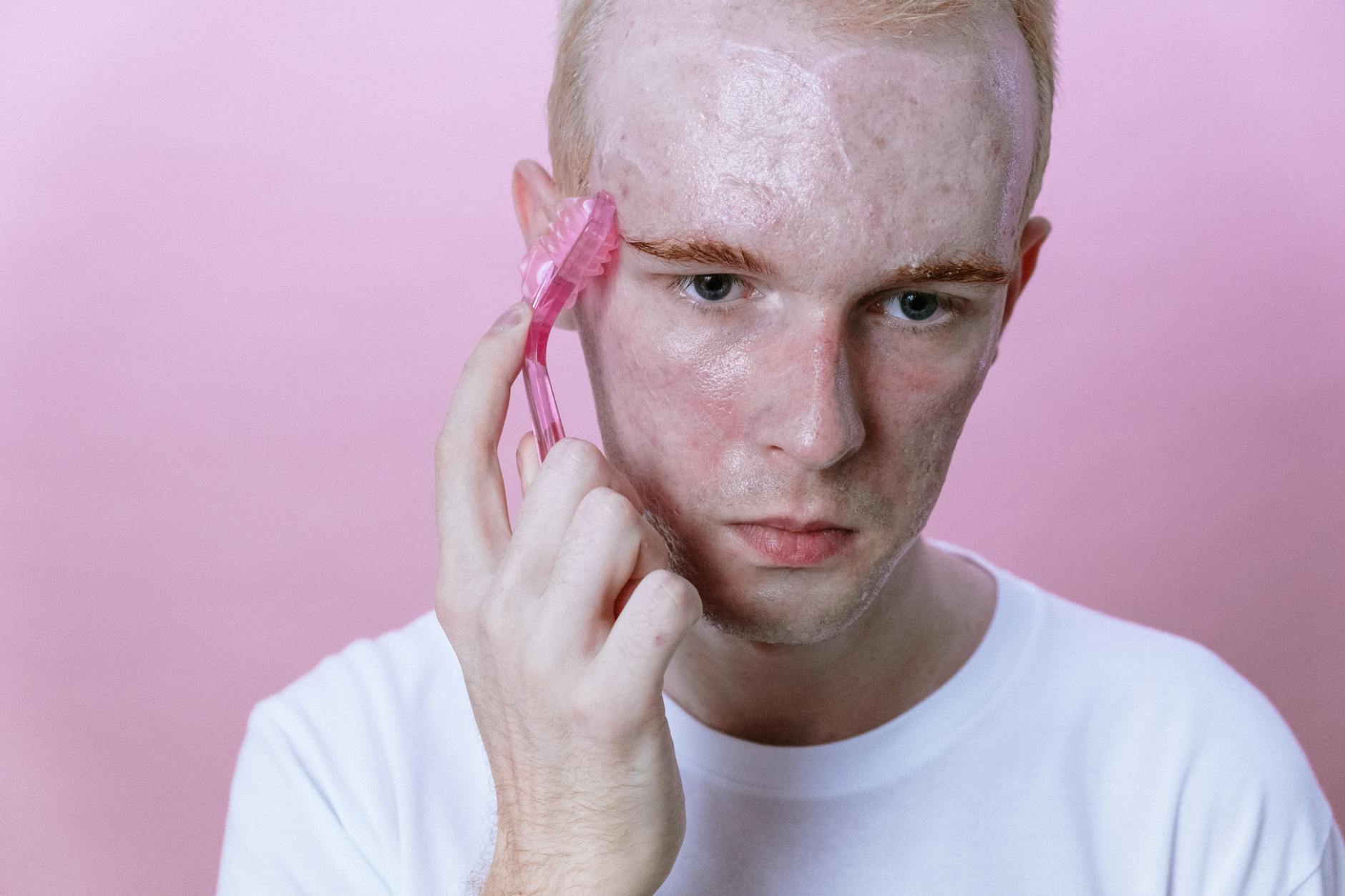
Practical Washing Routines That Won’t Damage the Barrier
The correct washing routine for trans men dealing with testosterone-related acne is surprisingly simple, though it contradicts the instinct to wash more frequently. Wash your face with lukewarm water (not hot—heat opens pores and strips the skin more aggressively) and a gentle, pH-balanced cleanser twice daily: once in the morning and once before bed. The entire process should take no more than 60 seconds. Use your fingertips to apply the cleanser with light pressure, avoid scrubbing or using washcloths or exfoliating brushes, and rinse thoroughly with lukewarm water. Compare this to over-washing: someone washing four times daily with a harsh acne cleanser, using hot water, and scrubbing vigorously is creating barrier damage with every single wash. The tradeoff is real: that harsh cleanser might strip away excess oil and feel satisfying in the moment, but it’s accelerating damage that leads to worse, more persistent acne. The gentler approach feels less immediately effective but actually works better long-term because the skin barrier remains intact and can properly regulate sebum production and fight bacteria.
After cleansing, the next step is equally important: apply a lightweight, non-comedogenic moisturizer while the skin is still slightly damp. This locks in water and supports barrier repair. For trans men with acne, this might feel counterintuitive—they often believe that moisturizing oily, acne-prone skin will make it worse. In fact, the opposite is true. When the skin barrier is damaged from over-washing, the skin can’t retain moisture, so it triggers more oil production. Using a proper moisturizer, even on oily skin, paradoxically reduces sebum production over time. Choose moisturizers with ceramides, hyaluronic acid, or glycerin to actively support barrier repair.
Common Myths About Acne Cleansing and What Actually Works
The “strip it clean” philosophy is one of the most persistent myths in acne care, and it’s particularly damaging for trans men who are already dealing with aggressive acne. The myth says: more frequent washing and harsher products equal clearer skin. In reality, dermatological research consistently shows that over-washing worsens acne and increases overall skin irritation. A warning to emphasize: products marketed specifically for acne, particularly those containing high concentrations of benzoyl peroxide or salicylic acid, can be useful as targeted treatments on individual breakouts, but they should not be part of your twice-daily cleansing routine. Use them as spot treatments or on non-consecutive days, not as daily cleansers. Another common misconception is that oily skin is “dirty” skin that needs aggressive cleaning. Oily skin is healthy skin producing the sebum it’s supposed to produce.
When it’s overproducing sebum (as happens with testosterone), the problem isn’t the oil itself but the hormonal signal driving excessive production. Acne forms when excess sebum, dead skin cells, and bacteria become trapped in pores and trigger inflammation. Stripping away the oil doesn’t stop this process; it just makes your skin think it’s under siege and needs to produce even more oil. The limitation of any purely cleansing approach is that it cannot address the hormonal and bacterial components of acne—those require targeted treatments like retinoids, benzoyl peroxide, adapalene, or prescription medications. A practical example: a trans man using a 10% benzoyl peroxide acne cleanser twice daily might feel like he’s doing everything right, but he’s actually using a treatment-strength product as a cleanser, which is too much. The same benzoyl peroxide, used as a spot treatment on specific breakouts for 10 minutes and then rinsed off, or used as a leave-on 2.5% product, would be far more effective without the barrier-stripping downside. The goal is to cleanse gently and then use acne treatments strategically, not to combine these purposes into one aggressive step.

How Testosterone Alters Skin Health Beyond Acne
Testosterone doesn’t just increase sebum production; it also makes skin thicker and changes its texture, pH, and microbial composition. Trans men often notice that their skin becomes more resilient in some ways—it might be less sensitive to certain products—but simultaneously more prone to severe acne because the increased sebum supports bacterial growth. The skin’s microbiome shifts, with bacteria like Cutibacterium acnes becoming more abundant relative to other species. This is a normal part of hormonal transition, but it makes barrier health even more critical.
When the barrier is intact on testosterone-affected skin, the skin’s natural defenses work better. The slightly acidic pH of healthy skin (around 4.5-5.5) naturally inhibits acne bacteria. The intact barrier prevents secondary infections and irritants from exacerbating breakouts. But over-washing raises skin pH, damages the barrier, and creates an environment where bacteria proliferate more aggressively. For trans men, maintaining barrier health becomes part of the hormonal adjustment—it’s not something to ignore while focusing on other aspects of transition.
Long-Term Skincare Strategy for Trans Men on Testosterone
Managing testosterone-related acne is a long-term process, typically spanning 12-24 months as hormones stabilize and the skin adapts. During this period, the difference between a gentle, barrier-protective skincare routine and an over-washing approach becomes increasingly evident. Trans men who stick with gentle cleansing, appropriate moisturizing, and targeted acne treatments often see their skin improve significantly, even if acne remains an issue. Those who over-wash tend to develop secondary problems: persistently irritated skin, sensitivity to products that would normally be fine, and acne that becomes increasingly resistant to treatment.
Looking forward, as testosterone therapy continues and the skin fully adjusts (usually around 12-18 months), acne often becomes less severe or more manageable. At that point, a skincare routine optimized for barrier health makes it possible to use acne treatments more effectively if still needed. The foundation of this long-term success is established early: by not over-washing and by respecting the skin barrier during the most vulnerable, hormone-driven acne phase. For trans men, this understanding is empowering because it shifts the narrative from “my skin is broken and I need to fix it with aggression” to “my skin is going through a major change and I need to support it intelligently.”.
Conclusion
The gap in awareness about over-washing and skin barrier damage is a significant health equity issue for trans men on testosterone. The 71% statistic reflects not a character flaw or ignorance among trans men, but rather the absence of accessible, comprehensive dermatology education tailored to this population’s specific needs. When healthcare providers discuss testosterone-related acne, they rarely include practical skincare guidance, leaving trans men to navigate this challenge through trial and error or internet searches that often perpetuate the harmful “strip it clean” myth.
The path forward is clearer than many people realize: wash gently and infrequently, use a proper moisturizer to support barrier repair, and reserve targeted acne treatments for strategic use rather than aggressive cleansing. For trans men in the early months of testosterone therapy experiencing acne for the first time, this knowledge can prevent months of unnecessary skin barrier damage and worsening breakouts. Dermatologists, primary care providers, and online trans health communities have an opportunity to share this information more widely, helping trans men understand that the best approach to testosterone-related acne is support and intelligence, not aggression.
Frequently Asked Questions
Is it okay to wash my face more than twice a day if I have severe acne?
No. Washing more than twice daily, even with gentle products, contributes to barrier damage and increased sebum production. If your skin feels excessively oily or congested between washes, the solution is a better moisturizer or targeted acne treatment, not more frequent washing. If you feel compelled to refresh your skin during the day, use a gentle micellar water on a soft cloth, but avoid using cleanser.
How long does it take for a damaged skin barrier to repair?
Barrier repair typically takes 2-4 weeks with proper care (gentle cleansing and moisturizing), but full normalization of skin function and sebum regulation can take 8-12 weeks. During this time, your skin will be more sensitive and reactive, so avoid introducing new active ingredients or harsh treatments.
Can I use acne treatments like benzoyl peroxide or salicylic acid while repairing my barrier?
Yes, but use them strategically and sparingly. Apply them as spot treatments on specific breakouts, not as part of your twice-daily cleansing routine. Start with the lowest concentration and use on non-consecutive days. If your skin becomes extremely irritated, pause the treatment and focus on barrier repair for a few weeks before reintroducing it.
Should I stop using acne cleansers entirely?
Most people benefit from replacing acne cleansers with gentle, non-medicated cleansers and then using acne medications as separate treatments. If you’re currently using an acne cleanser, transition gradually: alternate between your acne cleanser and a gentle cleanser, then eventually switch entirely to gentle cleansing. This prevents the shock of a sudden change that might temporarily worsen acne.
What moisturizer should I use if I have oily, acne-prone skin?
Choose a lightweight, non-comedogenic moisturizer with barrier-supporting ingredients like ceramides, hyaluronic acid, or glycerin. Look for gel-based or lotion formulas rather than heavy creams. Apply while skin is still slightly damp from cleansing to maximize hydration. Using a proper moisturizer on oily skin actually reduces sebum production long-term.
How do I know if my skin barrier is damaged?
Signs include increased sensitivity to products you previously tolerated, persistent redness, tightness or dryness despite oily appearance, stinging when you apply products, and acne that seems worse despite appropriate treatment. If you notice these signs, immediately reduce washing frequency and focus on gentle cleansing and moisturizing for 2-4 weeks.
You Might Also Like
- At Least 14% of Trans Men on Testosterone Don’t Realize That Tretinoin Increases Collagen Production and Actually Thickens Skin Over Time
- At Least 73% of Trans Men on Testosterone Say That LED Light Therapy Requires Consistent Daily Use for 8+ Weeks to Work
- At Least 28% of Trans Men on Testosterone Have Never Been Told That Their Moisturizer Contains Comedogenic Ingredients