
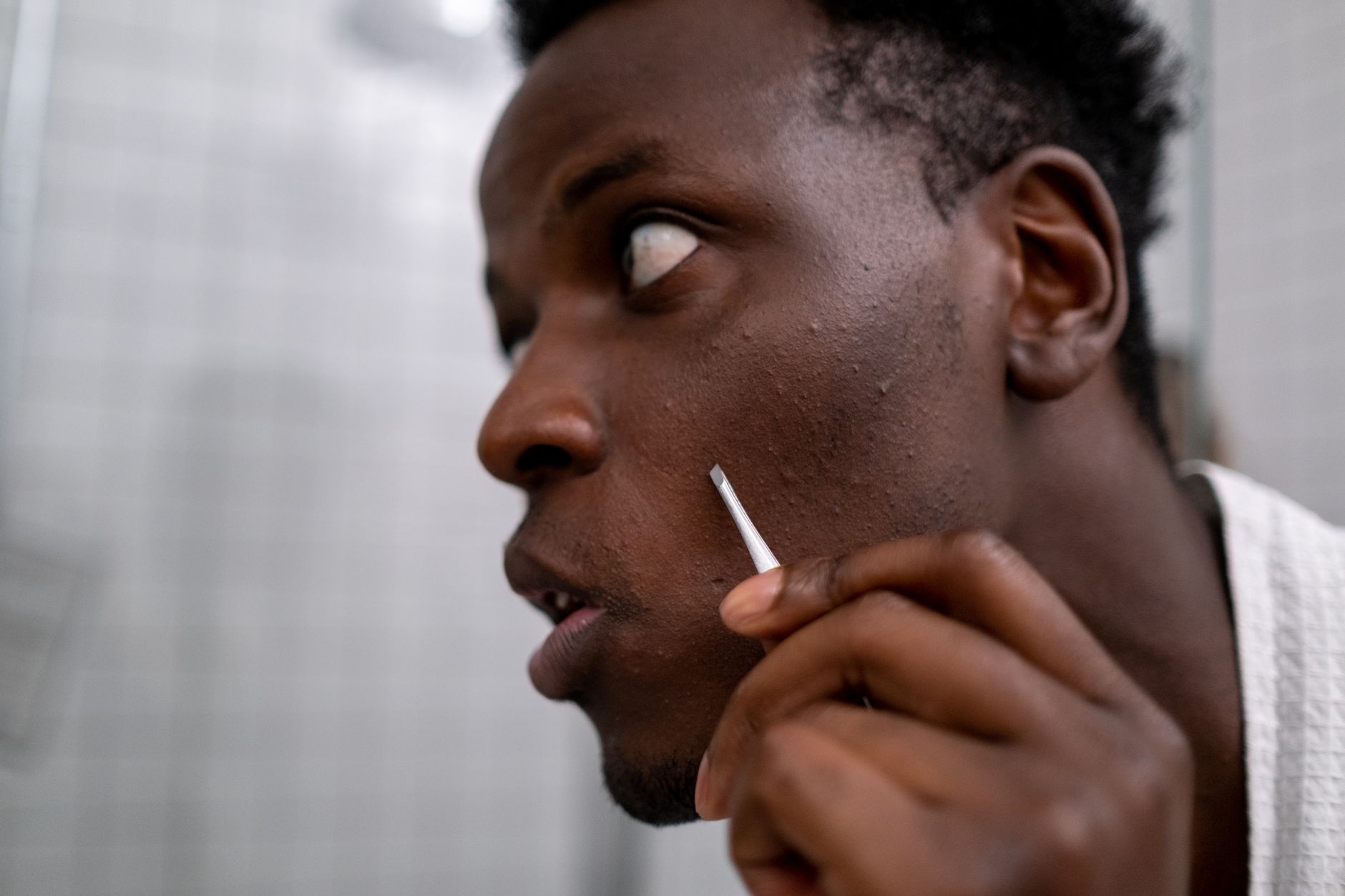
The best blemish treatment devices in 2026 use nanocurrent and microcurrent technology to reduce acne and improve skin clarity. These at-home devices transmit gentle electrical currents that mimic your body’s natural electrical energy, stimulating ATP production and promoting skin repair—helping to reduce redness, irritation, and the bacteria that cause breakouts faster.
For example, the ZIIP Halo 2.0 ($399.99) is the only at-home device combining both microcurrent and Nanocurrent™ technology, featuring 14+ guided programs specifically designed for dual-waveform blemish treatment. Unlike older skincare tools, these 2026 devices combine multiple technologies in a single device. You can now find microcurrent and nanocurrent devices ranging from $180 to $500 for at-home use, making professional-grade treatment accessible without expensive salon visits that typically cost $200 to $600 per session.
Table of Contents
- How Do Nanocurrent and Microcurrent Technologies Work for Acne?
- Top At-Home Blemish Treatment Devices in 2026
- Professional vs. At-Home Microcurrent Treatment: What’s the Difference?
- Choosing the Right Device for Your Blemish Concerns
- What You Should Know About Microcurrent Device Safety and Limitations
- Multi-Technology Integration in 2026 Devices
- Market Growth and Technology Advances Driving the 2026 Generation
- Frequently Asked Questions
How Do Nanocurrent and Microcurrent Technologies Work for Acne?
Microcurrent technology works by transmitting gentle electrical currents that mimic the endogenous electric energy of the human body. These currents stimulate ATP (adenosine triphosphate) production in skin cells, which fuels tissue repair and growth. The result is reduced redness, irritation, and bacterial activity—all key factors in blemish formation. When you use a microcurrent device on acne-prone skin, the electrical stimulation helps accelerate the skin’s natural healing process, making breakouts appear to clear faster. Nanocurrent technology operates slightly differently. Rather than targeting specific skin conditions like acne, nanocurrent mimics your body’s natural electrical currents on a smaller, more subtle scale.
This approach sparks overall skin renewal and repair, leading to clearer, calmer-looking skin. The key distinction is that nanocurrent works systemically to improve skin health, while microcurrent can be more specifically targeted at blemish-prone areas. Devices that combine both technologies, like the ZIIP Halo 2.0, allow users to switch between modes depending on whether they’re treating active acne or working on overall skin clarity and evenness. The challenge with these devices is that results vary significantly between users. Early research suggests they may help improve skin tone, elasticity, mild facial contouring, and overall firmness, but dermatologists caution that these should be viewed as supportive tools, not replacements for professional acne treatments. If you have severe cystic acne or persistent breakouts, a device alone won’t solve the problem—you’ll likely need professional intervention alongside at-home tools.
Top At-Home Blemish Treatment Devices in 2026
The ZIIP Halo 2.0 ($399.99) stands out as the only at-home device that combines both microcurrent and Nanocurrent™ technology in a single device, with 14+ guided programs. It’s designed to treat multiple concerns—acne, pigmentation, and sagging skin—which gives it broader capabilities than most microcurrent-only competitors. The multi-technology approach means you get specialized treatment for different skin issues without buying separate devices. The NuFace Trinity+ ($395) offers app-guided treatment with interchangeable attachments for targeted therapy.
While similarly priced to the ZIIP Halo 2.0, it focuses primarily on microcurrent without nanocurrent features, making it better suited for general skin tightening and anti-aging rather than acute blemish treatment. For users specifically targeting breakouts, the ZIIP’s dual-technology approach is more relevant, though both devices fall in the premium price range. The Medicube Age-R Booster Pro ($220) represents the budget-friendly option, combining microcurrents with EMS (electrical muscle stimulation), electroporation, and electric needles in one device. It’s significantly cheaper than the ZIIP Halo 2.0 or NuFace Trinity+, but it trades the focused nanocurrent technology for broader functionality. If you’re new to microcurrent devices and want to test whether the technology works for your skin before investing $400, this is the lower-risk entry point.
Professional vs. At-Home Microcurrent Treatment: What’s the Difference?
Professional microcurrent treatments administered in dermatology offices or aesthetic clinics typically cost $200 to $600 per session, depending on location and provider. These sessions use professional-grade equipment, such as the NeurotriS Professional Machine Package, which starts at $7,495. Professional devices are often more powerful and deliver stronger electrical currents, potentially providing faster visible results in fewer treatments. At-home devices ($180–$500 range) are designed to be safer for unsupervised use, which means they deliver gentler electrical currents over longer periods. You won’t see the dramatic results of a single professional session, but consistent daily or weekly use accumulates over time.
The trade-off is convenience and cost: one professional session costs roughly as much as buying an entire at-home device, but you control the treatment schedule at home. For managing mild to moderate acne, at-home devices can be effective, though they work better as part of a routine rather than as a standalone solution. One important limitation: at-home devices lack the customization a professional can provide. A dermatologist can assess your specific acne type (bacterial, hormonal, inflammatory) and adjust treatment intensity accordingly. At-home devices come with preset programs designed for general blemish treatment, which may or may not match your exact skin needs. This is why many dermatologists suggest using at-home devices to maintain professional treatment results rather than as a complete replacement.
Choosing the Right Device for Your Blemish Concerns
Your choice depends on three factors: budget, treatment goals, and skin sensitivity. If you have a $400+ budget and want the most specialized blemish treatment, the ZIIP Halo 2.0 is purpose-built for acne with its dual nanocurrent and microcurrent capabilities. If your acne coexists with other concerns like fine lines or uneven texture, the broader multi-technology approach makes sense. However, if you’re on a tighter budget or have sensitive skin, the Medicube Age-R Booster Pro at $220 allows you to test microcurrent technology with less financial risk. The type of acne matters too. If you have surface-level blemishes and redness, microcurrent devices excel at reducing inflammation and accelerating healing.
If your acne is deeper, cystic, or hormonally driven, these devices work best alongside professional treatments or oral medications. Using an at-home device in isolation won’t fix hormonal acne; you need dermatological support. Similarly, if you have very sensitive or reactive skin, starting with a lower-power device and building tolerance is smarter than jumping to a premium option with more aggressive settings. Treatment consistency is the final factor. At-home devices require regular use—typically 3–5 times per week—to see results. If you know you won’t commit to that schedule, spending $400 on a device you use sporadically won’t give you the outcome you’re expecting. The $220 Medicube is a better gamble if you’re unsure about your compliance.
What You Should Know About Microcurrent Device Safety and Limitations
Microcurrent and nanocurrent devices are generally safe when used as directed, but certain populations should avoid them. If you have a pacemaker or other electronic medical implants, these devices are contraindicated because electrical currents could interfere with device function. Pregnant users should check with their OB-GYN before starting treatment. If you have active open wounds, severe skin infections, or keloid-prone skin, using electrical stimulation could worsen the condition. The most common complaint from first-time users is over-treatment sensitivity. Using a microcurrent device more frequently or at higher intensities doesn’t speed up results—it can actually cause irritation, redness, or temporary worsening of breakouts. The devices are designed for specific treatment durations (usually 5–10 minutes per session) at moderate intensity levels.
Ignoring these guidelines won’t give you faster acne clearance; it just irritates your skin. Additionally, if you’re using strong acne medications like tretinoin or benzoyl peroxide, introducing a microcurrent device simultaneously may be too much stimulation. Dermatologists often recommend spacing out the introduction of new treatments by 2–4 weeks to see how your skin reacts. One lasting misconception is that these devices work immediately. Results typically appear after 4–6 weeks of consistent use. If you’re expecting clear skin after one treatment, you’ll be disappointed, and you might give up prematurely. Patience and consistency are essential.
Multi-Technology Integration in 2026 Devices
The 2026 generation of microcurrent devices includes features that earlier models lacked. Faster treatment times, improved safety controls, and multi-technology integrations—such as LED light therapy combined with nanocurrent or app-based customization—have become standard in premium devices. The ZIIP Halo 2.0’s 14+ guided programs allow you to switch between protocols depending on whether you’re treating acute blemishes, addressing pigmentation, or working on skin firmness. App connectivity is increasingly common in 2026 devices.
The NuFace Trinity+ pairs with an app that tracks your treatments and provides feedback on technique and consistency. This adds accountability and helps optimize results, though it also means you’re reliant on your phone and the company’s app infrastructure. Some users prefer the simplicity of a device without Bluetooth connectivity; others value the data tracking. The trade-off is personalization versus ease of use.
Market Growth and Technology Advances Driving the 2026 Generation
The home microcurrent devices market was valued at $1.2 billion in 2024 and is projected to reach $2.4 billion by 2033, representing a compound annual growth rate (CAGR) of 7% during the 2023–2032 forecast period. This reflects consumer demand for professional-quality treatments at home and technological advancement making these devices more effective and accessible. As manufacturing scales up and competition increases, prices have been coming down while features have improved—the $220 Medicube device represents a price point that didn’t exist in the consumer market five years ago.
The current 2026 generation demonstrates how manufacturers have responded to user demand for specialized treatments. The ZIIP Halo 2.0 combines nanocurrent and microcurrent technology with 14+ guided programs in a single $399.99 device, while competitors like the NuFace Trinity+ ($395) and Medicube Age-R Booster Pro ($220) offer different feature combinations at varying price points. These devices now integrate technologies previously available only in professional settings—including LED therapy combinations, electrical stimulation protocols, and app-based treatment tracking.
- —
Frequently Asked Questions
How often should I use a microcurrent device for acne?
Most devices are designed for 3–5 times per week, with each session lasting 5–10 minutes. More frequent use doesn’t accelerate acne clearance and may cause irritation.
Can I use a microcurrent device if I’m on tretinoin or other acne medications?
You should space the introduction of new treatments. If you’re already on tretinoin, wait 2–4 weeks before adding a microcurrent device, and then start at lower intensity. Combining multiple treatments too quickly can overwhelm your skin barrier.
What’s the difference between the ZIIP Halo 2.0 and NuFace Trinity+?
The ZIIP Halo 2.0 ($399.99) combines nanocurrent and microcurrent with 14+ programs and treats acne, pigmentation, and sagging skin. The NuFace Trinity+ ($395) uses microcurrent only with app guidance and interchangeable heads, better suited for anti-aging than blemish-specific treatment.
How long before I see results from an at-home microcurrent device?
Expect visible results after 4–6 weeks of consistent use. Results vary by individual, skin type, and acne severity; devices work best alongside other skincare practices, not as standalone solutions.
Is a microcurrent device safe for sensitive skin?
Microcurrent devices are generally safe, but sensitive skin requires a cautious approach. Start at the lowest intensity setting and use once per week initially, then increase frequency as your skin adapts. If you experience persistent irritation, discontinue use and consult a dermatologist.
Can a microcurrent device replace professional dermatology treatment?
No. At-home devices are supportive tools for maintaining skin clarity and managing mild acne, but they cannot replace professional treatments for moderate-to-severe, cystic, or hormonally driven acne. Use them alongside professional guidance, not as a substitute.