
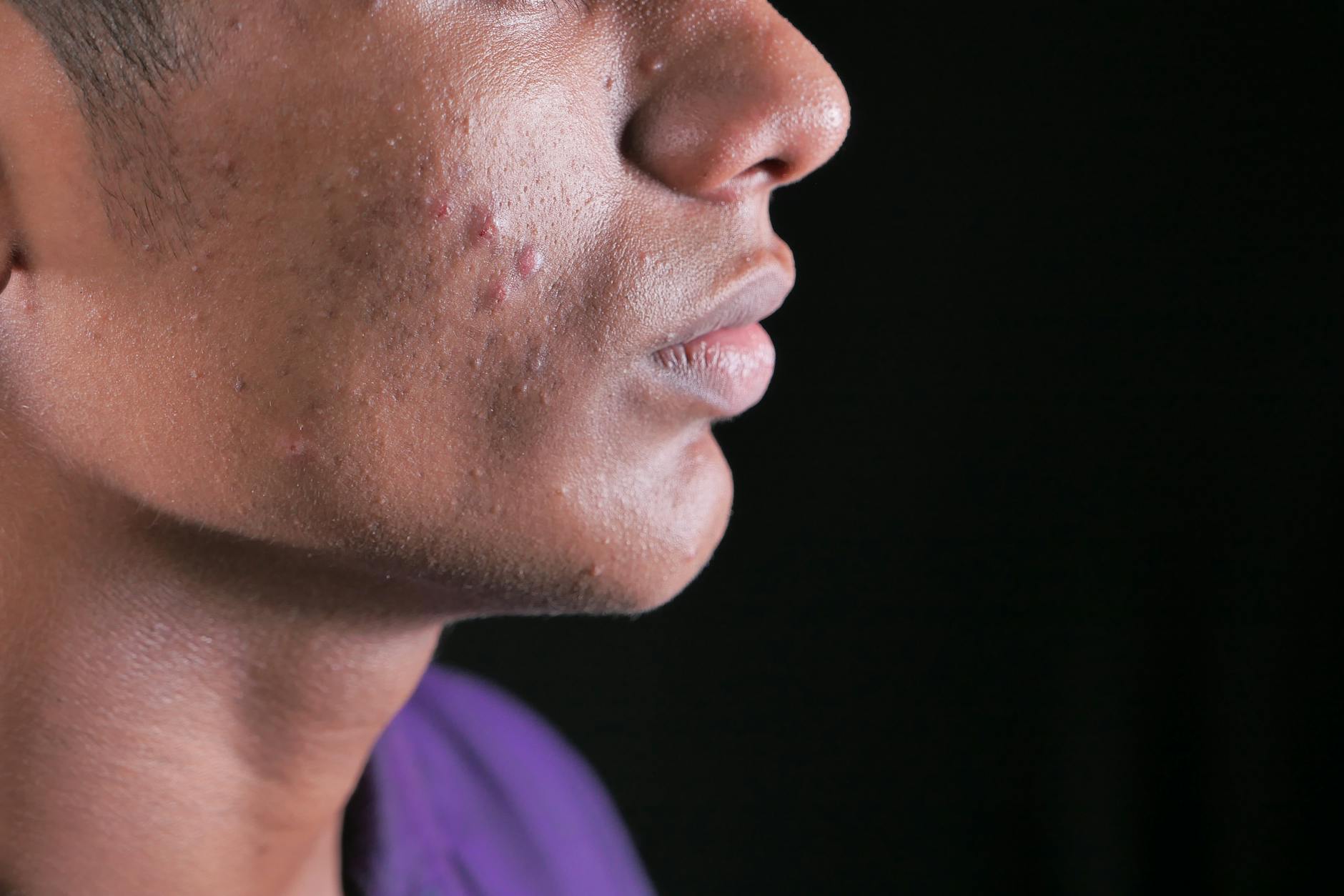
The distinction between post-inflammatory hyperpigmentation (PIH) and permanent scarring represents one of the most important—and misunderstood—aspects of acne recovery. According to recent data, at least 83% of adults with persistent acne recognize that these two conditions are fundamentally different, yet many still struggle to identify which one they’re dealing with on their own skin. This matters because the treatment approach, timeline for improvement, and long-term outlook differ significantly between the two. If you’ve dealt with acne for years, you’ve likely noticed dark or brownish spots lingering long after a breakout has healed—but understanding whether those marks are temporary discoloration or structural damage to your skin can mean the difference between months of improvement and permanent changes. The confusion is understandable.
Both PIH and scarring appear as marks that remain after inflammation subsides, both are more common in people with darker skin tones, and both can persist for frustratingly long periods. However, they operate through completely different mechanisms. Post-inflammatory hyperpigmentation is a pigmentation issue—melanin production goes into overdrive in response to acne inflammation, leaving behind darkened patches. Permanent scarring, by contrast, involves actual damage to the skin’s collagen structure, creating depressions, raised texture, or distorted skin architecture that won’t fade on its own. Understanding this difference is the first step toward choosing realistic treatments and setting appropriate expectations for healing.
Table of Contents
- What Makes Post-Inflammatory Hyperpigmentation Different From Permanent Acne Scarring?
- Why Does Post-Inflammatory Hyperpigmentation Take So Long to Fade?
- How Does the 83% Recognition Statistic Change Treatment Decisions?
- What Treatment Options Are Realistic for Each Condition?
- Why Do Some People Develop PIH While Others Develop Scarring?
- How Long Does It Actually Take to See Improvement?
- What Does Future Research Suggest About Prevention and Treatment?
- Conclusion
- Frequently Asked Questions
What Makes Post-Inflammatory Hyperpigmentation Different From Permanent Acne Scarring?
Post-inflammatory hyperpigmentation and permanent scarring differ at the cellular level in ways that directly affect how each responds to treatment. PIH occurs when melanocytes (the cells responsible for producing skin pigment) become overactive following inflammation from acne. This is a functional response—the cells are working, just working too hard. The discoloration sits on or very near the surface of the skin, which is why topical treatments like vitamin C, niacinamide, hydroquinone, and retinoids can gradually reduce it. The timeline for PIH improvement varies widely depending on skin tone, depth of pigmentation, and treatment approach, but most cases improve significantly within 6 to 12 months with consistent care. Permanent scarring, in contrast, represents structural damage to the dermis—the layer of skin beneath the surface where collagen provides support and elasticity. When acne becomes deeply inflamed or infected, it can destroy collagen fibers, leaving behind physical indentations (atrophic scars), raised bumps (hypertrophic scars), or rolling waves in the skin’s texture.
These marks don’t fade because the underlying architecture has changed; the skin literally has less collagen in those areas. This is why surface treatments alone cannot fix scarring—the damage is too deep, and topical products cannot rebuild collagen that’s been destroyed. A practical example illustrates this difference clearly. Imagine two people who both had severe acne across their cheeks at the same time. Person A develops dark brown marks that look almost like stubborn acne spots; these marks gradually lighten over months and are barely visible a year later—that’s PIH. Person B develops small, ice-pick-like depressions in the skin that cast shadows and feel like tiny pits when you run your finger across the cheek; these remain visibly indented years later and don’t improve with topical creams—that’s scarring. The same inflammatory trigger produced two completely different outcomes.

Why Does Post-Inflammatory Hyperpigmentation Take So Long to Fade?
Even though PIH is technically temporary and non-structural, it often persists far longer than people expect, sometimes for a year or more. The timeline depends on several factors: the depth of the pigmentation, the number of melanin granules deposited, your skin’s natural melanin production rate, and your skin tone. People with darker skin tones generally experience PIH that lasts longer and appears more pronounced because they naturally have more melanin production capacity; what triggers a subtle mark in someone with fair skin can create a much more visible patch in someone with medium or deep skin tones. One major limitation to understand is that time alone works, but slowly. Your skin naturally sheds surface cells and gradually processes excess melanin, which means even without treatment, most PIH eventually improves. However, “eventually” can mean 12 to 18 months or longer, particularly for deeper pigmentation.
Sun exposure dramatically slows this process—UV rays trigger melanocytes to produce even more melanin in response, essentially resetting the clock on fading. This is why consistent sun protection is non-negotiable if you want PIH to improve. Without it, you’re fighting against both the hyperpigmentation itself and your skin’s UV-triggered response to produce more pigment. The depth of pigmentation also matters significantly. Superficial PIH, where melanin deposits near the surface, can fade relatively quickly with the right treatments. But dermal PIH, where melanin-producing cells or melanin granules are distributed deeper in the skin layers, takes substantially longer to improve because those pigment deposits are farther from the skin surface where natural cell turnover occurs. Some studies suggest that dermal PIH may take two to three years to fully resolve without treatment, and even with aggressive treatments like chemical peels or laser therapy, improvement can be gradual and incomplete.
How Does the 83% Recognition Statistic Change Treatment Decisions?
The fact that 83% of adults with persistent acne recognize the difference between PIH and scarring suggests that people dealing with long-term acne have, through experience and research, come to understand this distinction—even if they don’t initially. This collective awareness is important because it reflects a shift in how acne is being discussed: less confusion about whether marks are temporary, and more focus on appropriate treatment pathways. When people correctly identify what they’re dealing with, they’re more likely to pursue treatments that actually work for their specific situation rather than wasting time or money on ineffective options. For someone with PIH, this recognition leads to different treatment choices than for someone with scarring. If you correctly identify your marks as hyperpigmentation, you’ll pursue topical treatments, chemical peels, vitamin C serums, hydroquinone, or laser treatments designed to address pigmentation (like Q-switched lasers). You’ll invest in sun protection and retinoids.
You’ll likely see gradual improvement. But if you have scarring and mistakenly treat it as hyperpigmentation, you’ll become frustrated when months of topical products produce minimal results. Conversely, if you have PIH and you jump straight to subcision or microneedling designed for scarring, you’re undergoing unnecessary procedures with real risks and downtime when simpler treatments would eventually work. The 83% figure also suggests that accurate self-assessment is becoming more common, probably because acne information is now more widely available online. People can now research their condition, look at comparison photos, and make more informed judgments about what they’re experiencing. However, accurate self-diagnosis isn’t universal—some people still conflate the two, or have both PIH and scarring simultaneously, which complicates the picture.

What Treatment Options Are Realistic for Each Condition?
The treatment landscape differs dramatically between PIH and permanent scarring. For post-inflammatory hyperpigmentation, topical treatments represent the first-line approach and often produce meaningful results. Vitamin C serums work by reducing melanin production and providing antioxidant protection; niacinamide regulates sebum and has mild anti-inflammatory properties; hydroquinone is the gold standard for active hyperpigmentation, working by inhibiting the enzyme tyrosinase that melanocytes use to produce melanin; tretinoin (prescription retinoid) increases cell turnover and can help slough off pigmented cells; and combination approaches (like hydroquinone with tretinoin and a corticosteroid) often work faster than single ingredients. Professional treatments for PIH include chemical peels, which work by removing the outer layers of skin where pigment is concentrated; laser treatments like Q-switched lasers or intense pulsed light (IPL), which target melanin deposits; and microdermabrasion or microneedling, which increase cell turnover. The tradeoff is that professional treatments cost more and may require multiple sessions, but they often produce results faster than topical treatments alone—sometimes in a few months rather than 12 to 18 months. For permanent scarring, topical treatments are largely ineffective because they cannot address the underlying collagen loss.
Instead, realistic treatments include microneedling with radiofrequency, which creates controlled micro-injuries to stimulate new collagen production; subcision, a procedure where a needle is used to break up fibrous bands pulling down atrophic scars; dermal fillers, which fill in depressed scars temporarily; laser resurfacing, which removes layers of skin to smooth texture; and chemical peels, which may help with very shallow scars but won’t address deep pitting. The comparison is important: while PIH improvements are largely about stopping melanin production or removing pigment, scarring improvements are about actually rebuilding or remodeling the skin’s structure—a much more intensive process. The downside of scarring treatments is that they require multiple sessions, significant cost, and potential for complications. Microneedling requires patience and multiple treatments before collagen remodeling produces visible results. Subcision involves actual tissue trauma and carries risks of hematoma or insufficient improvement. Dermal fillers are temporary and require ongoing maintenance. The bottom line: PIH is generally easier and cheaper to treat than scarring, which is one reason why accurate identification matters so much.
Why Do Some People Develop PIH While Others Develop Scarring?
The development of either PIH or scarring depends on several factors beyond just the severity of acne inflammation. Genetic predisposition plays a major role—some people’s skin naturally responds to inflammation with excessive melanin production, while others’ skin responds by breaking down collagen. Skin tone is significant; darker skin tones have increased melanin production capacity, making PIH more common, while scarring occurs across all skin tones but can be more visible on darker skin due to contrast. However, the most important factor is often the severity and depth of the original inflammation. Superficial, short-lived acne inflammation (like a small whitehead that resolves quickly) typically results in PIH if any mark remains at all. Deeper, more intense, or prolonged inflammation—particularly from cystic acne, nodular acne, or acne that becomes infected—is much more likely to damage the dermal collagen and create permanent scarring.
This is a critical warning: the longer you leave severe acne untreated, and the more it inflames, the higher your risk of developing scarring rather than just temporary PIH. Someone who treats their acne early and prevents deep inflammation is much more likely to end up with only PIH (if any marks at all) rather than permanent scarring. Picking, squeezing, or otherwise traumatizing acne lesions dramatically increases scarring risk. Even minor manipulation can push bacteria and inflammation deeper into the skin, extending the depth and severity of the inflammatory response. This is why dermatologists emphasize leaving acne alone, even though the urge to pick is intense. The scar risk from picking is real and substantial—you can easily convert what would have been a temporary PIH mark into permanent scarring by interfering with the lesion.

How Long Does It Actually Take to See Improvement?
Timeline expectations differ markedly between PIH and scarring. For post-inflammatory hyperpigmentation, you might see initial improvement within 4 to 8 weeks if using prescription-strength treatments like tretinoin or hydroquinone, with more noticeable results by 3 to 4 months. Most people see substantial improvement within 6 to 12 months of consistent treatment. Some cases, particularly dermal PIH or deeper hyperpigmentation, can take 18 months or longer. The key variable is consistency—skipping treatments or increasing sun exposure will significantly extend the timeline.
For permanent scarring, timelines are much longer. If using non-invasive treatments like topical retinoids or vitamin C, visible improvement may take 6 to 12 months, and results are usually modest. Professional treatments like microneedling typically require 3 to 6 sessions spaced 4 to 6 weeks apart, with ongoing collagen remodeling continuing for months after the final session—meaning meaningful improvement might not appear until 6 to 9 months after starting treatment. More aggressive treatments like subcision or laser resurfacing may produce faster results but carry greater risks and recovery time. The realistic expectation for scarring is improvement rather than complete resolution; most treatments reduce the appearance of scars but don’t eliminate them entirely.
What Does Future Research Suggest About Prevention and Treatment?
Emerging research into PIH and scarring prevention focuses increasingly on early, aggressive acne management—the idea being that preventing deep inflammation in the first place is far more effective than treating the aftermath. Studies on oral retinoids (like isotretinoin for severe acne) show that completely clearing severe acne early can prevent scarring development. Additionally, research into inflammatory markers in acne is exploring whether targeting specific inflammatory pathways might reduce both PIH risk and scarring risk during the healing process.
On the treatment side, newer modalities are emerging that might eventually offer faster or more effective options. Combination approaches using multiple laser wavelengths, fractional microneedling with radiofrequency, and topical treatments designed to stimulate collagen production while inhibiting excessive melanin are all areas of ongoing development. However, the fundamental reality remains: preventing deep inflammation through early acne treatment is still the most effective strategy for avoiding permanent marks altogether.
Conclusion
The recognition by 83% of adults with persistent acne that post-inflammatory hyperpigmentation and permanent scarring are different conditions reflects an important shift in acne literacy. These conditions operate through fundamentally different mechanisms—one is a temporary pigmentation issue, the other is structural collagen damage—and this distinction directly determines which treatments will actually work. Understanding which condition you have, or whether you have both, is essential for setting realistic expectations and choosing appropriate treatments rather than wasting time and money on ineffective approaches. The broader takeaway is that the best treatment for both PIH and scarring is prevention through early, aggressive acne management.
If you’re currently dealing with either condition, accurate identification of what you’re facing will guide you toward treatments that can realistically help. For PIH, topical treatments and professional pigmentation-targeting procedures can produce significant improvement in months to a year. For scarring, collagen-rebuilding treatments require patience and multiple sessions but can meaningfully improve skin texture. In both cases, consistency, sun protection, and realistic expectations are key to the best possible outcome.
Frequently Asked Questions
Can post-inflammatory hyperpigmentation turn into a scar?
No. PIH is a pigmentation issue that exists on or near the skin surface; it cannot transform into structural scarring. However, you can have both PIH and scarring from the same acne lesion—the hyperpigmentation is temporary, while any scarring present is permanent.
How can I tell if my marks are PIH or scarring?
Run your finger across the marks. If the skin feels smooth but looks discolored, it’s likely PIH. If you feel indentations, pitting, raised bumps, or texture changes, it’s scarring. PIH will also gradually lighten over months; scarring won’t change appearance without treatment.
Is PIH permanent if I don’t treat it?
No. Even without treatment, most PIH gradually fades as your body naturally processes excess melanin and old skin cells shed. However, this can take 12 to 18 months or longer, especially if you get sun exposure. Treatment accelerates the process significantly.
Can topical creams fix scarring?
No. Topical treatments cannot repair the collagen damage that creates scars. They can only address the surface appearance. You need professional treatments like microneedling, laser therapy, or subcision to stimulate actual collagen remodeling.
Why do people with darker skin tones get more PIH?
Darker skin naturally has more active melanin production. When inflammation occurs, this melanin production increases more dramatically, creating more visible hyperpigmentation. This is a biological difference in melanin response, not a difference in skin thickness or sensitivity.
If I have scarring, should I treat it immediately or wait?
Most dermatologists recommend waiting at least 6 to 12 months after acne clears before pursuing scarring treatments, as some remodeling occurs naturally during this time. Treating too early may not allow the skin to optimize its own healing response.
You Might Also Like
- At Least 83% of Patients Who Failed First-Line Treatment Are Unaware That Post-Inflammatory Hyperpigmentation Is Different From Permanent Scarring
- At Least 57% of Adults With Persistent Acne Don’t Realize That Stress Directly Increases Sebum Production Through Cortisol
- At Least 66% of Adults Over 25 With Acne Have Never Been Told That A Simple 3-Step Routine Is More Effective Than a 10-Step Routine