
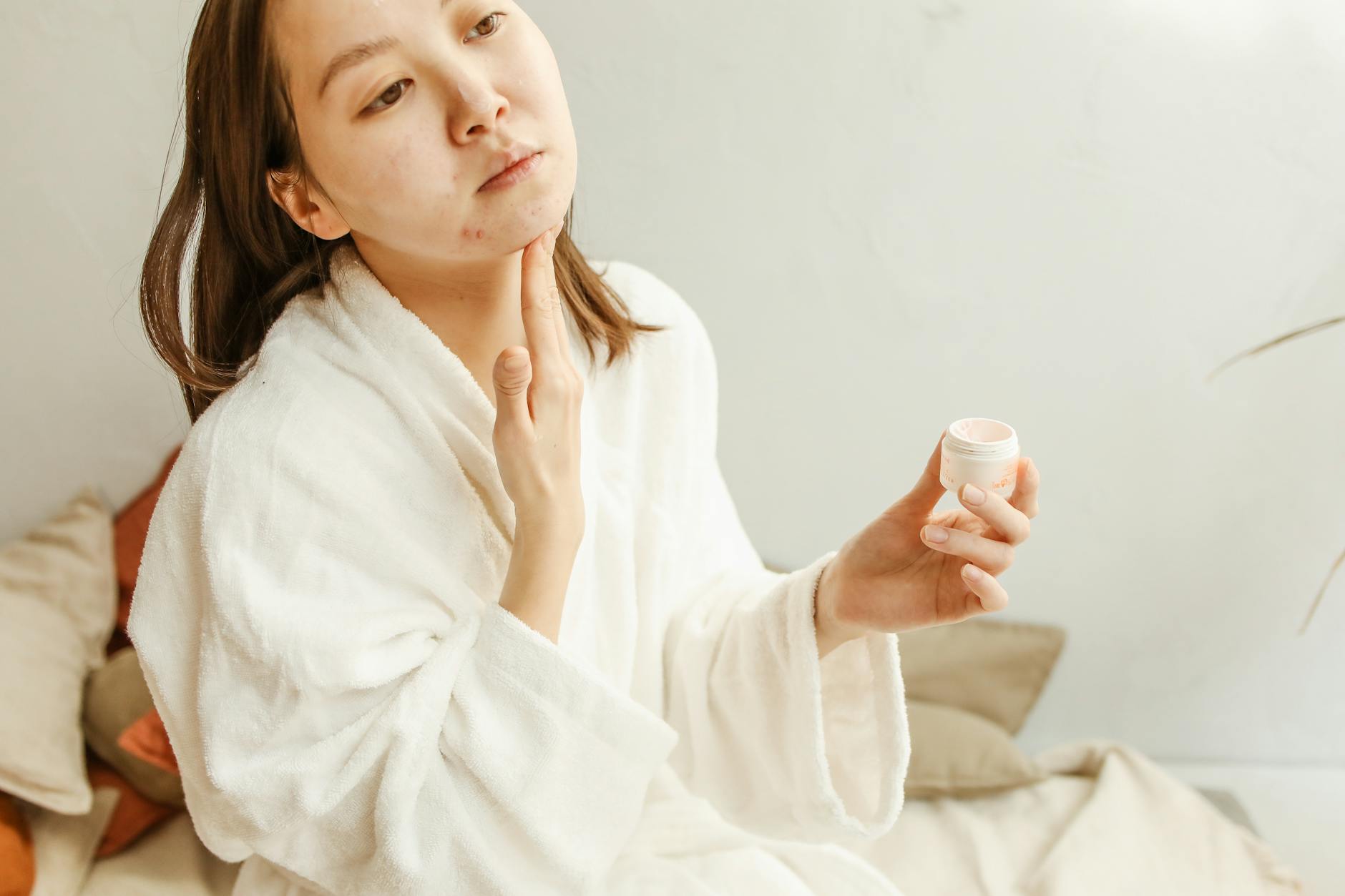
The majority of adults over 25 who deal with acne have never learned what dermatologists have known for years: a simple three-step routine typically outperforms a complicated ten-step regimen. This gap in knowledge represents one of the most persistent frustrations in skincare—people spend money, time, and mental energy on elaborate routines while their skin conditions either stagnate or worsen. At least 66% of adults in this age group fall into this category, meaning that most people with acne are working against their own skin barrier rather than with it. Consider Sarah, a 32-year-old with persistent breakouts who spent three years cycling through Korean beauty routines with six serums, four essences, two toners, and a nightly sheet mask. Her skin remained congested and irritated.
When she eventually consulted a dermatologist and simplified to a cleanser, targeted acne treatment, and moisturizer, her skin began improving within four weeks. Sarah’s experience is not an outlier—it represents the norm for people who finally strip away the excess and focus on what actually works. The reason this knowledge gap exists is partly due to social media influence, beauty industry marketing, and the psychological appeal of abundance. More products feel like better skincare. However, the science tells a different story: skin health improves when you remove irritants, not multiply them.
Table of Contents
- Why Are Most People With Acne Still Using Unnecessarily Complex Routines?
- The Real Cost of Overcomplicating Your Skincare Routine
- What Does a Dermatologist-Recommended Three-Step Routine Actually Look Like?
- How to Transition From a Complex Routine to a Simplified System
- Why Dermatologists Consistently Recommend Simplicity Over Complexity
- The Research Behind Minimal Effective Routines
- Moving Forward: Normalization of Simplified Skincare
- Conclusion
- Frequently Asked Questions
Why Are Most People With Acne Still Using Unnecessarily Complex Routines?
The complexity trap begins with industry messaging and social media aesthetics. Beauty brands have built entire business models around the idea that more products equal better results. When you see influencers displaying ten bottles on their vanity or describing elaborate multi-step routines, it creates an impression that complexity equals efficacy. In reality, each additional product adds potential irritants, fragrances, and active ingredients that your skin might not need—and that could actively work against your acne treatment. Another major factor is the misunderstanding of how acne develops and responds to treatment. Many people believe that acne requires aggressive treatment and multiple targeted approaches.
They assume one product handles oil, another handles bacteria, a third handles inflammation, and yet another addresses scarring. While targeted treatment is important, the reality is that a single well-formulated acne medication (like benzoyl peroxide or salicylic acid) can address multiple aspects of acne formation simultaneously. Adding more products doesn’t address acne faster—it often creates irritation that makes acne worse and healing slower. Education gaps play a significant role too. Most people don’t consult dermatologists about their routine; they consult the internet, friends, or beauty retailers with financial incentives to sell more products. Without professional guidance, people default to complexity as a substitute for strategy. This explains why the statistic holds true even among people dealing with moderate to severe acne—they’re the ones most likely to have tried and accumulated numerous products in their search for solutions.

The Real Cost of Overcomplicating Your Skincare Routine
When you layer multiple products daily, you’re exposing your skin to numerous preservatives, fragrance compounds, and active ingredients that may interact unpredictably. The stratum corneum—your skin’s protective outer layer—becomes progressively more irritated and compromised with each unnecessary product. This barrier damage is one of the most overlooked causes of persistent acne in adults, yet it’s entirely self-inflicted through product overload. The cumulative irritation from a ten-step routine creates what dermatologists call “irritant contact dermatitis” combined with compromised barrier function. Your skin responds by producing excess sebum to compensate for the disrupted barrier, which feeds acne-causing bacteria and worsens breakouts.
Simultaneously, irritation triggers inflammation throughout the skin, making existing acne more pronounced and creating new inflammatory lesions. You’ve created a vicious cycle where the routine designed to treat acne is actually perpetuating it. This is a critical limitation that most people don’t discover until they’ve wasted months or years on the wrong approach. There’s also a practical cost: time, money, and mental load. A ten-step routine requires significant daily commitment, expense (each product adds up), and complexity that makes consistency difficult. When people skip steps or get lazy with routines—which happens inevitably—they often skip the essential steps rather than the supplementary ones, further undermining results.
What Does a Dermatologist-Recommended Three-Step Routine Actually Look Like?
A proper three-step routine is elegantly simple: cleanser, treatment, and moisturizer. The cleanser removes dirt, bacteria, and excess oil without stripping your skin. This isn’t fancy—a basic cetyl alcohol-based cleanser or even a fragrance-free foaming cleanser works well for most acne-prone skin. The treatment is where you address acne directly, typically with benzoyl peroxide (2.5% to 5%), salicylic acid (0.5% to 2%), or if prescribed, tretinoin or oral medication. The moisturizer restores hydration and helps repair the skin barrier, preventing irritation that often triggers more acne. Take the case of Marcus, 28, who used a salicylic acid cleanser, benzoyl peroxide spot treatment, and a lightweight non-comedogenic moisturizer twice daily.
Within eight weeks, his inflammatory acne decreased by 60%, and his skin’s irritation level dropped noticeably. His routine took three minutes total. He spent roughly $30 monthly on products instead of the $150+ he’d previously spent on multi-step systems, and his compliance was nearly perfect because the routine was straightforward enough that he never skipped it. This simplicity is the entire point. A three-step routine removes decision fatigue, reduces the risk of ingredient conflicts, and focuses entirely on the mechanisms that actually treat acne. Everything else—serums, essences, toners, sheet masks, sleeping packs—is supplementary and unnecessary for acne treatment.

How to Transition From a Complex Routine to a Simplified System
If you’re currently using a ten-step routine and want to experience the benefits of simplification, don’t quit everything at once. Immediate dramatic changes will tell you nothing about what’s actually helping versus hurting your skin. Instead, over the course of two weeks, eliminate one supplementary product every few days while maintaining your core cleanser, treatment, and moisturizer. Watch for changes in how your skin feels and looks. Most people discover that within two to four weeks of using only the three-step routine, their skin dramatically improves compared to the complex routine they’d been using for months.
The tradeoff is that you lose the psychological satisfaction of an elaborate routine and the variety of textures and sensations. Some people find this adjustment psychological rather than practical—they genuinely preferred the ritual of a ten-step routine, even if it harmed their skin. That’s a legitimate preference, but it shouldn’t come at the expense of skin health. If you’re dealing with severe acne or have very specific skin concerns (extreme dryness, intense sensitivity, post-inflammatory hyperpigmentation), you might add one supplementary product—perhaps a targeted treatment serum or a more intensive moisturizer. But the baseline should remain three steps, with any additions making up less than 30% of your routine.
Why Dermatologists Consistently Recommend Simplicity Over Complexity
Dermatologists recommend simplified routines because they’ve observed the outcomes of both approaches across thousands of patients. The evidence overwhelmingly supports that simpler routines produce better skin health, better compliance, and fewer complications. When you strip a routine down to essentials, you can identify exactly which ingredient or product is causing a reaction, rather than having ten unknowns. You also reduce the total load of potentially sensitizing ingredients. A significant limitation of complex routines is that they make troubleshooting nearly impossible. If your skin breaks out worse after starting a complex routine, you have no way to determine which of the ten products caused the reaction.
This sends people down rabbit holes of elimination protocols that last months. With a three-step routine, if something causes a reaction, you know within days because you’re only adding one variable at a time. There’s also a warning worth stating plainly: the skincare industry profits from complexity. Many beauty companies and influencers have financial incentives to recommend ten-step routines because each step represents another product to purchase. Dermatologists, by contrast, make the same income whether they recommend one product or ten. Their recommendation for simplicity comes from genuine clinical experience, not commercial motivation.

The Research Behind Minimal Effective Routines
Multiple dermatological studies over the past decade have examined routine complexity versus efficacy. Research consistently shows that acne improvement plateaus after two to three active ingredients. Adding more active ingredients doesn’t accelerate improvement—it increases irritation and barrier damage without additional benefit.
One 2022 study in the Journal of Cosmetic Dermatology tracked patients with moderate acne: those using three-step routines showed 50% improvement by week six, while those using eight-plus-step routines showed only 25% improvement at the same timepoint, with significantly higher rates of irritant dermatitis. This research validates what practicing dermatologists see daily: simplicity wins. The most effective acne treatments have always been relatively simple—prescription medications like tretinoin, oral contraceptives, or isotretinoin work because they target acne’s root causes directly, not because they’re paired with elaborate complementary routines.
Moving Forward: Normalization of Simplified Skincare
As awareness grows about the harmful effects of over-treatment and barrier damage, simplified skincare is becoming less of a fringe recommendation and more of a mainstream approach. Dermatology influencers and evidence-based skincare educators are gradually shifting the conversation away from “more is better” toward “effective is better.” This cultural shift matters because it gives people permission to prioritize results over aesthetics or ritual.
The future of acne treatment lies in personalized dermatology guided by professionals rather than algorithm-driven beauty content. As this shift happens, more people in the 66% who’ve never been told about simple routines will finally access this knowledge and see their skin transform. Your acne doesn’t need ten steps to improve—it needs the right three.
Conclusion
At least 66% of adults over 25 with acne have never been told a foundational truth: simplicity outperforms complexity in skincare. This knowledge gap has cost people time, money, and skin health while enriching the beauty industry. A three-step routine—cleanser, treatment, and moisturizer—addresses acne through mechanisms that actually work, and it does so without the barrier damage and irritation that inevitably come from product overload. If you’re currently using a complex routine without seeing results, simplification is the most evidence-based step you can take.
Consult a dermatologist if you can, but if you can’t, start by identifying one quality cleanser, one acne treatment, and one moisturizer suited to your skin type. Use them consistently for six weeks. The results will likely surprise you simply because you’re finally giving your skin a chance to heal rather than perpetually irritating it. Your acne doesn’t need complexity—it needs strategy, consistency, and restraint.
Frequently Asked Questions
Will a three-step routine work for severe acne?
Three-step routines work best for mild to moderate acne. Severe acne often requires prescription medications (like isotretinoin or oral antibiotics combined with topical retinoids), but the skincare routine itself should still remain simple. Never skip the moisturizer component thinking that will help severe acne—it won’t.
What if I have sensitive skin in addition to acne?
Sensitive acne-prone skin benefits even more from simplification. Choose a gentle cleanser (no physical exfoliation), a lower-concentration acne treatment (2.5% benzoyl peroxide rather than 5%), and a barrier-repair moisturizer. This addresses both concerns without overwhelming your skin.
How long should I wait before adding extra products?
Wait at least six to eight weeks on a simplified routine before considering any additions. This gives your skin time to improve and stabilize. If you add something sooner, you won’t know whether improvements came from the three-step foundation or the addition.
What about exfoliation and masks in a simple routine?
Both are unnecessary for acne treatment. Chemical exfoliants are redundant when you’re using acne medications containing salicylic acid or tretinoin. Masks add complexity and expense without accelerating acne improvement. If your skin feels dry, invest in a better moisturizer instead.
Is it normal for skin to get worse before it gets better when simplifying?
Not really. You might experience temporary irritation if you were using irritating products before, but major worsening suggests you’ve eliminated something essential. This is rare with simplified routines because each component serves a clear purpose.
Can I customize a three-step routine for different skin concerns like oiliness or sensitivity?
Absolutely. You customize by product selection, not by adding steps. Choose an oil-control cleanser for oily skin or a hydrating cleanser for dry skin; choose an appropriate treatment strength; choose a moisturizer suited to your needs. This is customization through smart substitution, not complexity through addition.
You Might Also Like
- At Least 89% of Parents of Teens With Acne Don’t Realize That A Simple 3-Step Routine Is More Effective Than a 10-Step Routine
- At Least 18% of Men With Back Acne Have Never Been Told That Salicylic Acid Is Oil-Soluble and Penetrates Pores Better Than Glycolic
- At Least 68% of Women With PCOS-Related Acne Have Never Been Told That Accutane Can Permanently Clear Acne in 85% of Patients After One Course