
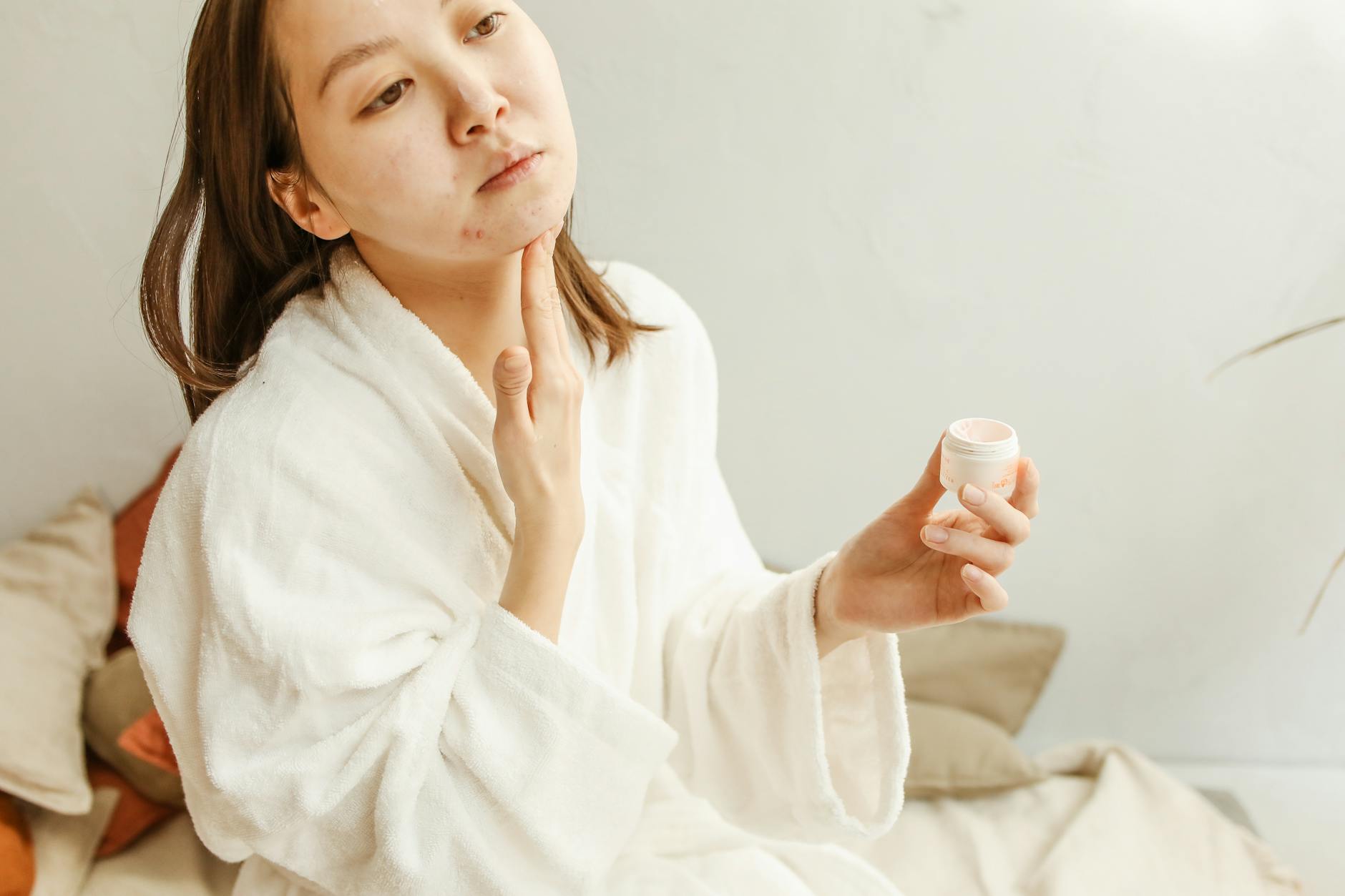
Generic tretinoin and brand-name Retin-A are therapeutically equivalent. The FDA assigns generic tretinoin a TE (therapeutic equivalence) code of “A,” meaning it has been proven equally safe and effective as the original brand-name formulation. Both contain identical tretinoin as the active ingredient, making them bioequivalent treatments for acne, including hormonal acne in women. For many women managing hormonal acne—particularly those experiencing premenstrual flares—this equivalence translates to significant cost savings without compromising treatment effectiveness.
The prevalence of hormonal acne in women is substantial. Studies show that up to 85% of adult women report worsening acne in the days before menstruation, while up to 15% of adult women suffer from acne altogether. Many of these women turn to tretinoin as a proven treatment option. Understanding that the generic version delivers identical results to the brand-name version empowers patients to make informed decisions about their acne treatment without unnecessary expense.
Table of Contents
- Why Do Women Experience Hormonal Acne and Seek Tretinoin Treatment?
- How Does Generic Tretinoin Compare to Brand-Name Retin-A in Real-World Use?
- What Do the Latest Studies Show About Tretinoin Formulation Equivalence?
- What Are the Practical Differences When Choosing Between Generic and Brand-Name Options?
- What Should Women Know About Starting Tretinoin Treatment for Hormonal Acne?
- Can Women Switch Between Generic and Brand-Name Tretinoin Mid-Treatment?
- What Does the Future Hold for Tretinoin Treatment and Generic Access?
- Conclusion
Why Do Women Experience Hormonal Acne and Seek Tretinoin Treatment?
hormonal acne occurs when fluctuations in estrogen and progesterone trigger increased sebum production and changes in skin bacteria colonization. This pattern is particularly pronounced during the luteal phase of the menstrual cycle, which is why many women notice breakouts in the week or two before menstruation. Unlike acne driven primarily by genetics or bacterial overgrowth, hormonal acne often requires targeted treatment—and tretinoin has become a gold standard due to its ability to regulate cell turnover, reduce sebum production, and address both active breakouts and post-inflammatory hyperpigmentation.
For adult women in their 20s, the prevalence is notable: approximately 50% continue to experience acne. By their 30s, this number drops to 33%, and by their 40s, approximately 25% still deal with acne. However, the onset of adult-onset acne has increased by approximately 10% globally over the past decade, suggesting that more women are seeking effective treatments like tretinoin than ever before. Tretinoin’s proven efficacy—combined with its ability to address both active acne and aging-related skin concerns—makes it particularly attractive for adult women managing hormonal breakouts.

How Does Generic Tretinoin Compare to Brand-Name Retin-A in Real-World Use?
While the active ingredient is identical between generic tretinoin and brand-name Retin-A, there is one important distinction: inactive ingredients may differ. These inactive components—such as emulsifiers, stabilizers, and preservatives—can affect how the formulation feels on the skin, how well it penetrates, and whether it may irritate sensitive skin. For example, a woman with rosacea-prone skin might experience irritation from one formulation’s base but tolerate another perfectly.
This doesn’t mean one is more effective; it means individual tolerance varies. The critical point is that the therapeutic outcome—tretinoin’s ability to clear hormonal acne, fade hyperpigmentation, and improve skin texture—is identical. The FDA’s therapeutic equivalence rating reflects rigorous bioequivalence studies demonstrating that the generic formulation delivers the same concentration of active ingredient to the site of action in the same timeframe as the brand-name version. However, a limitation worth noting: if a patient experiences significant irritation or poor absorption with one generic formulation, switching brands may help, as the inactive ingredient profile could differ between manufacturers.
What Do the Latest Studies Show About Tretinoin Formulation Equivalence?
Recent bioequivalence research, including 2025 studies using advanced Stimulated Raman Scattering microscopy, continues to validate tretinoin formulation equivalence at the molecular level. These studies examine how tretinoin penetrates the skin barrier and reaches therapeutic concentrations in the epidermis and dermis. The findings consistently support the FDA’s assessment that approved generic formulations deliver equivalent results to brand-name versions.
A practical example: a 28-year-old woman with persistent hormonal acne and some post-inflammatory hyperpigmentation might begin treatment with 0.025% tretinoin. Whether she uses brand-name Retin-A or a generic equivalent, the tretinoin will upregulate cell turnover, reduce sebaceous gland activity, and promote collagen remodeling. Clinical outcomes—including improvement in active lesions and fading of dark marks—will be equivalent. The main difference is cost: generic versions typically cost one-third to one-half the price of brand-name Retin-A.

What Are the Practical Differences When Choosing Between Generic and Brand-Name Options?
The decision between generic tretinoin and brand-name Retin-A largely comes down to cost, personal tolerance, and accessibility. Generic tretinoin is significantly less expensive, making long-term treatment more sustainable for many women. Since effective tretinoin therapy often requires 3 to 6 months of consistent use to see full benefits, cost considerations can determine whether a patient can afford to stay compliant with treatment. However, there are tradeoffs.
Some dermatologists note that certain brand formulations have been available longer and have more established user feedback regarding tolerability. If a patient finds one brand intolerable, switching to a different formulation—whether generic or branded—can resolve issues. Additionally, brand-name Retin-A comes in tube packaging, while many generics come in jars, which may affect product stability and ease of application. For hormonal acne management over the long term, the cost savings of generic tretinoin often outweigh minor formulation preference differences, especially when patient adherence is a limiting factor.
What Should Women Know About Starting Tretinoin Treatment for Hormonal Acne?
Tretinoin requires a careful introduction protocol, regardless of whether the formulation is generic or brand-name. Users should begin with the lowest concentration (typically 0.025%) and use it just 2 to 3 times weekly, gradually increasing frequency as the skin adapts. This gradual approach minimizes retinization—a temporary period of increased dryness, flaking, and sensitivity. Many women make the mistake of advancing too quickly, which leads to unnecessary irritation and abandonment of an otherwise effective treatment.
A critical warning: tretinoin is teratogenic and must not be used during pregnancy or while trying to conceive. Women using tretinoin for hormonal acne management should use reliable contraception. Additionally, tretinoin increases photosensitivity, requiring consistent daily sunscreen use (SPF 30 or higher). These considerations apply equally to generic and brand formulations—the active ingredient is the same, so the safety profile is identical. Compliance with these precautions is non-negotiable, regardless of which tretinoin version a woman uses.

Can Women Switch Between Generic and Brand-Name Tretinoin Mid-Treatment?
Yes, switching is generally safe and straightforward. Since the active ingredient is identical and therapeutically equivalent, a woman can transition from brand-name Retin-A to generic tretinoin without losing efficacy or experiencing significant skin changes. Some women switch to save money once their skin has adapted to tretinoin; others switch back to brand-name if they prefer a particular formulation’s feel or packaging.
A practical example: a woman who began with brand-name Retin-A 0.025% and successfully improved her hormonal acne after four months might switch to a generic 0.025% and subsequently increase to 0.05% for enhanced anti-aging benefits. Her skin will respond identically because the tretinoin dose and bioavailability are equivalent. The key is that her skin has already adapted to tretinoin’s effects, so the transition is seamless.
What Does the Future Hold for Tretinoin Treatment and Generic Access?
As tretinoin continues to gain recognition for its benefits beyond acne—including fine line reduction and skin barrier improvement—the importance of affordable generic access becomes even clearer. More telemedicine platforms now offer tretinoin prescriptions through licensed dermatologists, and generic formulations are increasingly available at major pharmacies, making this proven treatment more accessible to women managing hormonal acne.
The convergence of better access, proven efficacy data, and therapeutic equivalence between generic and brand formulations suggests that tretinoin will remain a cornerstone treatment for hormonal acne in women. As research continues to validate generic bioequivalence, the cost barrier to long-term tretinoin therapy continues to lower, enabling more women to sustain effective treatment without financial hardship.
Conclusion
Generic tretinoin is FDA-proven to be therapeutically equivalent to brand-name Retin-A, making it a safe and effective option for women treating hormonal acne. The active ingredient is identical, the bioavailability is equivalent, and the clinical outcomes are the same. For women experiencing hormonal acne—whether the 85% who notice premenstrual flares or those with persistent adult acne—generic tretinoin offers a cost-effective path to clearer skin without compromising treatment quality.
The decision to use generic tretinoin should be made in consultation with a dermatologist, who can recommend the appropriate starting concentration, application frequency, and monitoring protocol. Whether you choose generic or brand-name, consistency, sun protection, and patience during the retinization period are the true drivers of success. For many women managing hormonal acne, choosing the generic formulation simply means more money stays in your pocket while your skin receives the identical, proven treatment it needs.
You Might Also Like
- At Least 13% of Women With PCOS-Related Acne Are Unaware That Generic Tretinoin Works Identically to Brand-Name Versions
- At Least 66% of People With Acne Scars Would Benefit From Knowing That Generic Tretinoin Works Identically to Brand-Name Versions
- At Least 21% of Women With Hormonal Acne Say That Their Cleanser Is Making Their Acne Worse