
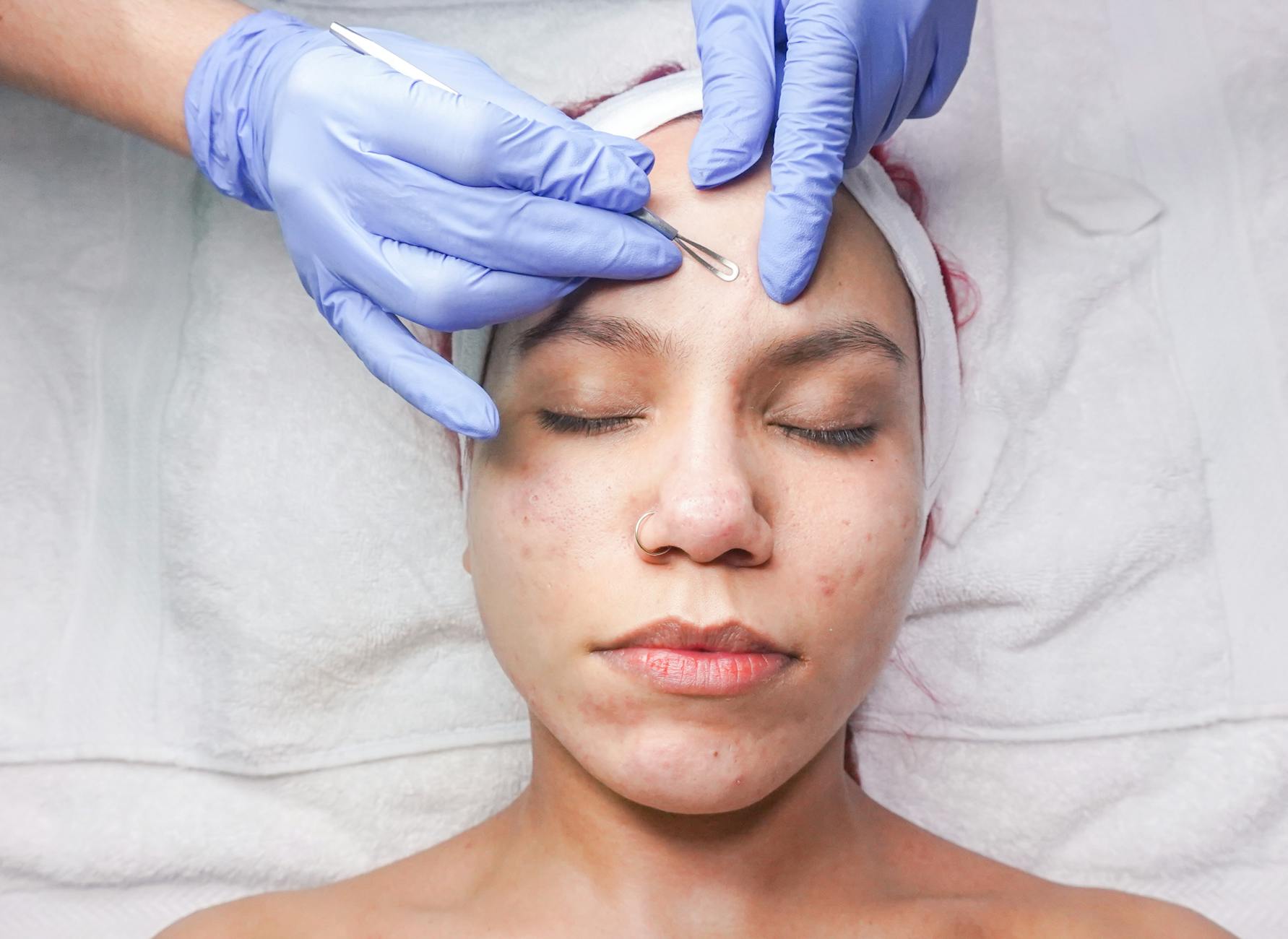
Hair products are a significant but often overlooked cause of acne along the forehead and temples. While the exact prevalence among acne patients isn’t definitively established in current medical literature, dermatologists widely acknowledge that hair oils, styling products, shampoos, and conditioners regularly trigger breakouts in these areas. The American Academy of Dermatology identifies hair care products as a confirmed acne trigger, particularly where products come into contact with facial skin.
If you’ve noticed that your forehead or temple breakouts coincide with your hair care routine—or that these areas clear up when you change products—you’re experiencing a well-documented phenomenon that affects a substantial portion of the acne population. The connection between hair products and facial acne is particularly pronounced in people with curly hair or of African descent, who typically use heavier styling products. A woman using coconut oil-based styling cream might develop a distinctive line of small pustules along her hairline within days of application. What makes this type of acne especially frustrating is that many people spend money on acne treatments without realizing the real culprit is sitting in their shower.
Table of Contents
- How Do Hair Products Trigger Forehead and Temple Breakouts?
- Which Hair Ingredients Are Most Likely to Cause Breakouts?
- Pomade Acne and Who’s Most Affected
- How to Tell If Your Hair Products Are Causing Your Breakouts
- Recovery Timeline and What to Expect
- Switching to Acne-Safe Hair Products
- Long-Term Management and Prevention
- Conclusion
How Do Hair Products Trigger Forehead and Temple Breakouts?
Hair products cause forehead and temple acne through a straightforward mechanism: oils, silicones, and other occlusive ingredients in hair care products transfer from your hair to your skin, clog pores, and trap bacteria. The problem is compounded by the fact that these areas have higher concentrations of hair follicles than other parts of the face, and the products sit directly against skin for hours at a time. When you sleep with your hair touching your face, or throughout the day as hair rests against your forehead, the acne-causing ingredients have continuous contact with pores. Research indicates that hair oil use is “the most significant predictor of acne severity” among acne patients, though exact prevalence numbers vary.
This doesn’t mean all hair oils are problematic for everyone—it’s ingredient-dependent and skin-dependent. However, certain oils used in hair care are well-known triggers. A person might use a lightweight leave-in conditioner without issues, while a heavier pomade causes immediate breakouts. The distinction matters because it means the problem is solvable; you don’t have to abandon hair care altogether, just identify which products your skin can tolerate.
Which Hair Ingredients Are Most Likely to Cause Breakouts?
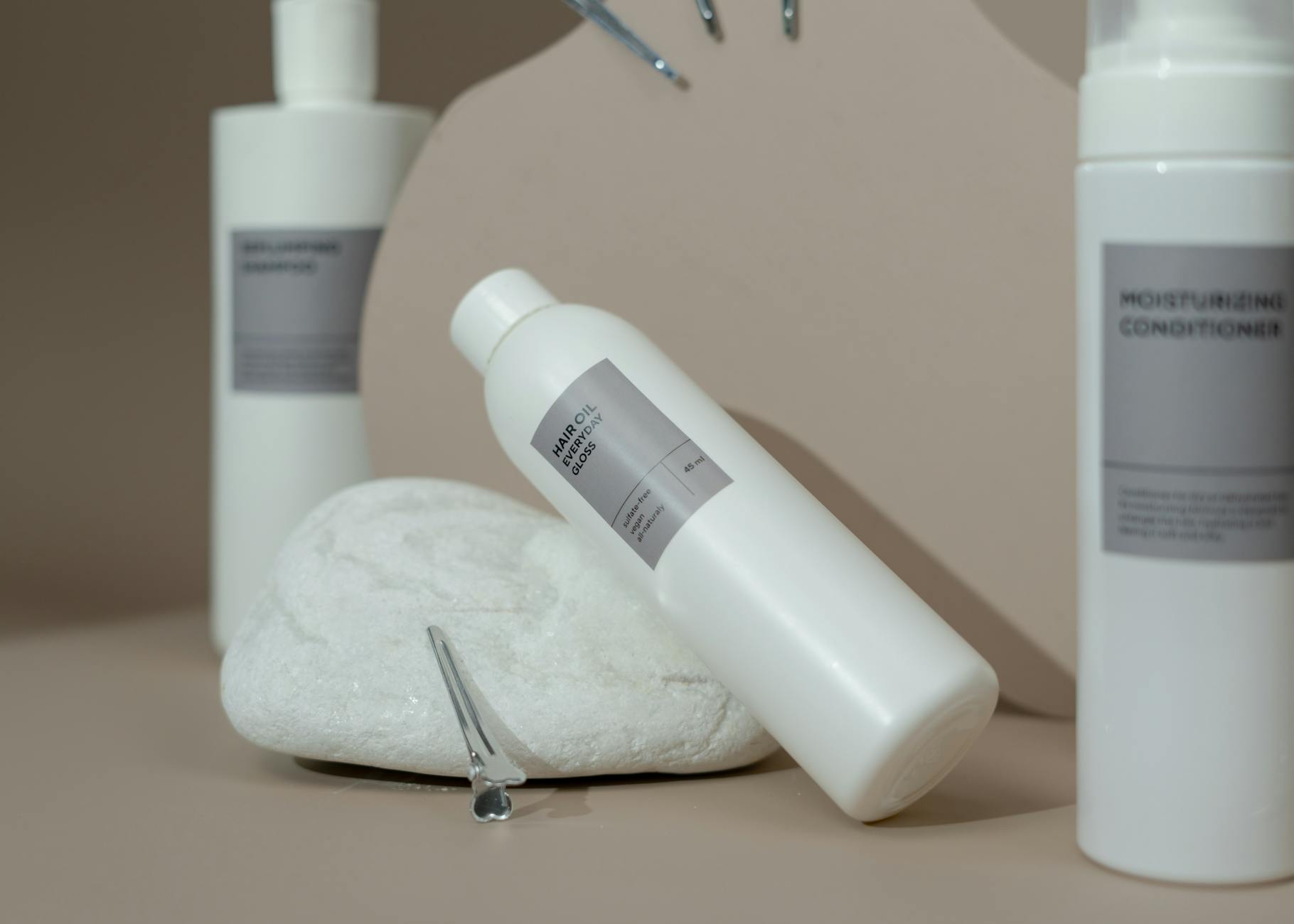
Specific ingredients found in hair products have documented links to acne formation. Mineral oils, coconut oil, cocoa butter, silicones, sulfates (particularly sodium lauryl sulfate), shea butter, and jojoba oil are the primary culprits. These ingredients are common in shampoos, conditioners, styling creams, pomades, gels, serums, and leave-in treatments. Coconut oil deserves special attention because it’s marketed as natural and beneficial, yet it’s highly comedogenic—it clogs pores readily and is one of the most common triggers for acne along the hairline. A person might switch to “organic” or “natural” hair products believing they’re choosing something better for their skin, only to experience worse breakouts due to coconut oil or shea butter content. The challenge is that many of these ingredients serve legitimate hair-care purposes.
Silicones smooth the hair shaft and reduce frizz. Oils nourish dry hair. Surfactants help products spread. Manufacturers include these ingredients because they work for hair health. However, what’s good for your hair can be actively harmful to your skin, particularly if your skin is acne-prone or sensitive. Reading ingredient lists is critical, but it also requires knowing which ingredients to avoid—information that’s not always obvious from product packaging.
Pomade Acne and Who’s Most Affected
Pomade acne is a recognized dermatological condition, though it goes by various names depending on the context. It’s characterized by breakouts that appear exactly where hair styling products contact the skin—typically the forehead, temples, and hairline. The condition is more common in people with curly hair or of African descent because these populations are more likely to use heavy-duty styling products, pomades, and oils as part of standard hair care. Men using pomade for styling frequently develop a characteristic line of acne along the front hairline.
Women using heavy styling creams might see breakouts specifically where braids or buns pull hair tightly against the forehead. This geographic specificity is actually helpful diagnostically. If your acne appears only along your hairline and temples but nowhere else on your face, and if it corresponds with your hair care routine, you’ve likely identified the cause. Conversely, acne scattered across your entire face is more likely driven by systemic factors like hormones, diet, or internal inflammation. Understanding which type of acne you have—product-induced or otherwise—changes your treatment strategy entirely.

How to Tell If Your Hair Products Are Causing Your Breakouts
The most reliable test is an elimination trial. Stop using the suspect hair product for 4-6 weeks and monitor whether breakouts in the hairline and temple areas improve. This timeline matters because skin takes several weeks to completely turn over and for clogged pores to clear. Some people see improvement within two weeks, but six weeks is the standard dermatological benchmark for full recovery.
Keep your acne treatment regimen otherwise consistent during this period; changing multiple variables at once makes it impossible to identify the actual culprit. Document the specifics: Which product did you stop using? Did breakouts improve, stay the same, or worsen? Did they improve only in the hairline area, or across your entire face? This information is valuable for your dermatologist and helps you build a personal profile of which ingredients your skin tolerates. If you see clear improvement after eliminating one product, you’ve likely found the problem. If breakouts persist, the issue may be a different hair product, another skincare product, or an unrelated acne trigger.
Recovery Timeline and What to Expect
Once you’ve stopped using an acne-causing hair product, you shouldn’t expect immediate results. The breakouts that are already present take time to heal. New clogged pores need to reach the skin surface and clear. Most dermatologists advise allowing 4-6 weeks for significant improvement, though some patients see changes within two to three weeks. During this waiting period, continue your regular acne treatment regimen—your cleanser, exfoliant, acne medication, or whatever you’re using. The hair product change removes the ongoing trigger, but your skin still needs help clearing existing congestion.
A common mistake is assuming that because you’ve stopped using the problematic product, you should also reduce or stop acne treatments. This logic is backwards. Your acne treatments are now more likely to work effectively because you’ve removed the offsetting trigger. If you were applying benzoyl peroxide every night while simultaneously clogging your pores with coconut oil, the two were fighting each other. Removing the coconut oil allows your acne treatment to work as intended. Be patient with this timeline, particularly if you had moderate to severe product-induced breakouts.

Switching to Acne-Safe Hair Products
Not all hair products cause problems, and you don’t need to abandon hair care entirely. The goal is finding products that are both effective for your hair and non-comedogenic for your skin. Look for products labeled “non-comedogenic” or specifically marketed for acne-prone skin. Lightweight options work better than heavy creams or oils. Water-based products are generally safer than oil-based ones. If you have curly hair or need heavy styling, seek out products formulated specifically for curly-haired individuals who also have acne-prone skin—these products exist and are designed to balance hair and skin needs.
Silicone-based serums are often better tolerated than oil-based ones, though this is individual. Some people can use lightweight silicones without problem while breaking out from oils. Others find silicones problematic and tolerate lighter oils better. There’s no universal answer; your skin’s response is what matters. Consider visiting a dermatologist with a list of your current products. They can help you identify problematic ingredients specific to your skin type and recommend alternatives that will work for your hair without triggering acne.
Long-Term Management and Prevention
Once you’ve identified which hair products trigger your acne, the long-term strategy is straightforward: avoid those products indefinitely. This doesn’t mean avoiding all hair care—it means being selective. Maintaining a mental or written list of safe products and problematic ingredients helps you make informed choices when you shop. Over time, you’ll develop a reliable routine with products you know work for both your hair and your skin. Many people find that their acne dramatically improves once they’ve made this switch, sometimes more so than with topical acne medications alone.
Prevention also involves awareness of new products. When you try something new for your hair, monitor your skin for the next few weeks. Early detection of a problematic product means you can stop using it before significant breakouts develop. This proactive approach prevents the frustration of severe acne that takes weeks to resolve. You might also consider preventive measures like keeping hair off your forehead at night if you’ve used a styling product, or using a silk pillowcase that reduces friction and product transfer from hair to skin.
Conclusion
Hair products are a significant cause of forehead and temple acne, affecting a substantial but not precisely quantified portion of acne patients. The underlying mechanism is well-established: occlusive and comedogenic ingredients transfer from hair to skin, clog pores, and trigger breakouts in areas where hair contacts the face. Identifying whether your breakouts are product-related involves eliminating suspect products and observing whether acne improves over a 4-6 week period.
The good news is that product-induced acne is highly solvable compared to acne driven by genetics, hormones, or internal factors. Once you’ve identified the problematic product or ingredient, switching to alternatives often produces dramatic improvement. If you suspect your hair care routine is contributing to your acne, discuss it with your dermatologist, review your product ingredients, and run an elimination trial. The path to clearer skin may be as simple as changing what you put in your hair.
You Might Also Like
- At Least 77% of College Students With Acne Have Tried Their Protein Powder May Contain Ingredients That Trigger Breakouts
- At Least 60% of Estheticians Treating Acne Don’t Realize That Their Diet May Be Contributing to 20-30% of Their Breakouts
- At Least 66% of Patients Who Failed First-Line Treatment Have Experienced Their Supplements May Be Causing Breakouts